Thai Elephants
Thailand’s current population of domesticated elephants is around 2,700. I was thrilled to spend the day with some of these ‘gentle giants’ at the Thai Elephant Conservation Center http://www.thailandelephant.or/en located in Northern Thailand just outside the city of Lampang. The center is operated by the Forest Industry Organization which is a State enterprise of the government of Thailand. They house 50 Asian elephants as well as ten of the King’s revered ‘white’ elephants in the royal elephant stables. Not to be mistaken for a ‘white elephant’ where a gift of little intrinsic value is exchanged, the Thai ‘white elephant’ has inexpressible worth to the people of Thailand.

Did you know White Elephants are not white?
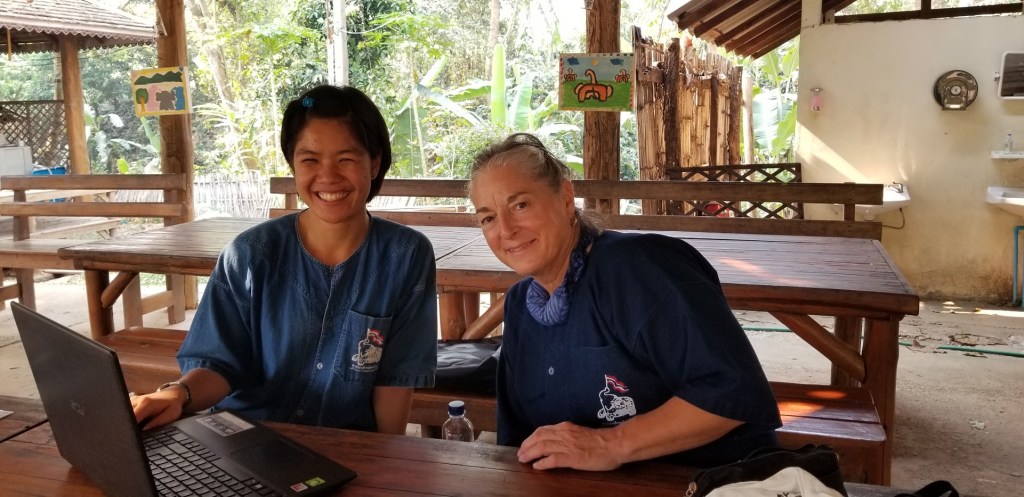
I arrived at the Conservation Center at 8:30 in the morning and was greeted by my guide and educator for the day, Fern. After changing in to clothing provided, I settled in at the outdoor classroom area to learn how to handle and care for elephants before being introduced to “my” elephant for the day. Since I was the only attendee, Fern indulged my curiosity about ‘white elephants’ and indicated that they do not breed white elephants so most are captured in the wild and gifted to the King. The male white elephants are housed separately from the female white elephants and these royal mammals are not available for public viewing. I asked the big question . . . if white elephants are not white, how do you know it’s a white elephant? Fern said that there are many characteristics and it can be a combination of different things but in general, there are seven things that must be present when the royal experts identify a white elephant:
- white toe nails
- white eyes
- pink palette
- white hair on the body
- white hair on the tail
- earthen (ceramic pot) color
- every pore has three hairs
There are many other characteristics but my favorite was that they have a unique snoring pattern when asleep! Maybe MY snoring is considered royal?
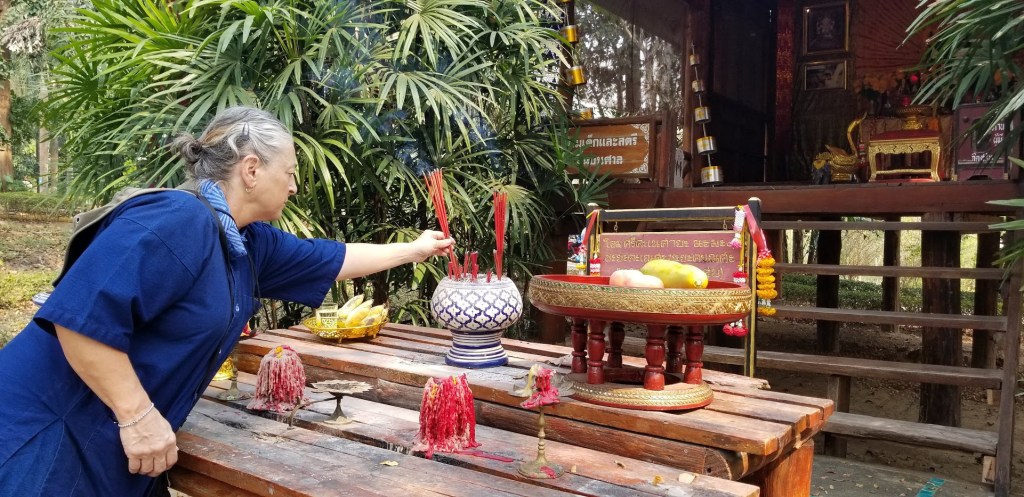
offering to Indra for a good day
After seeing video’s on a couple methods to get on/off the elephant and learning the basic elephant commands such as “Soon Soong” = Get on from the side, “Hup Soong” = Get down from the side, “Bai” = Go forward, “How” = stop, “Ben” = Turn left or right, “Soke” = Walk Backward and “Geb Bone” = Pick up thing, we made an offering of incense and prayed to the Indra god to have a good day with the elephant. I was so excited to meet my elephant named: Pang Pumpuang who is an adorable 37 year old girl with freckles between her eyes and on her trunk. Pumpuang and I bonded over the basket full of sugarcane I fed her! Her mahout, Taworn, stuck close by. A mahout is a professional who works with, rides and tends to an elephant. Currently, only males may be mahouts and usually are assigned an elephant at an early age and remain bonded throughout their lives.
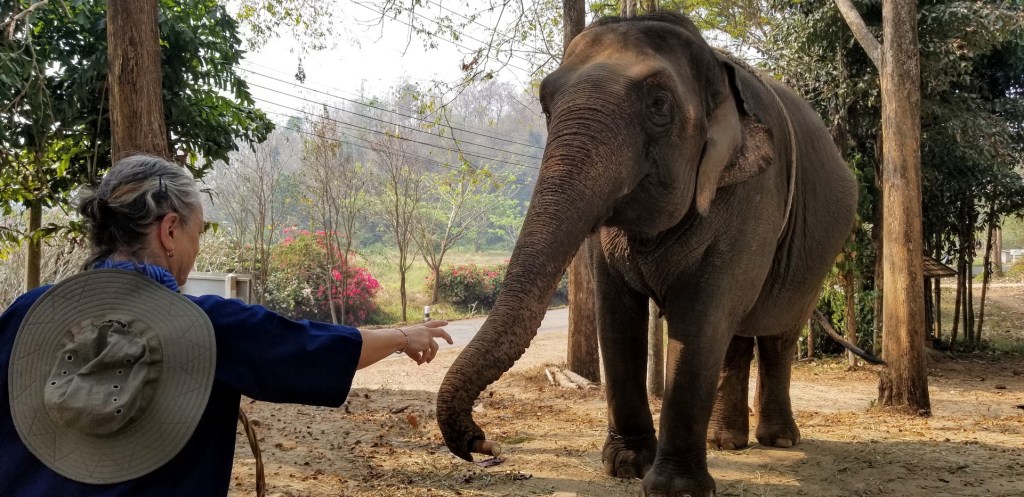
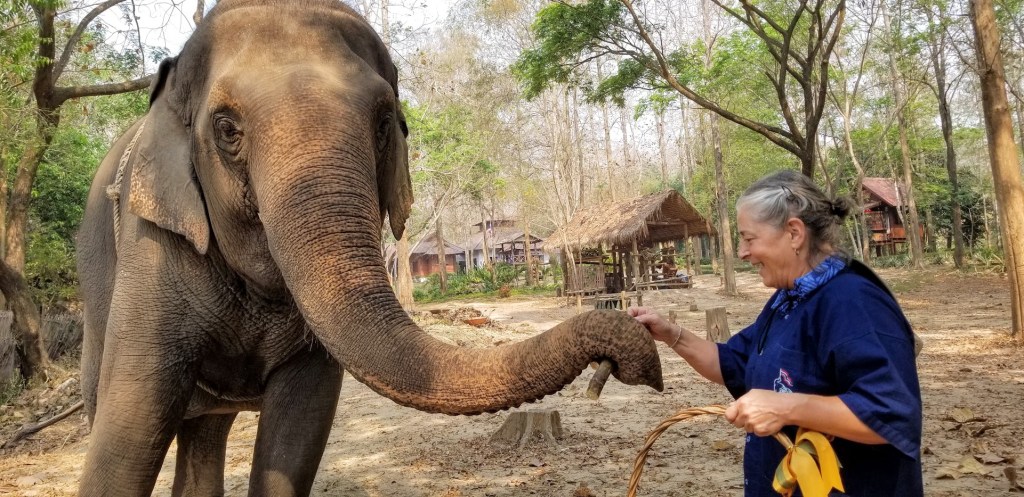
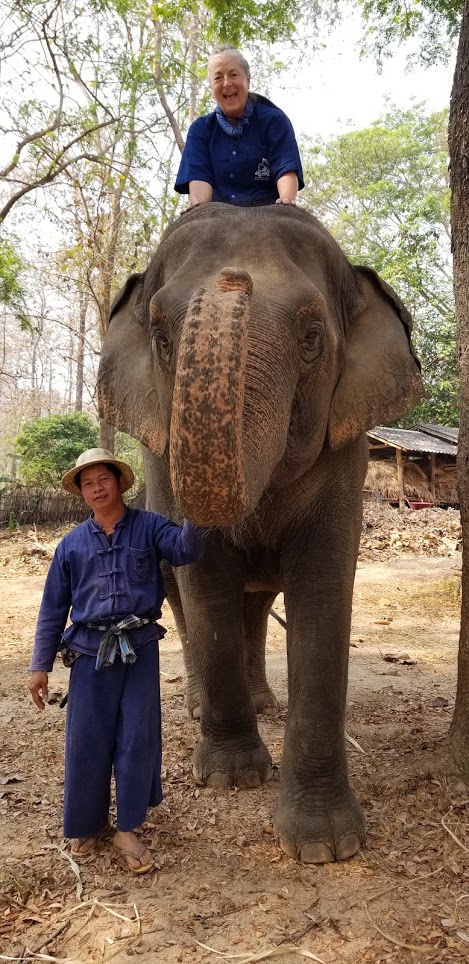
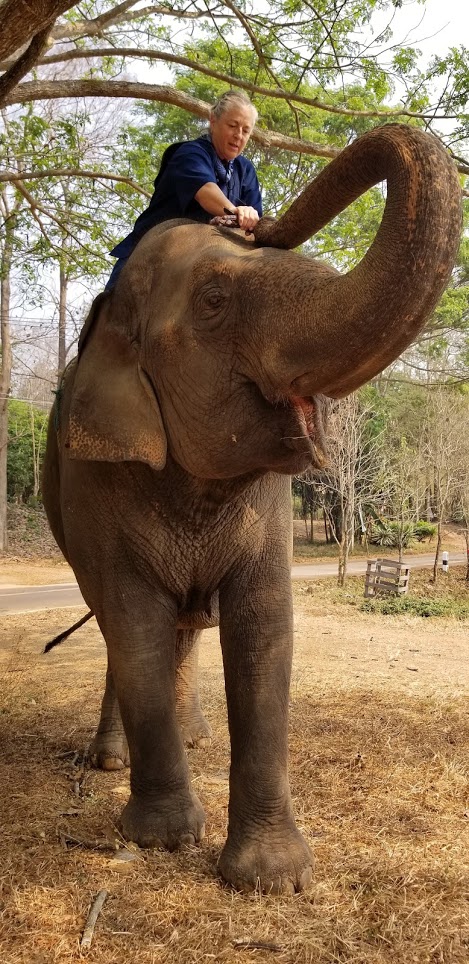
“Geb bone” 
I went on my first of three rides along the river. She liked eating the grass along the river bank and I thought she was going to go in the water!!! I was told: “hold onto the rope in back of you when she goes down hill”. I opted for the ‘get down from the side’ method opposed to jumping on over her head from the front – yikes, that’s one BIG animal. I was a good mahout in training by cleaning up her dung!
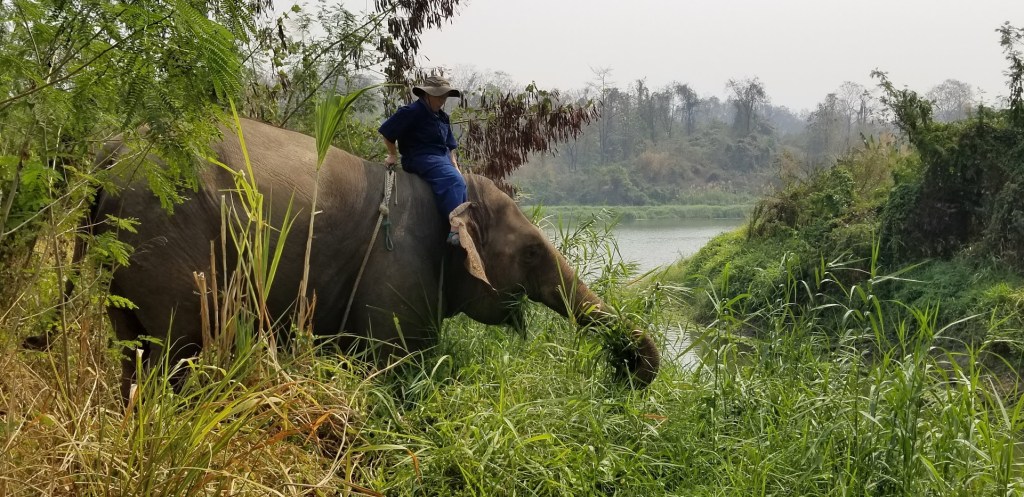
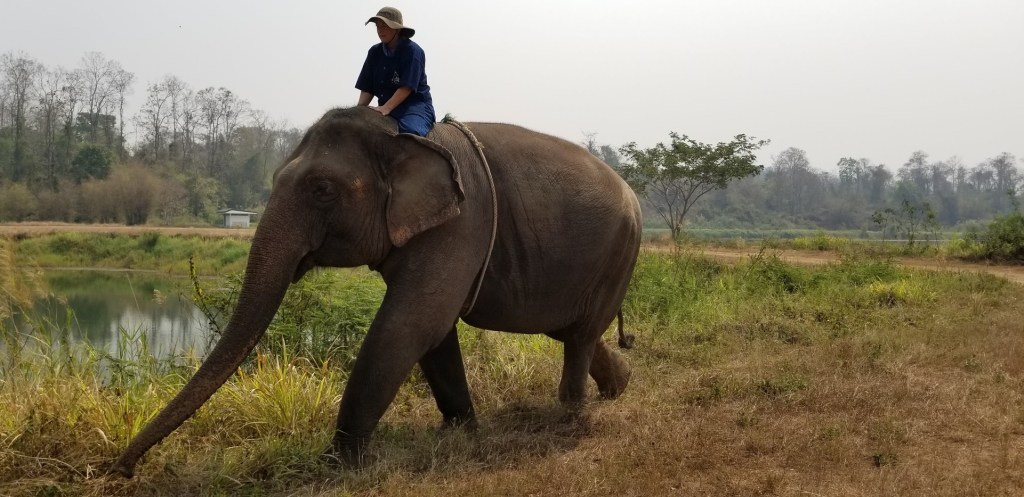


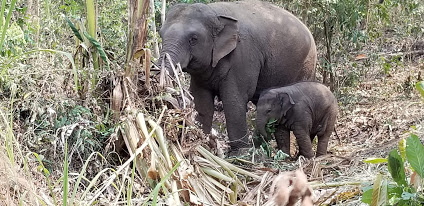
Next, we hiked in to the jungle to view a Mama and baby elephant. Fern said that many babies die when left in the jungle because they are so curious and playful with not such nice friends like poisonous snakes and other dangerous wild animals.

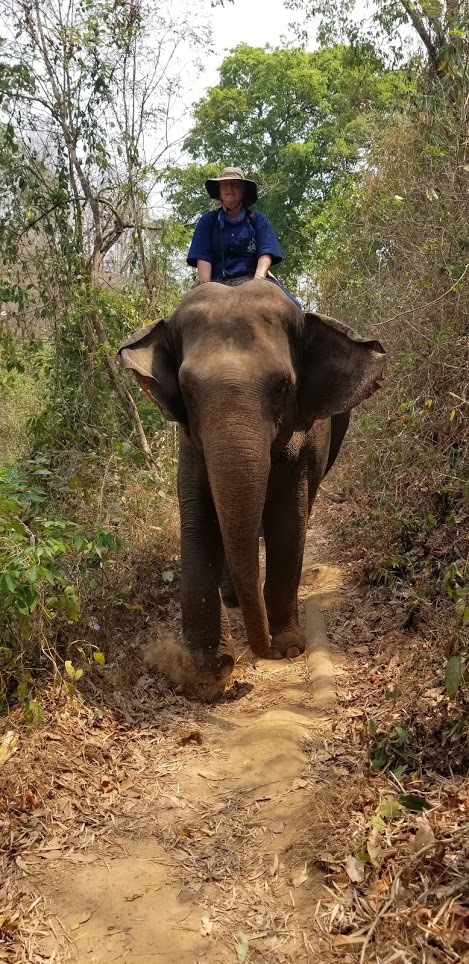
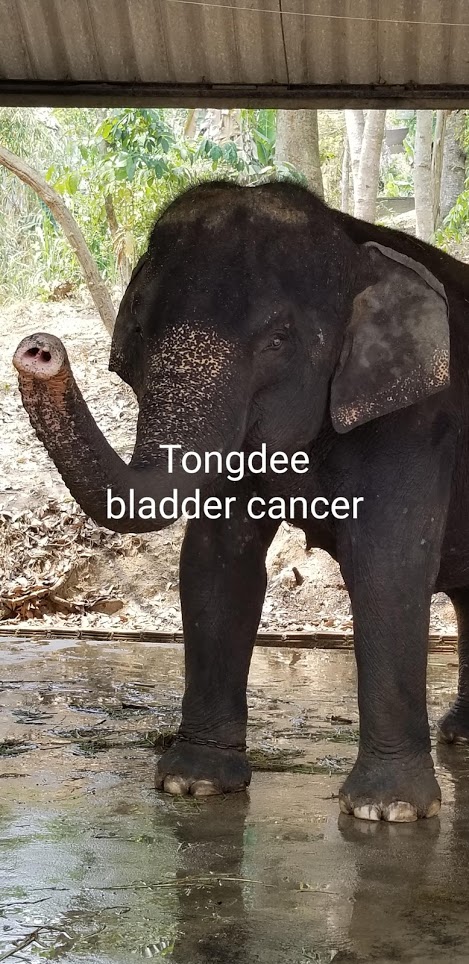
I re-mounted Pumpuang and trekked about a mile to the main part of the center to tour the elephant hospital. On the way, the terrain was very rocky and steep in places and I had to keep repeating “Bai” = Go forward since she liked to stop along the way to feed on the enticing vegetation. It may have been my imagination, but I felt like Pumpuang embraced her ears around my legs tightly to hold me on when climbing up hills. As a government run organization, the hospital treats any elephant whether privately owned or housed on the property free of charge. There were elephants with cancer, teeth issues and even a baby elephant getting an IV who had stomach problems. Next door to the hospital, we visited the ‘old elephant home’ and saw “Daoreuag” who is the oldest elephant housed there at 75 years old.
Bai, Bai, Bai, Bai, Bai 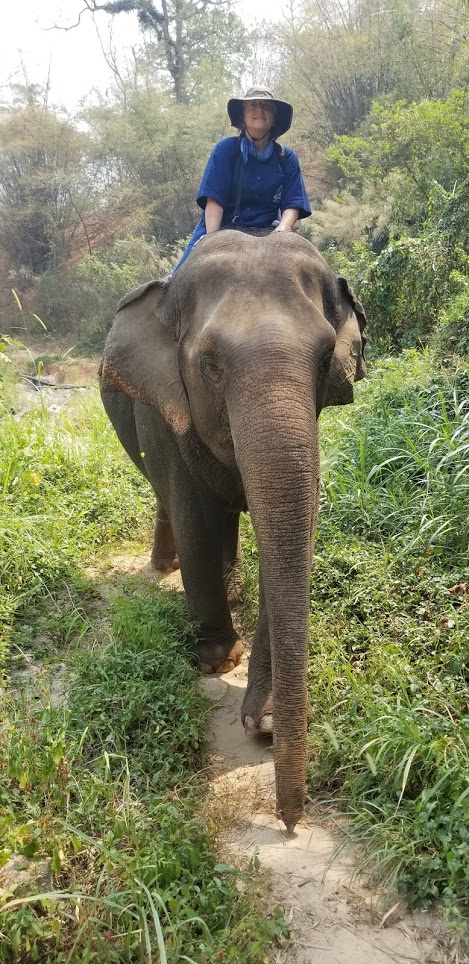
incline on the trek 
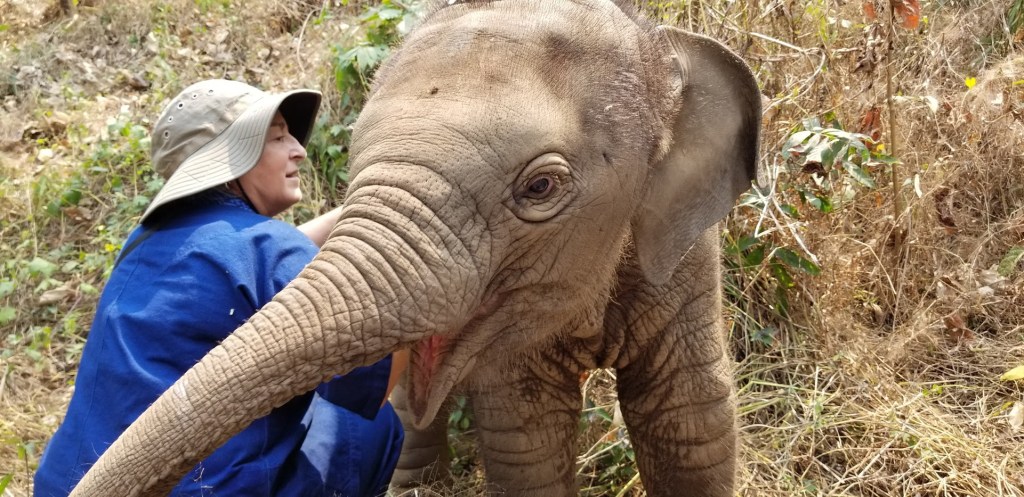
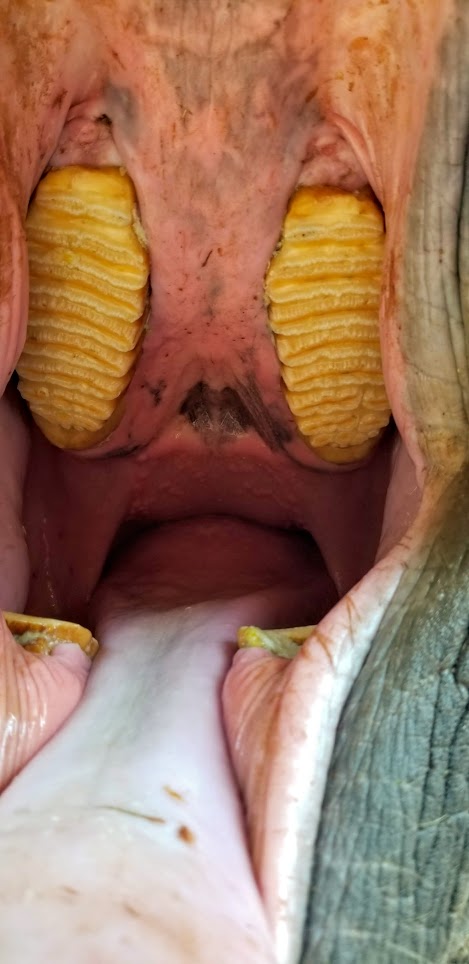
After visiting the hospital we had lunch then visited with the elephants that perform for visitors to the center and watched them get bathed by their mahouts. I was shocked to see the inside of this young (4 year old) elephants mouth with so few teeth to chew the hard sugarcane and whole bananas!
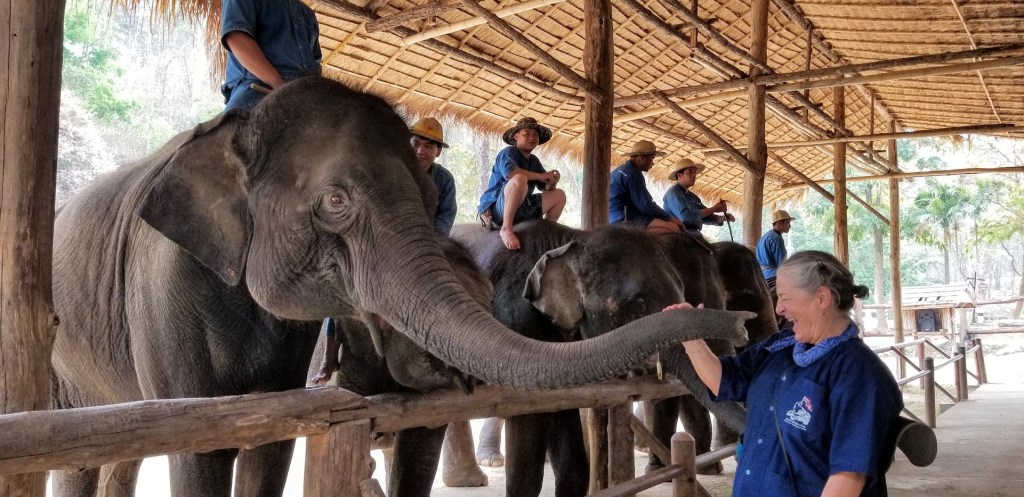


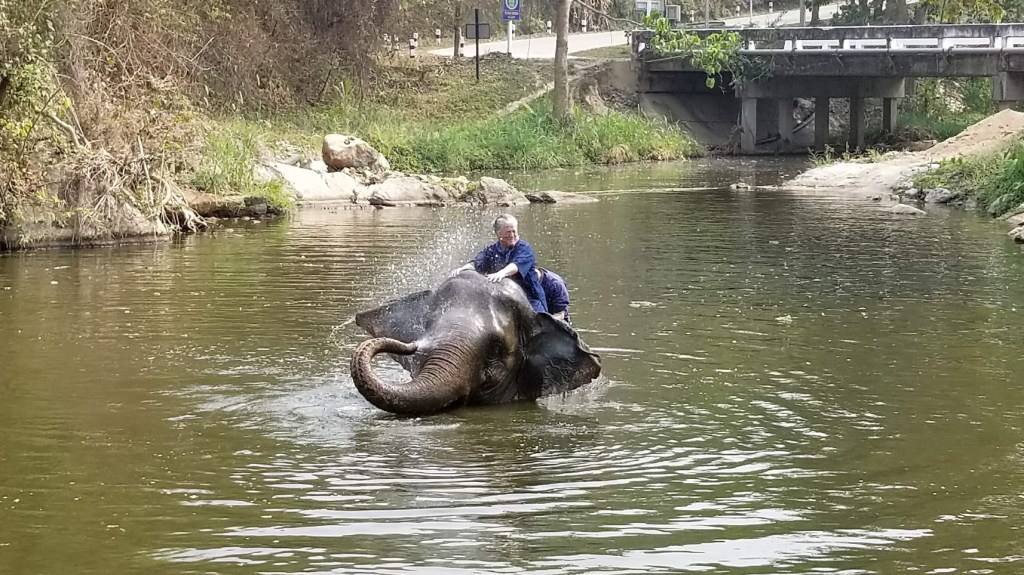
I can add to my resume that I learned how to make paper out of elephant dung! Afterwards, I mounted Pumpuang for the third time and bathed her before trekking back to our starting point a mile away. I’ve never laughed so hard and was completely soaked after being sprayed with water during the bath, but it felt so good on our hot trek back to the training center.

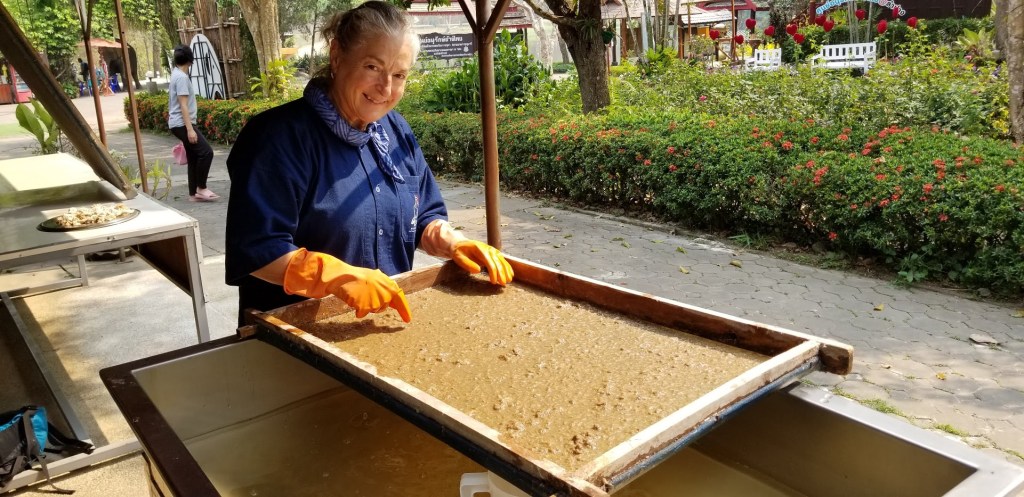
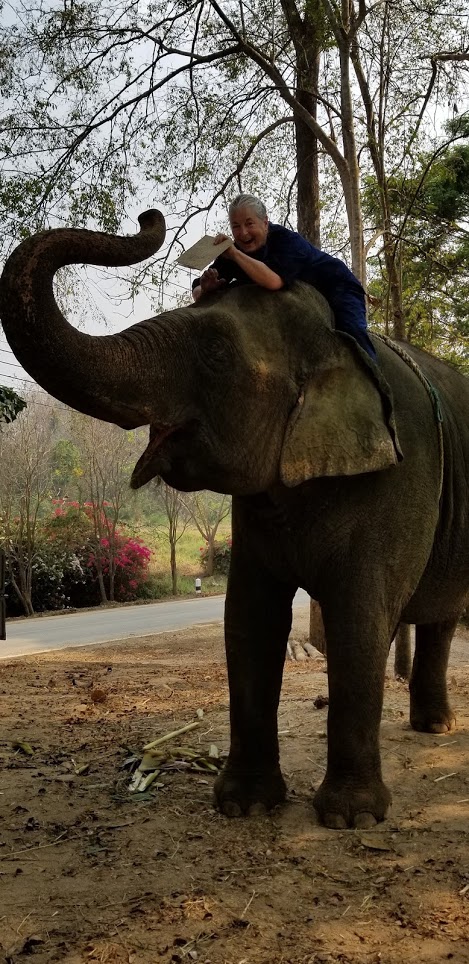
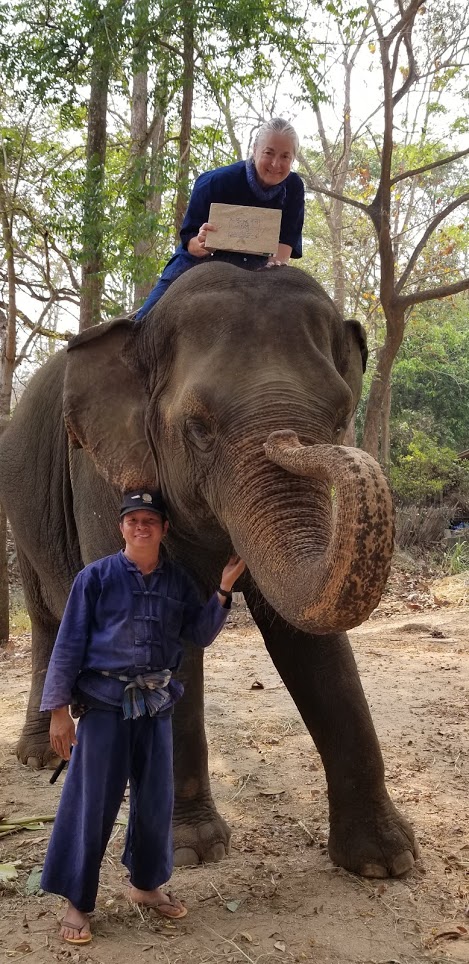
Pumpuang presented me with a certificate of appreciation for completion of the amateur mahout training course on non other than dung paper! Thank you Fern, Taworn and especially Pang Pumpuang for an unforgettable experience 🙂


 Embracing Gray