Thanks for joining me! I grew up in Portland Oregon as the middle child of a large, Catholic, Italian/German family of eight kids. After getting married at 20 years old, I moved to the Seattle Washington area and remained there for 42 years. After a divorce, raising two amazing sons and a successful career as a finance professional, I semi-retired and moved back to Portland.
As I do away with heels, hoes, suits and dyed hair, please join me as I reflect on my journey over this first year in retirement!
“Living for the moment, for nothing but the present, brings with it an unexpected bonus. It seems to me that if you can escape from the need to know the future (. . . ) then you achieve absolute freedom”
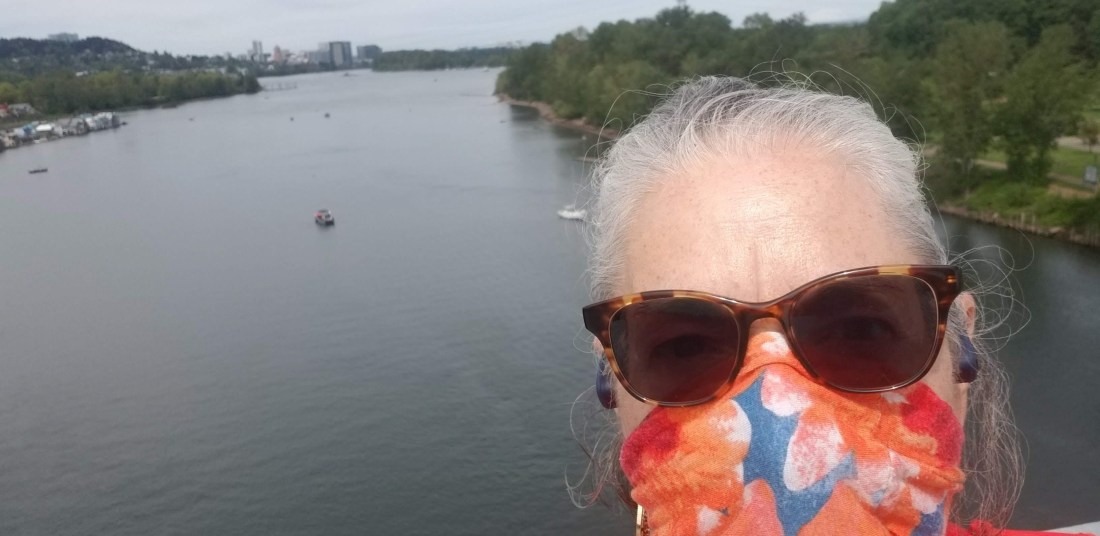
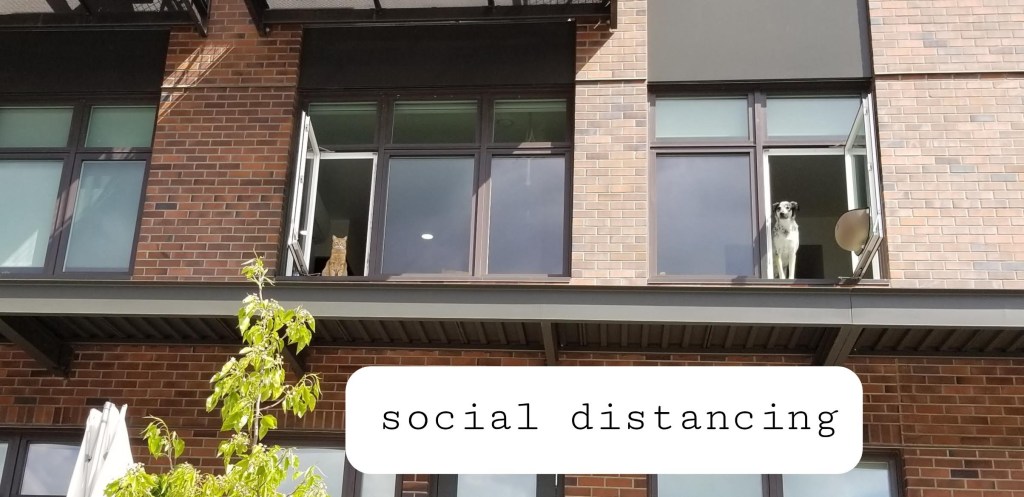
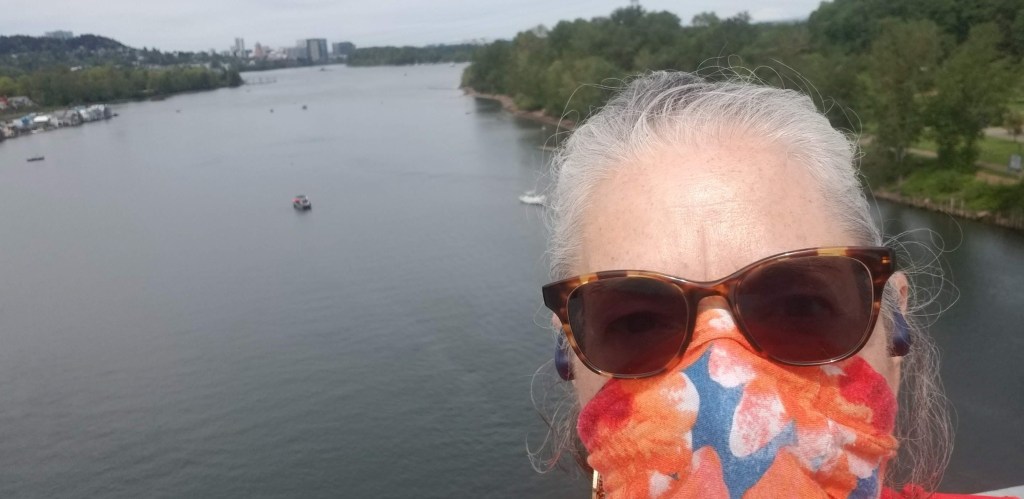
For Portland Oregonians, March 2020 changed all of our lives forever . . . my daily contemplative walks along the Willamette waterfront took on new meaning. The view from my glass half-full sees all the beauty in this unprecedented time. Family togetherness, home cooked meals around the dinner table, people walking and riding bikes instead of flying and driving in cars. Who says we can’t redefine the norm based on our learnings. Shorter work weeks, more flexible work from home, equitable pay for “front liners”, social healthcare policies, quiet time to look within and reflect and a unified society with a desire for peace, love and joy!
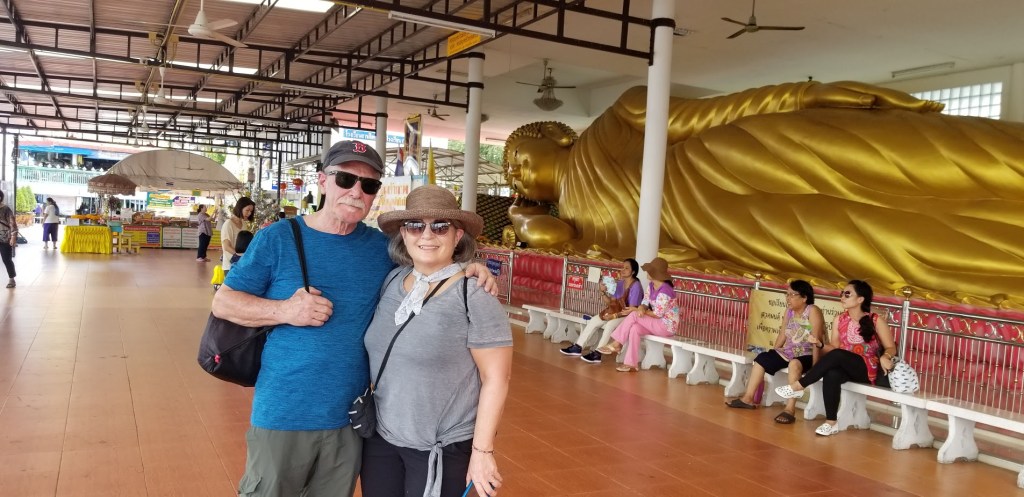
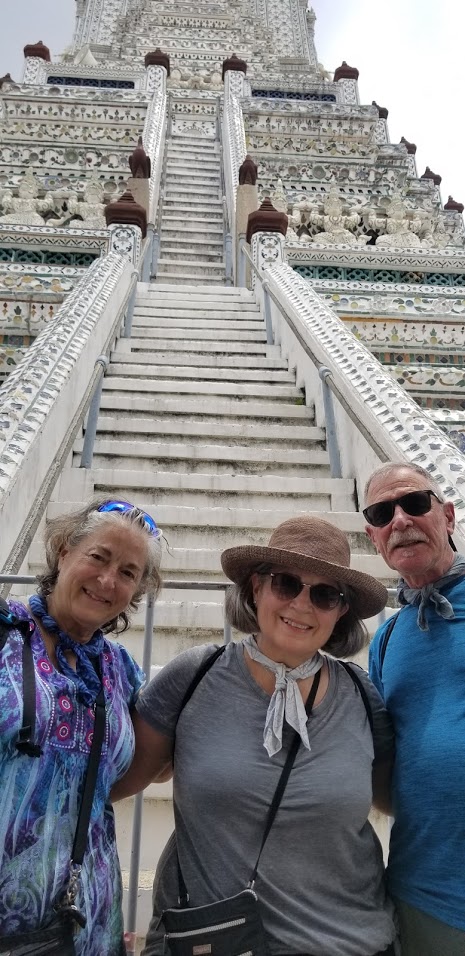
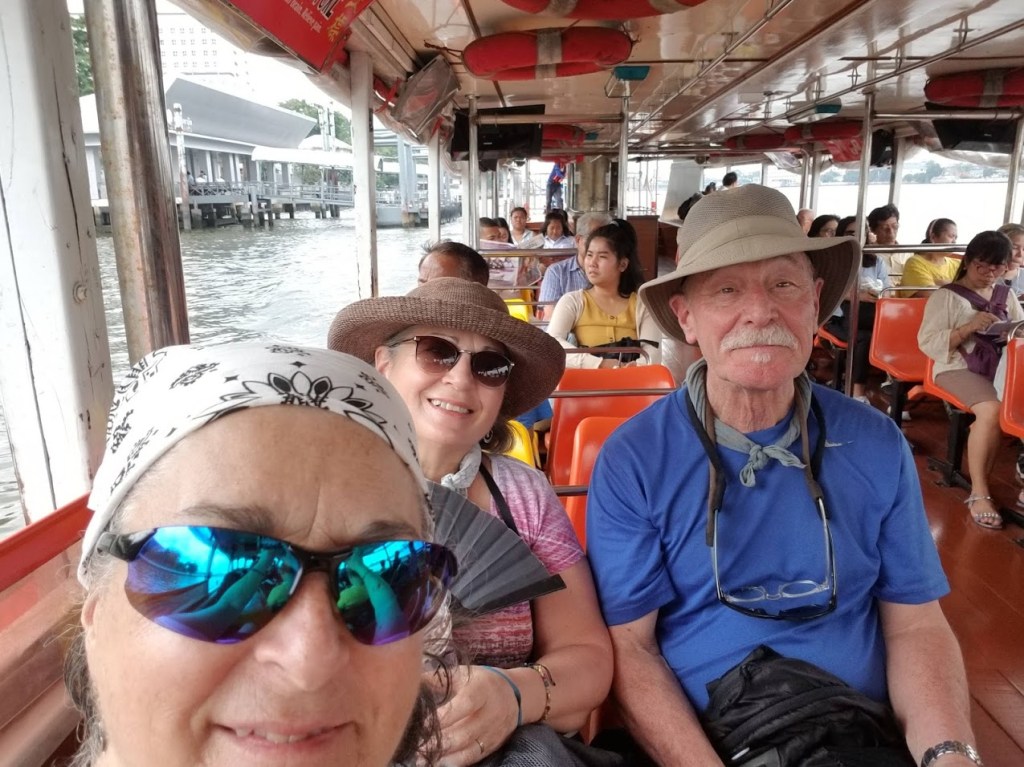
My sister, Margaret, and her husband, Keith, joined me in Bangkok to tour the city for a couple days before taking off to Cambodia to meet up with my brother, Don and his wife Tanya.
Welcome to Bangkok!
Boat ride to Ko Kret
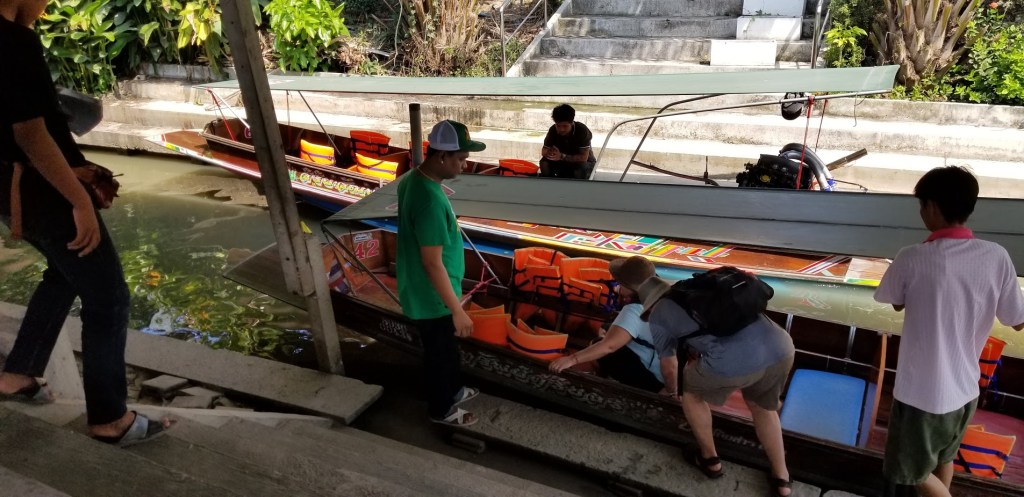
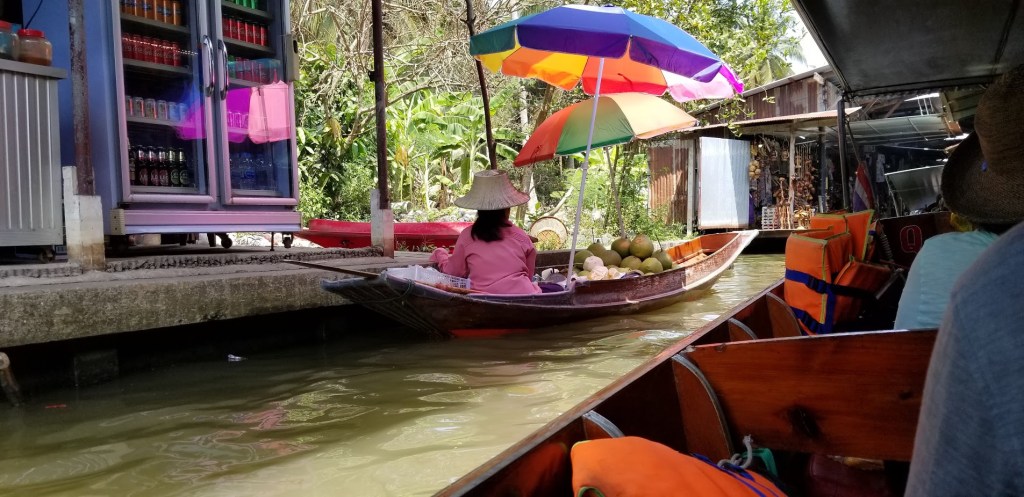
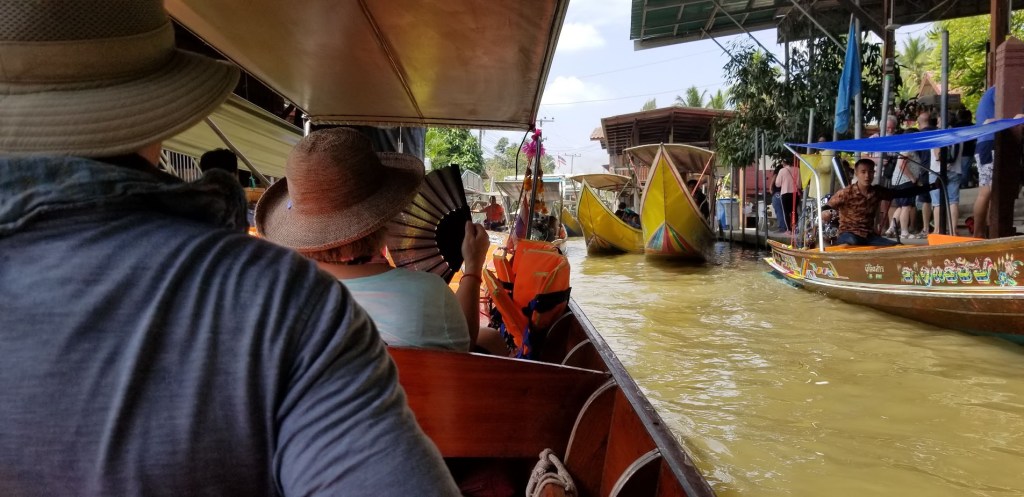
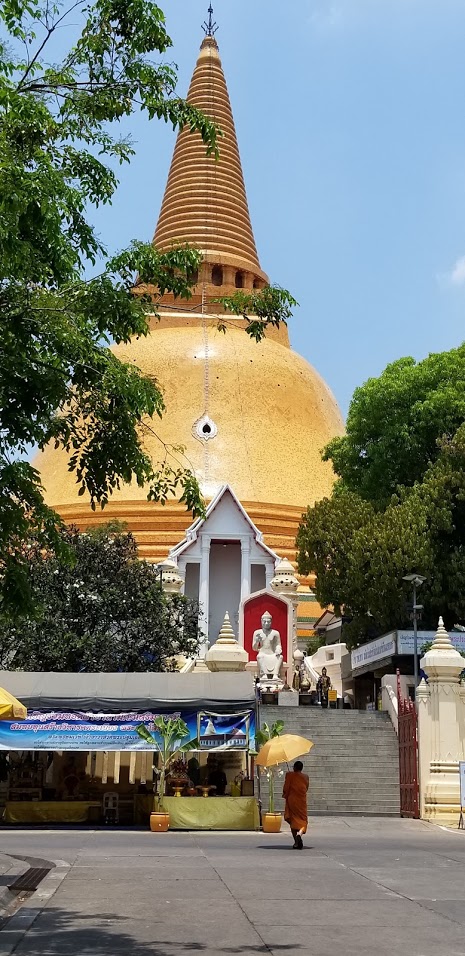
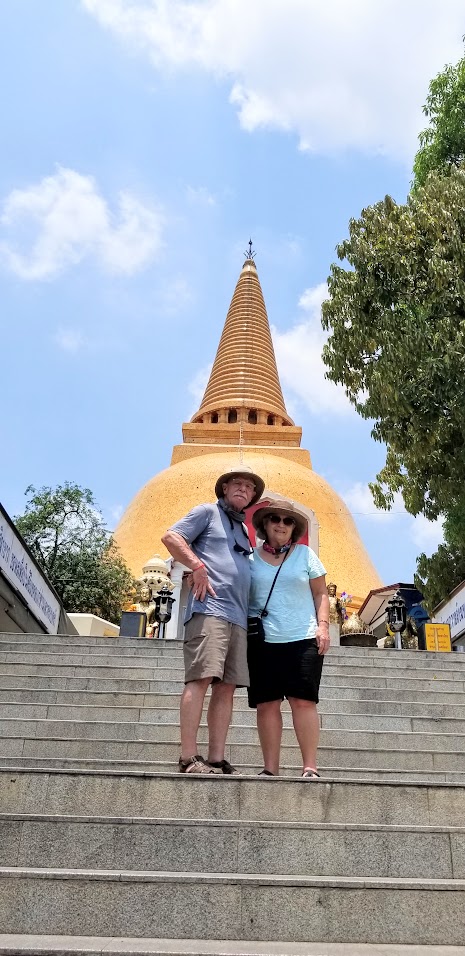
Mae Klong Railway Market, Floating Market and Largest Chedi in Thailand
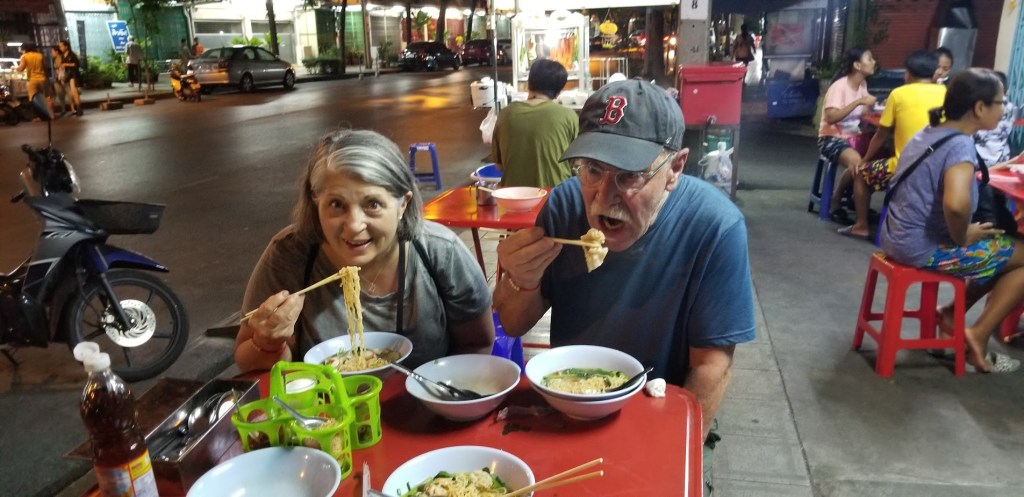
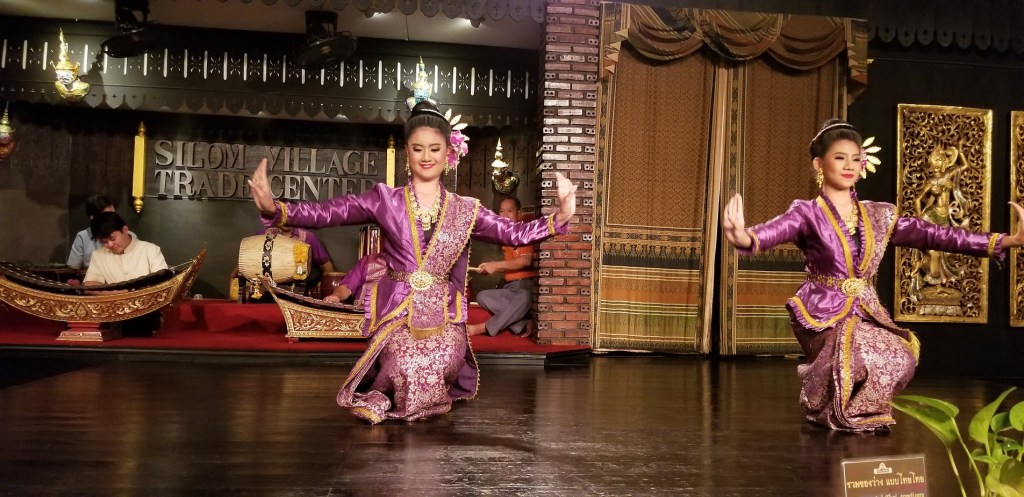
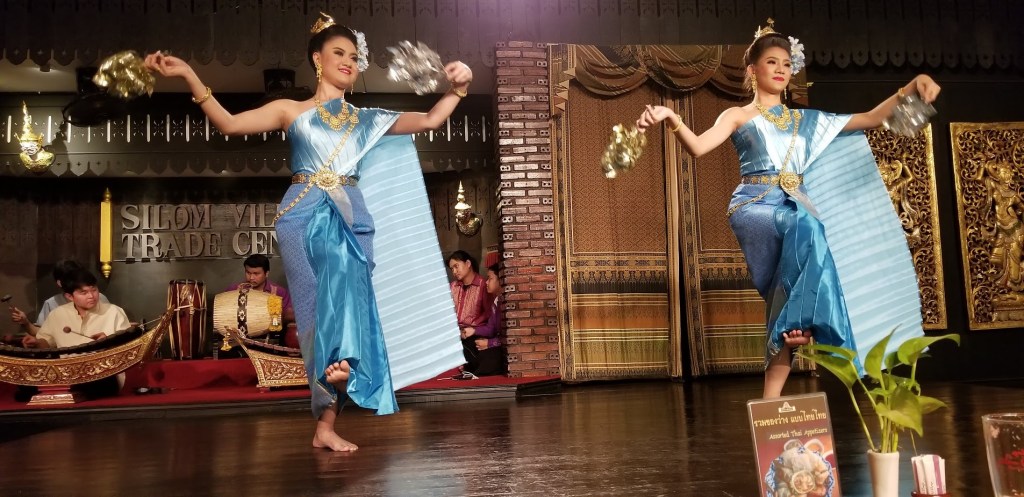
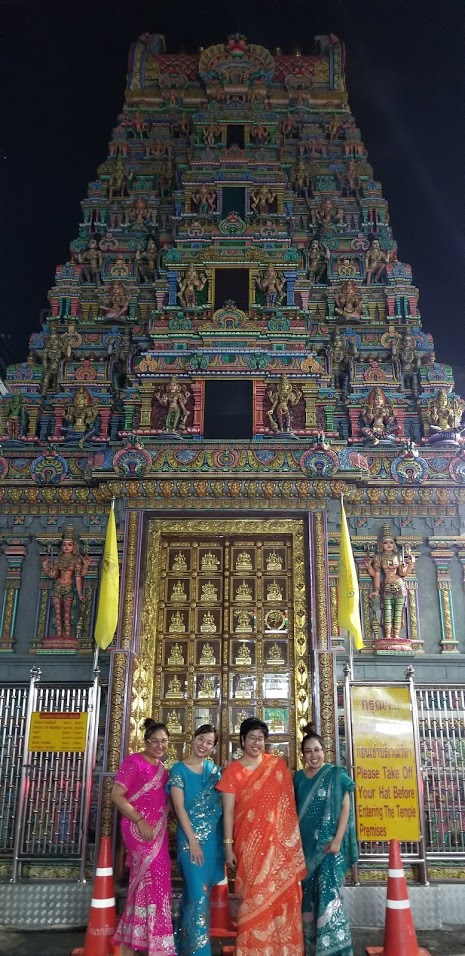
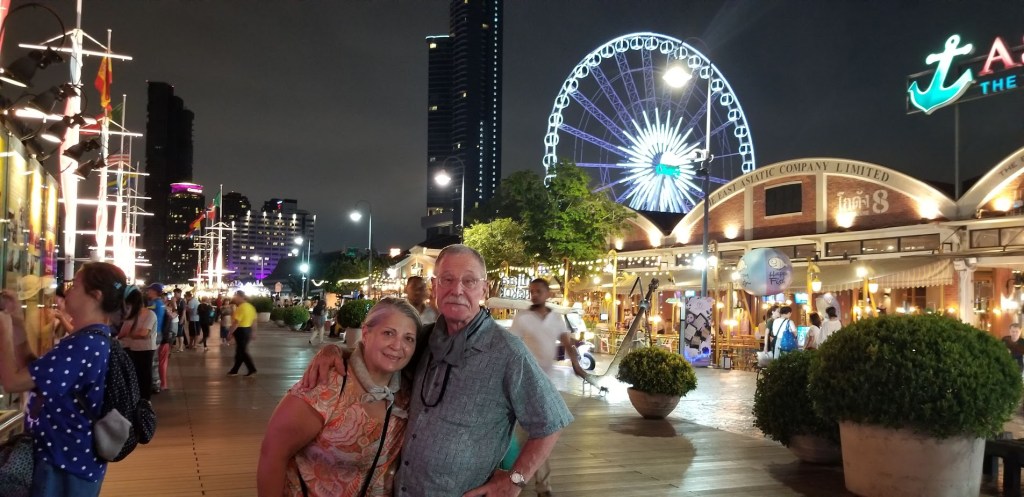
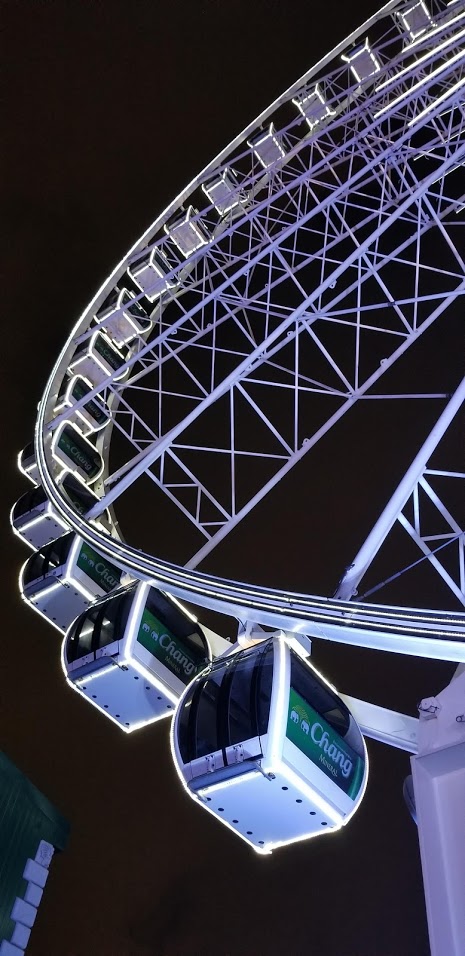
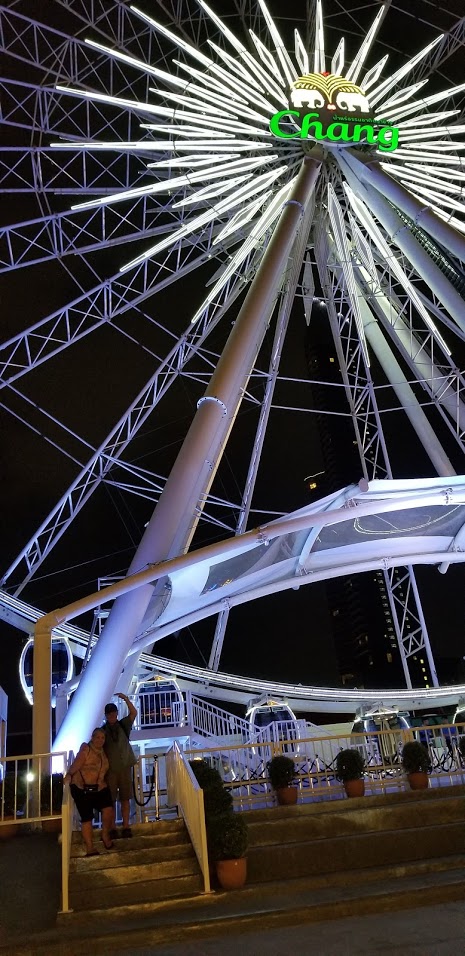
Bangkok Night Life
CAMBODIA
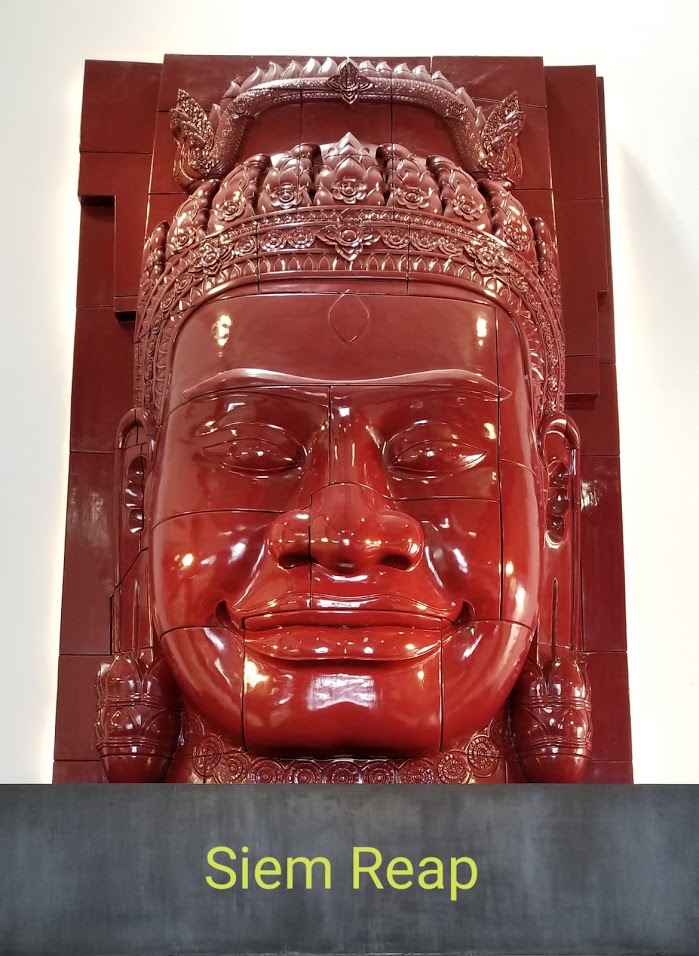
Siem Reap
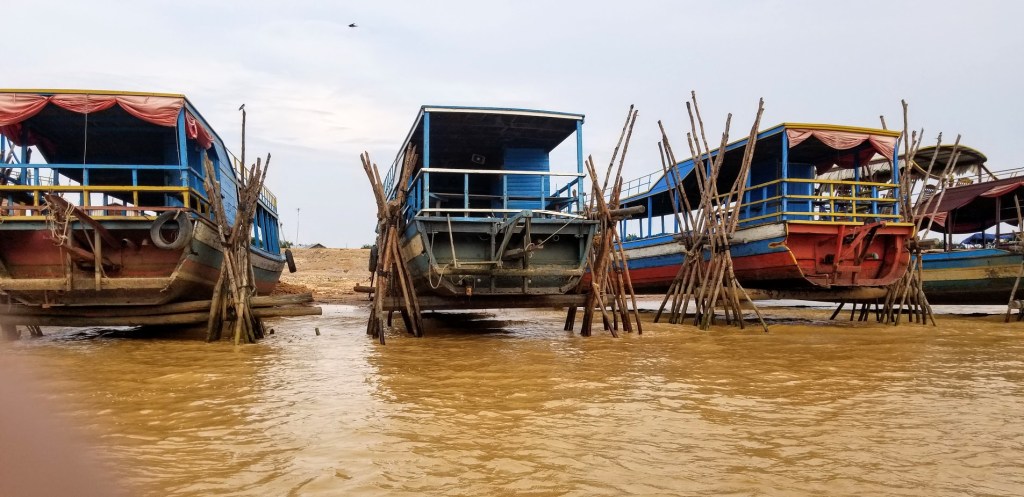
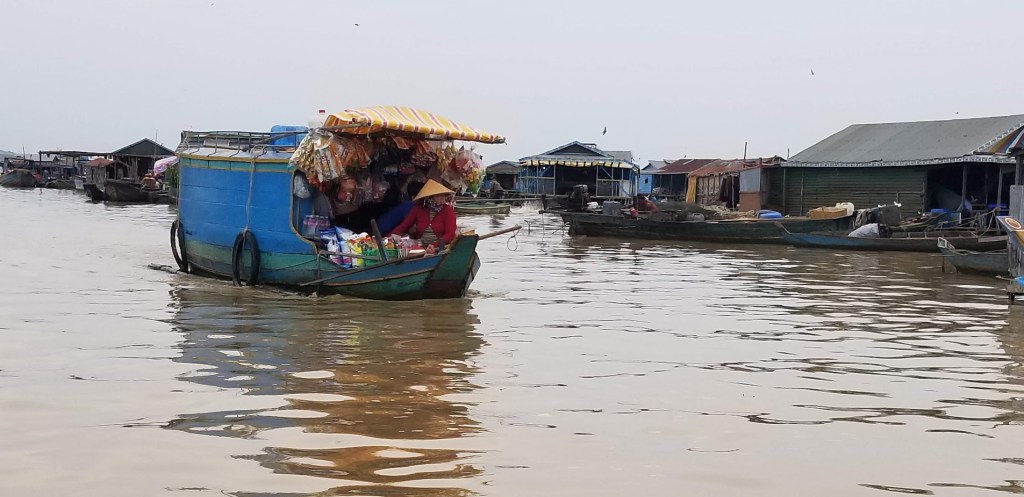
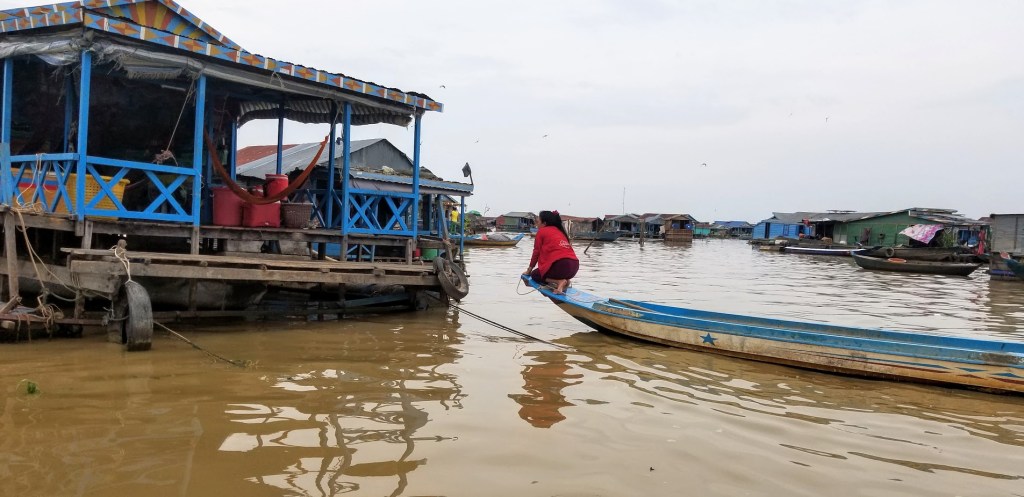
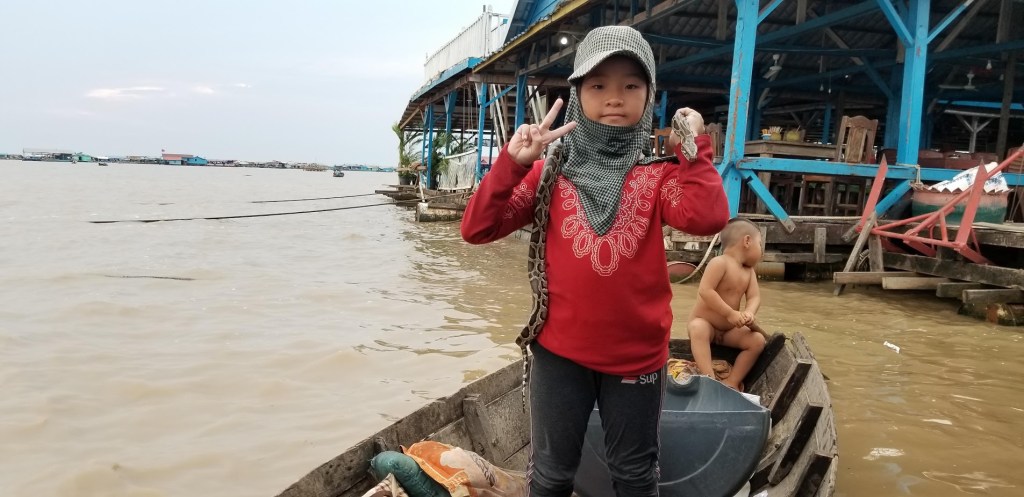
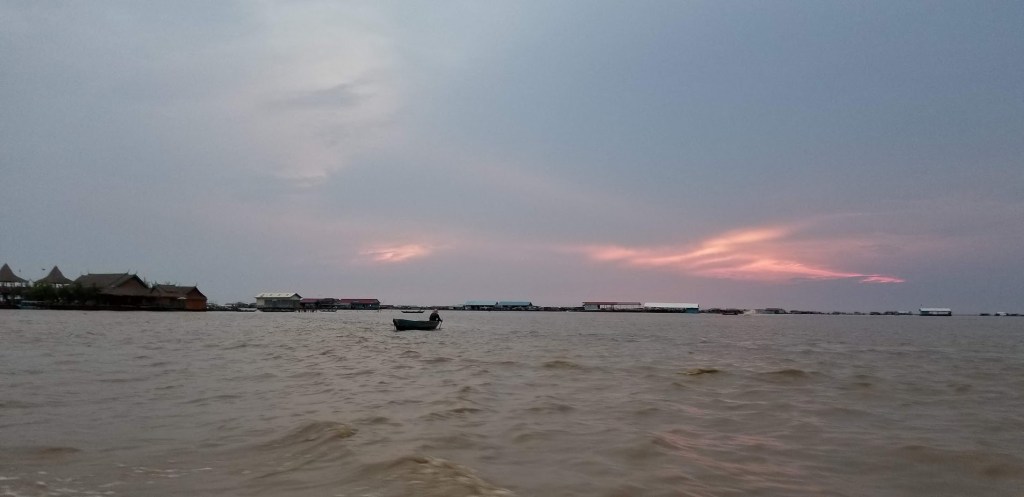
Once Don and Tanya arrived in Siem Reap, the five of us hired a guide to take us to Tonle Sap Lake where we visited a floating village. There are more than 170 floating villages on Tonle Sap with the majority of the 80,000 inhabitants considered non-immigrant foreigners. Made up of three ethnic groups of Vietnamese, Khmer and Cham, they are a people without a country. Vietnamese who endured the brutality of the Khmer Rouge regime in Cambodia faced execution or deportation to Vietnam. Those who stayed were stripped of all identity, property and papers and could not reclaim or buy land so their solution then and for generations today, is to live in wooden homes floating on bamboo rafts and barrels. Our guide, Kim, was about 5 or 6 years old during the Khmer Rouge rule. As the sun was setting on the lake, and the boat engine turned off, he shared some heart felt memories from this devastating genocide.
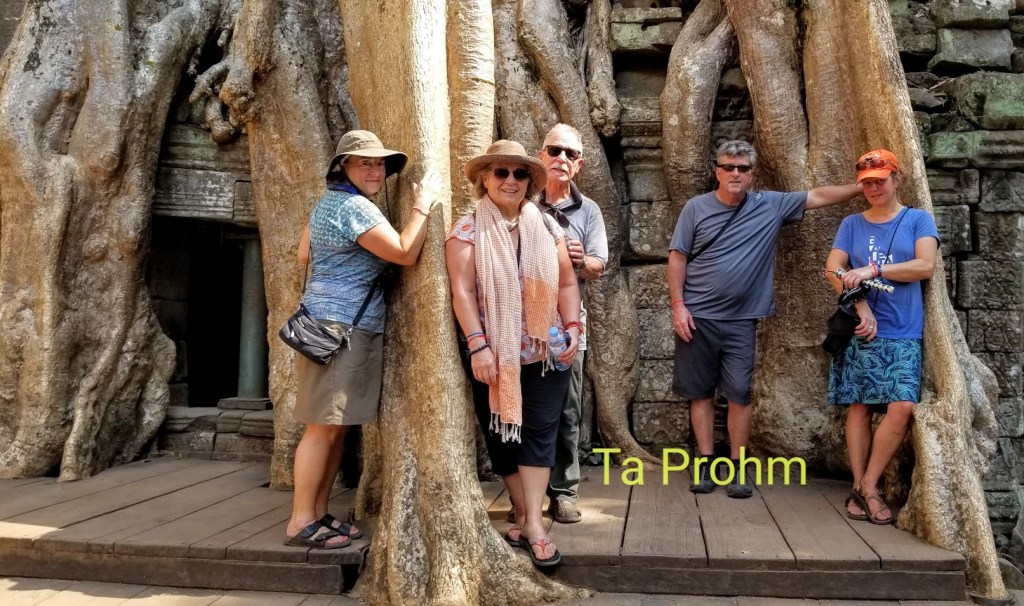
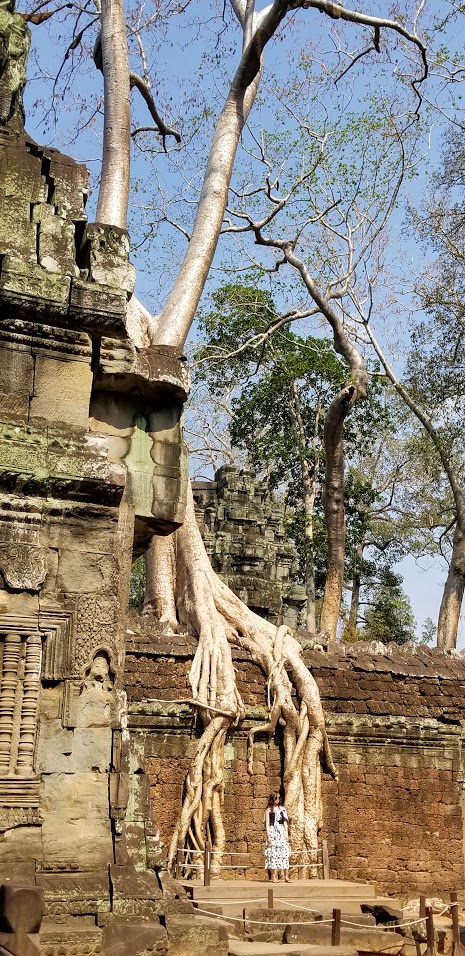
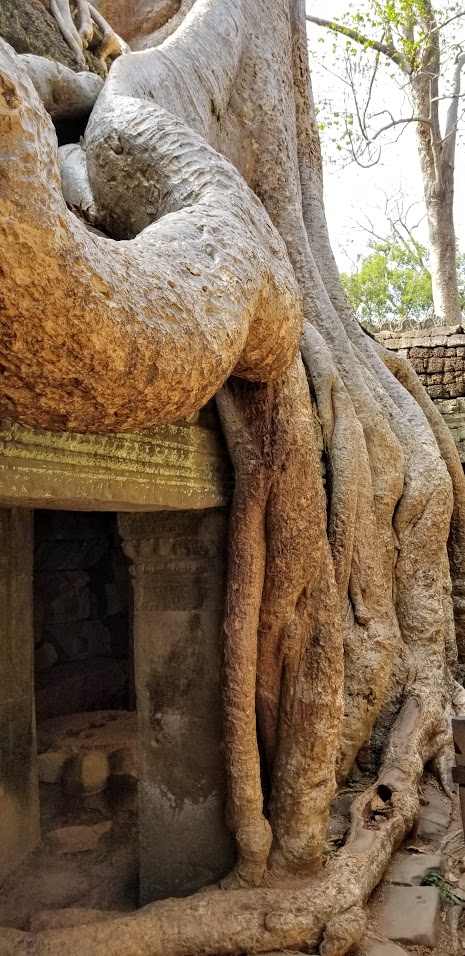
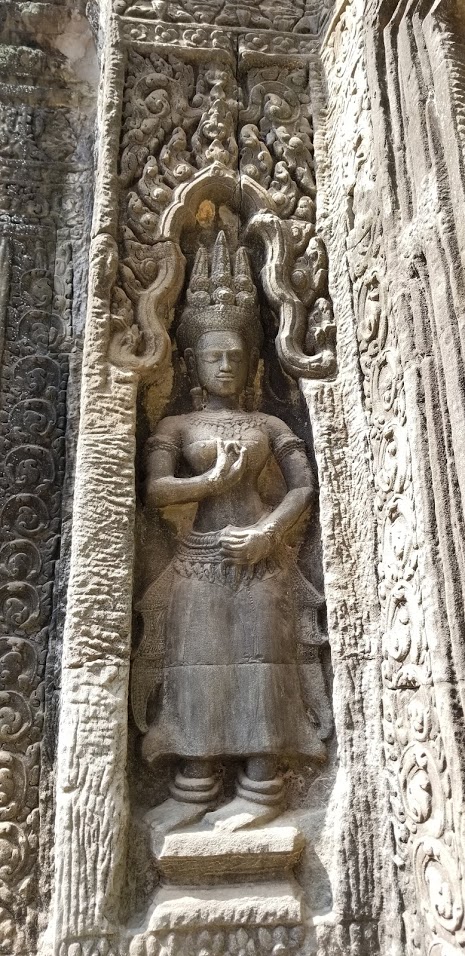
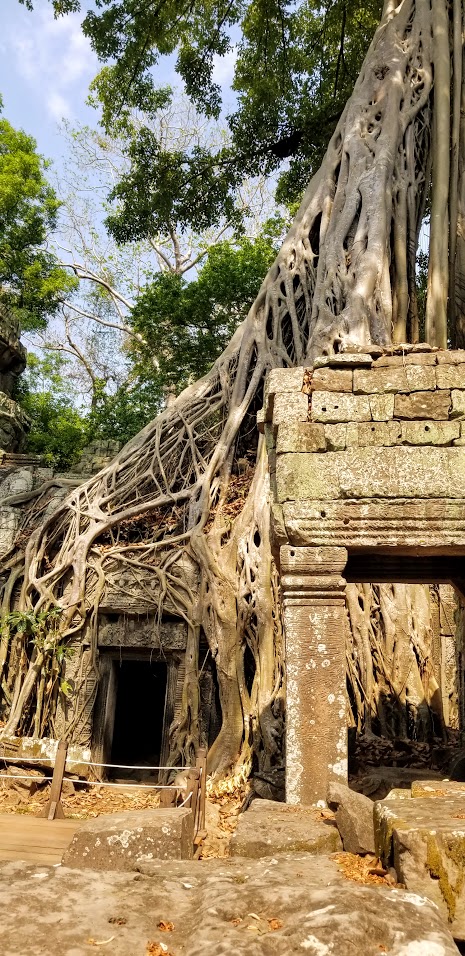
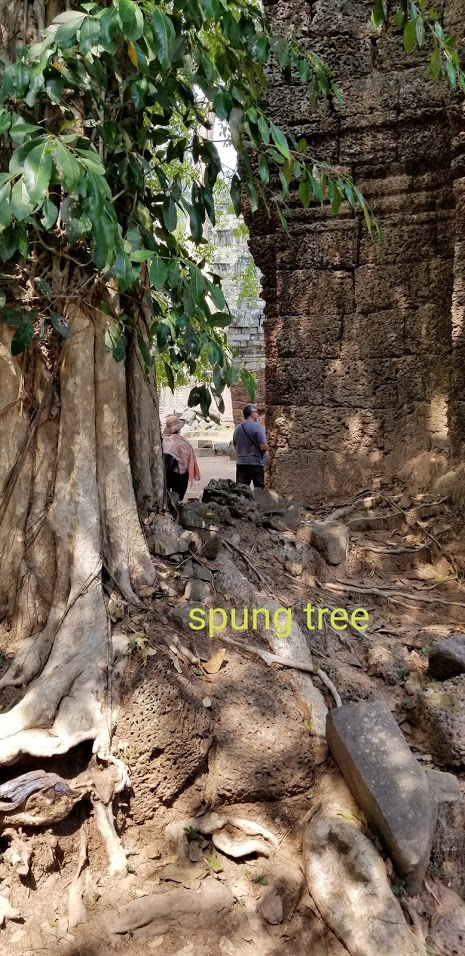
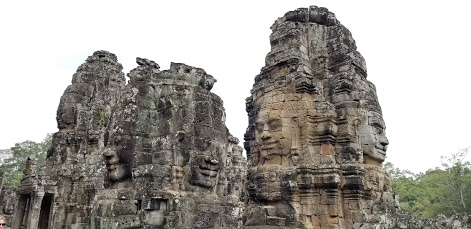
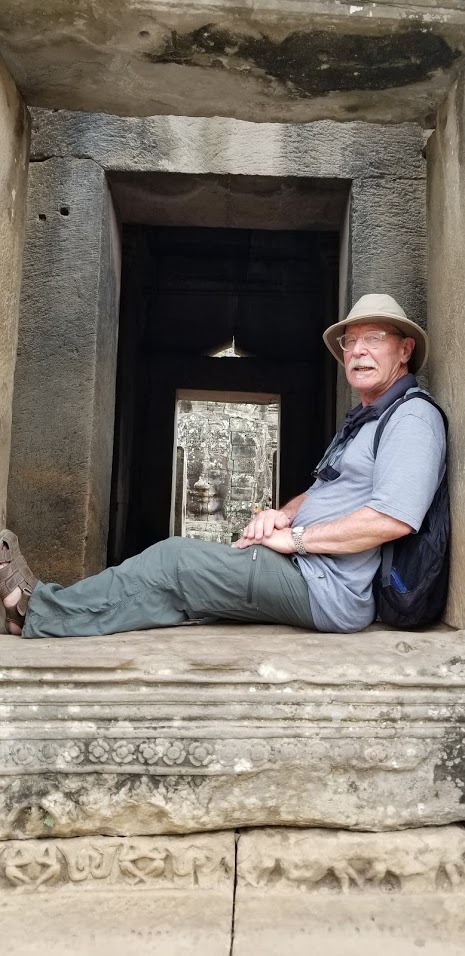
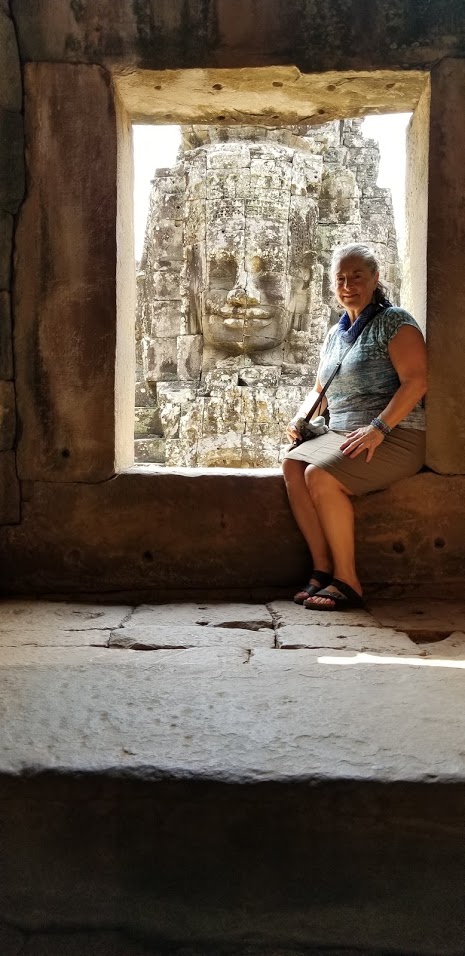
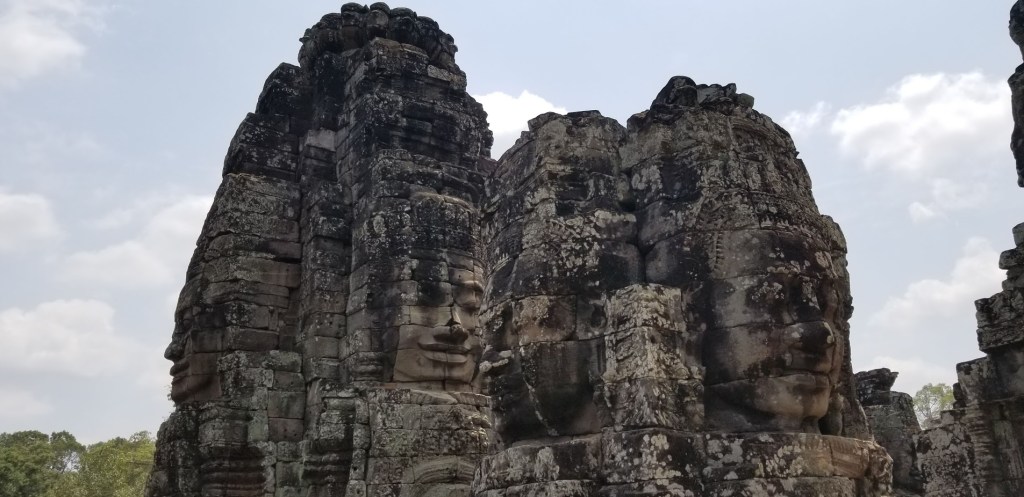
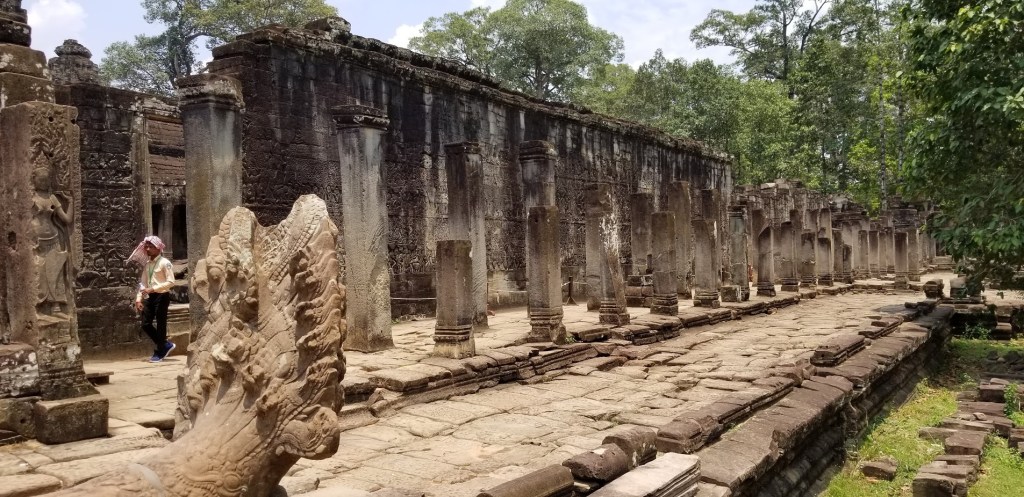
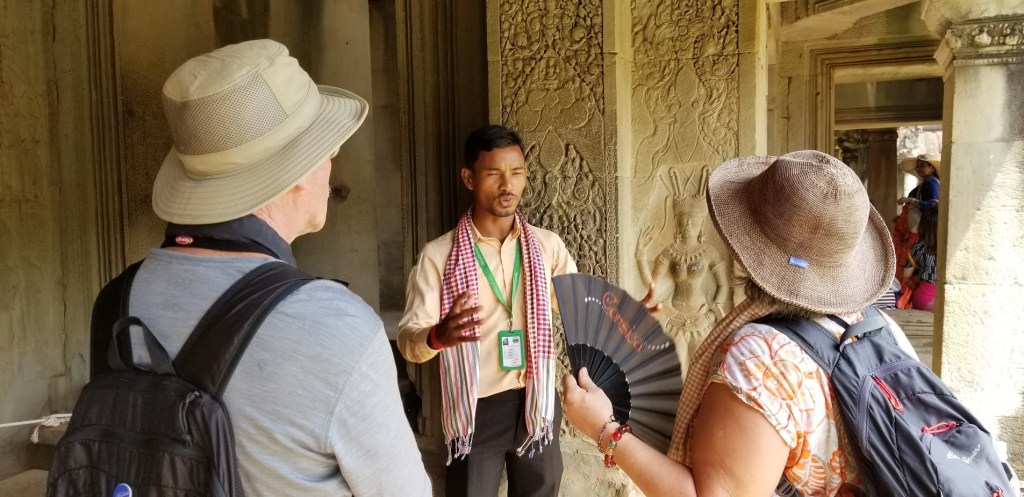
Angkor Wat, Bayon, Ta Prohm
How did they build it?
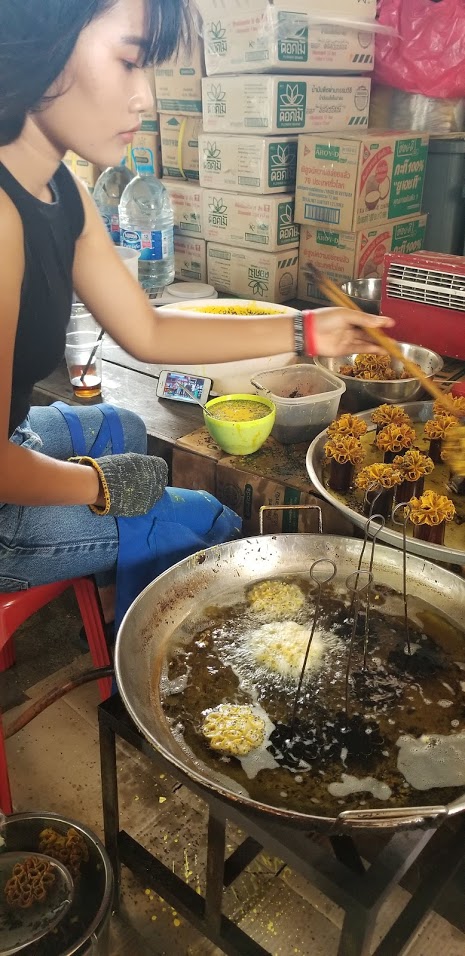
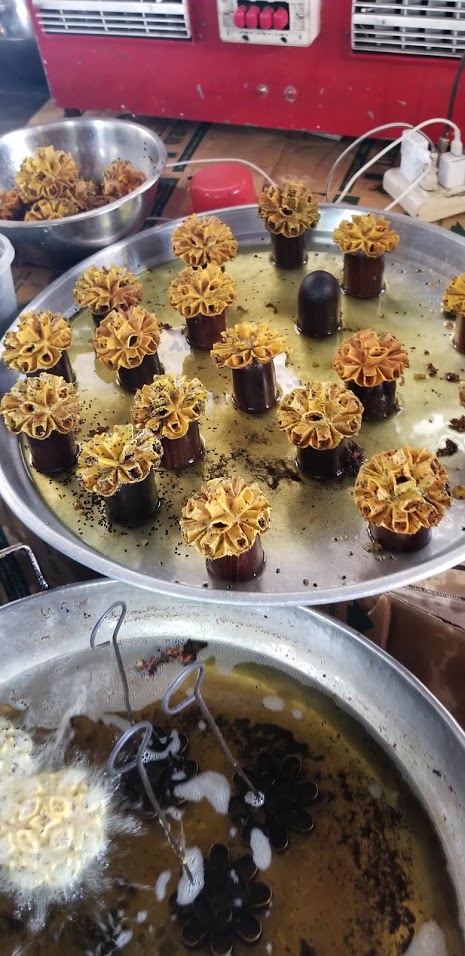
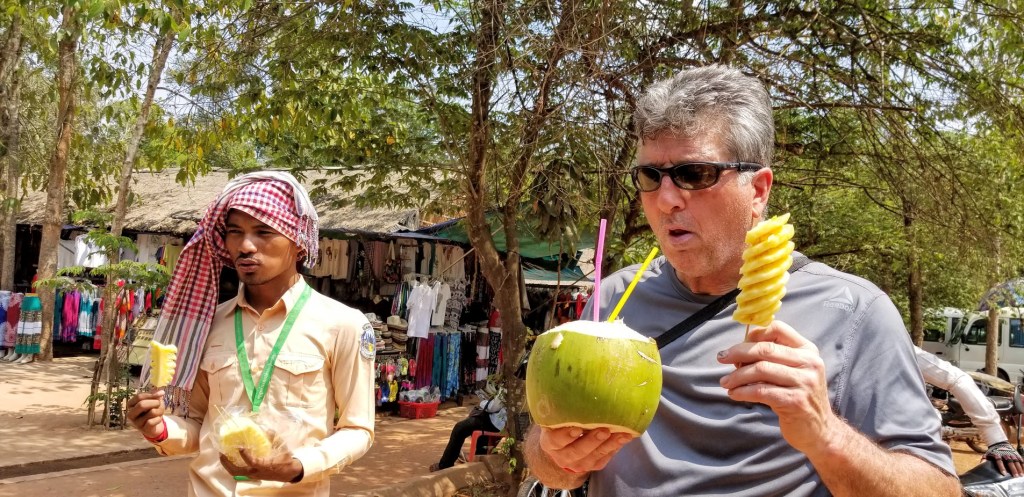
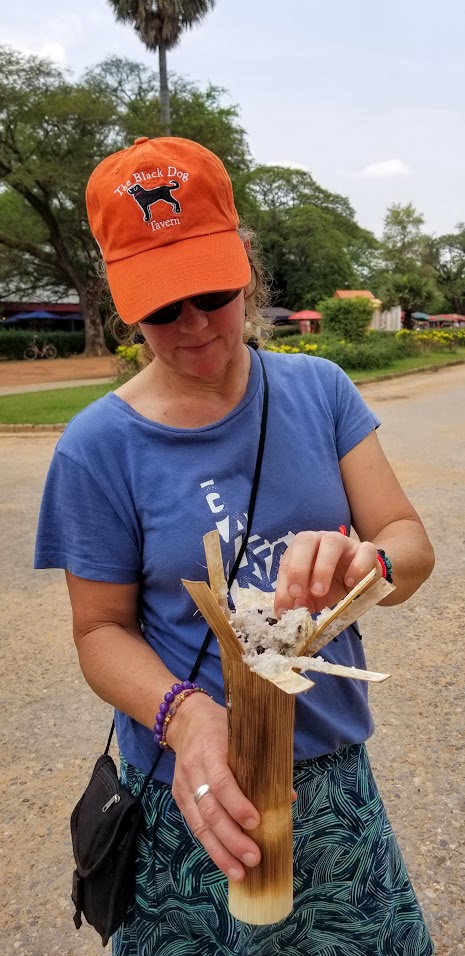
Coconut Sticky Rice and Beans Grilled inside Bamboo Tube
Heart Echo Chamber
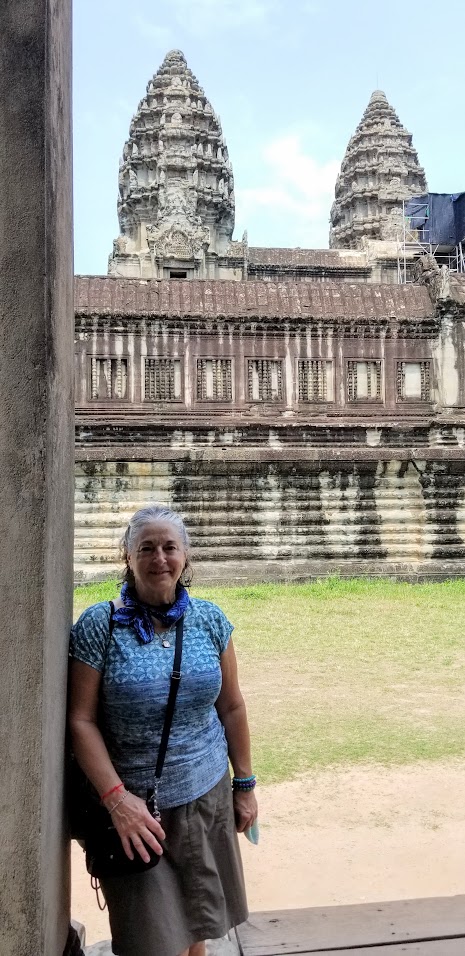
Angkor Wat
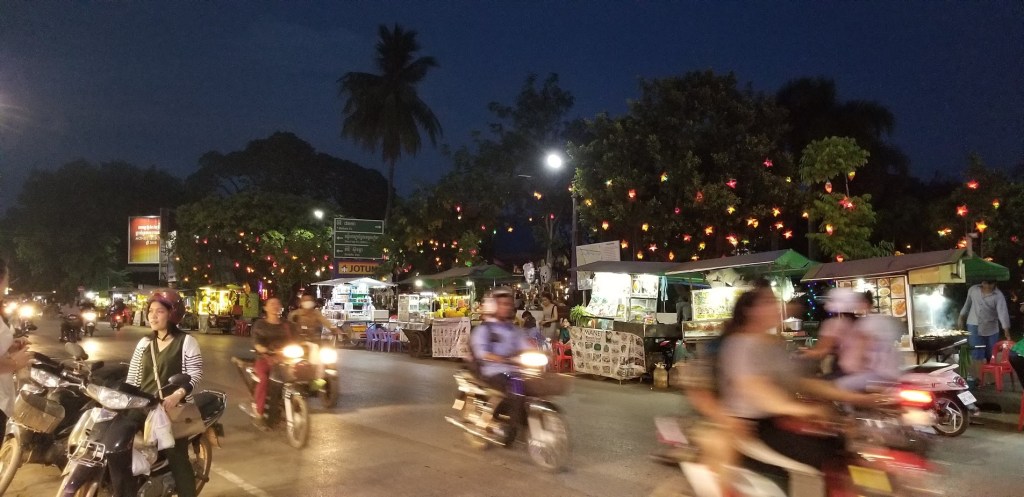
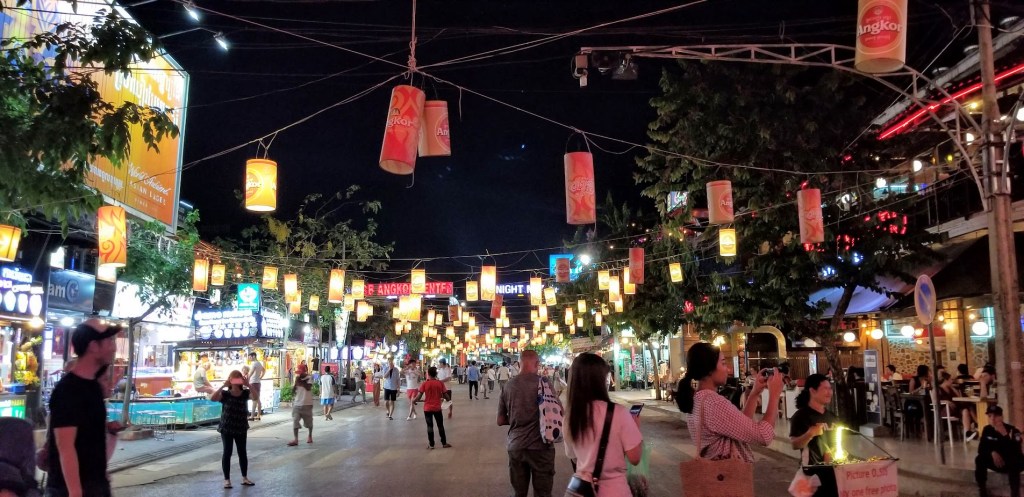
Siem Reap Night Life
Phnom Pen
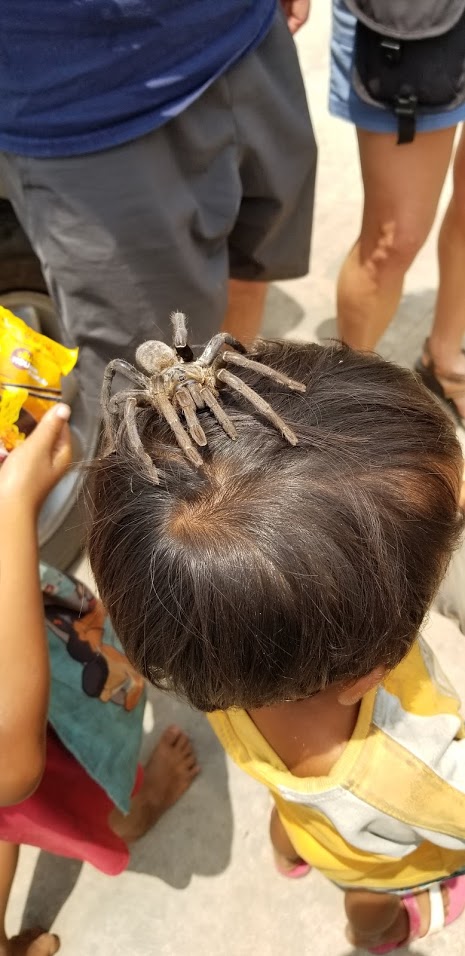
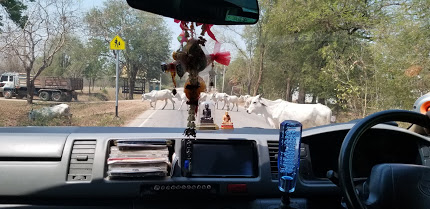
We hired a mini-van to drive us from Siem Reap to Phnom Penh, the capital city of Cambodia. The 6 hour drive was just about the scariest thing I’ve ever done . . . it gives a whole new meaning to the song “Jesus take the wheel”. The two-way highway was crowded with slow moving semi-trucks on the road and motor bikes kicking up clay dust on the sides. Our driver was very talented at weaving in and out of the lane to on-coming traffic and passing one, two or three semi-trucks at a time! We took a “potty” break at the spider stop – yikes. Fortunately, we made it to Phnom Penh safely and enjoyed some of the sights during our one night stay.
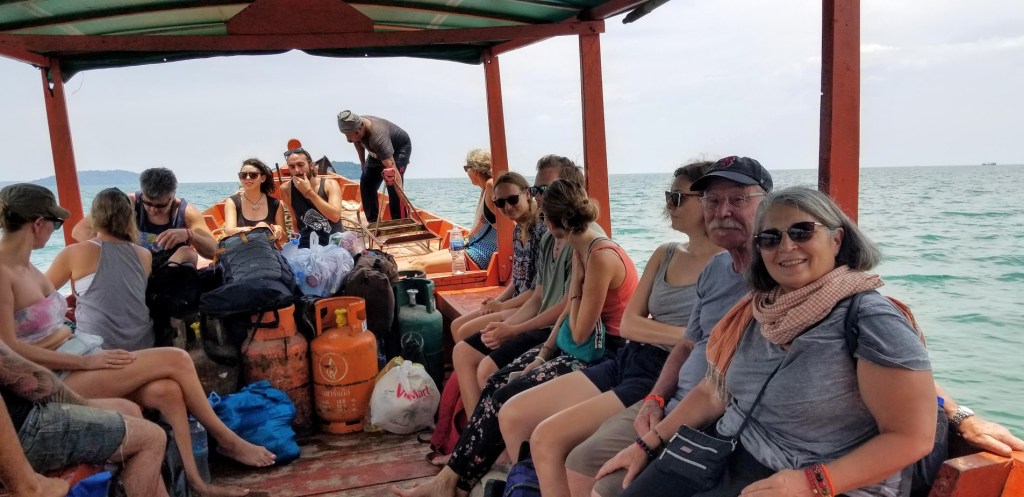
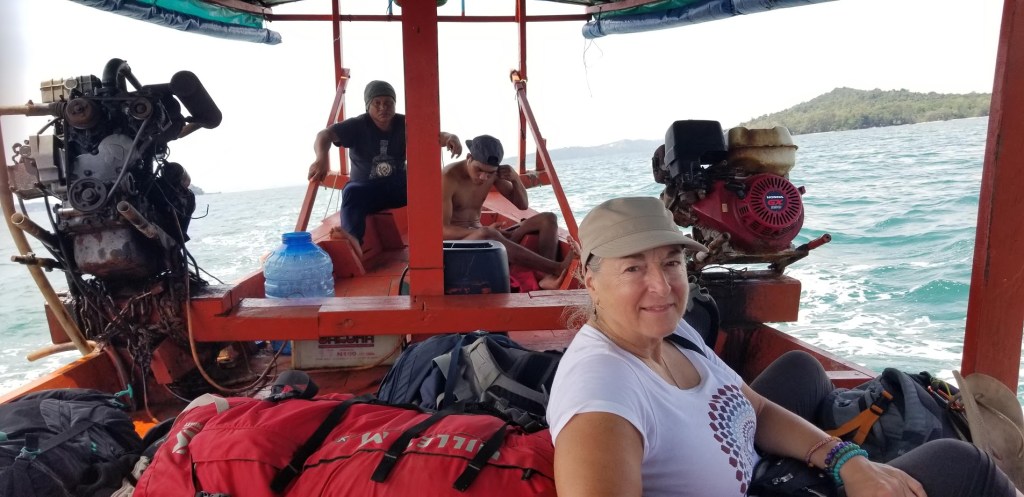
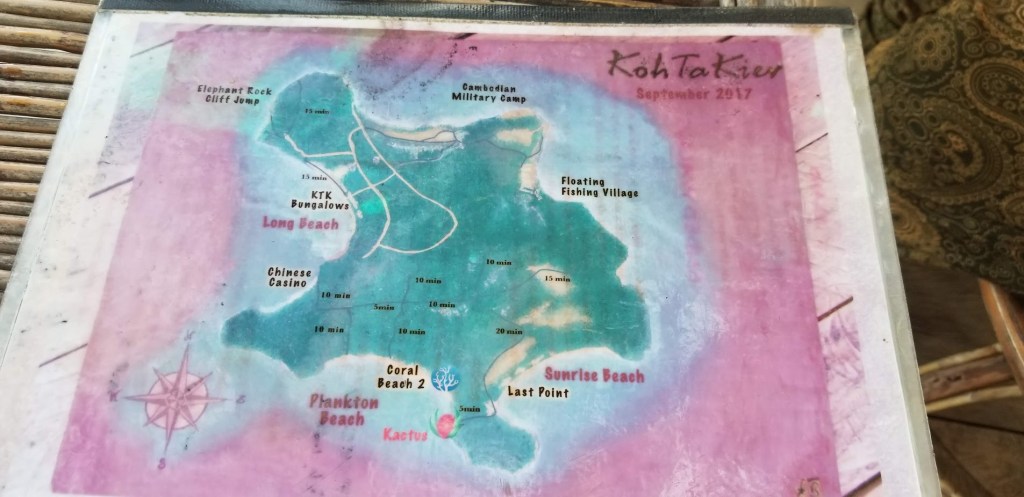
Off Grid – Koh Ta Kiev
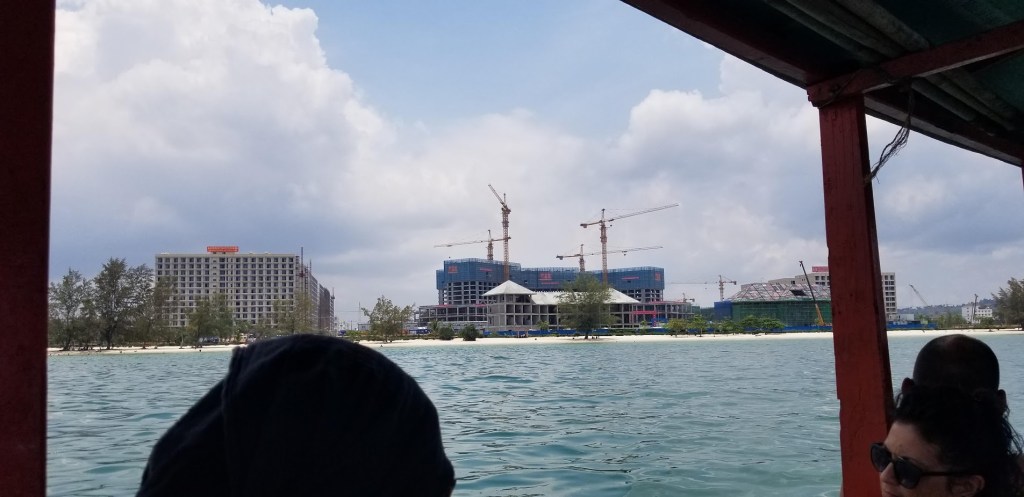
Chinese Construction in Sihanoukville
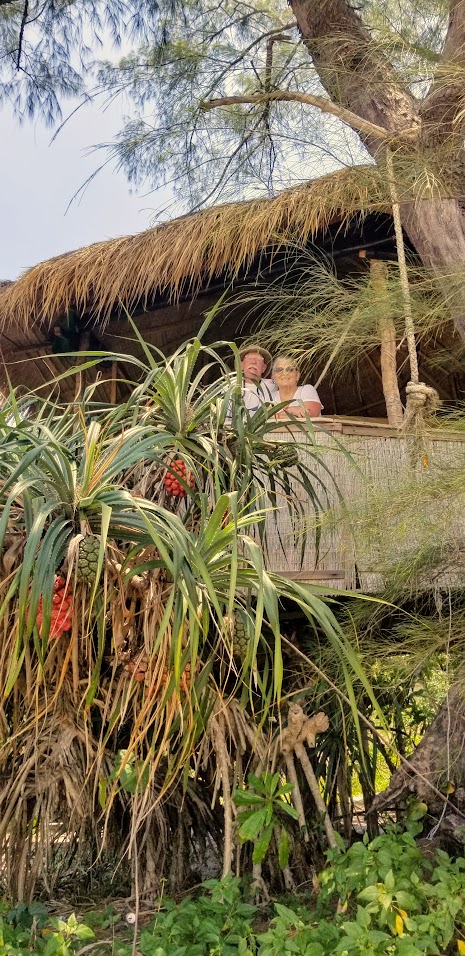
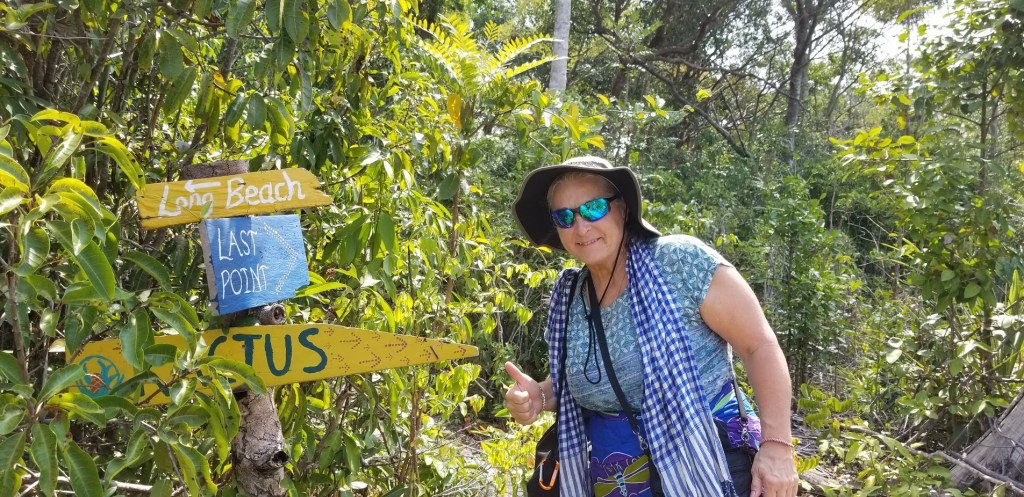
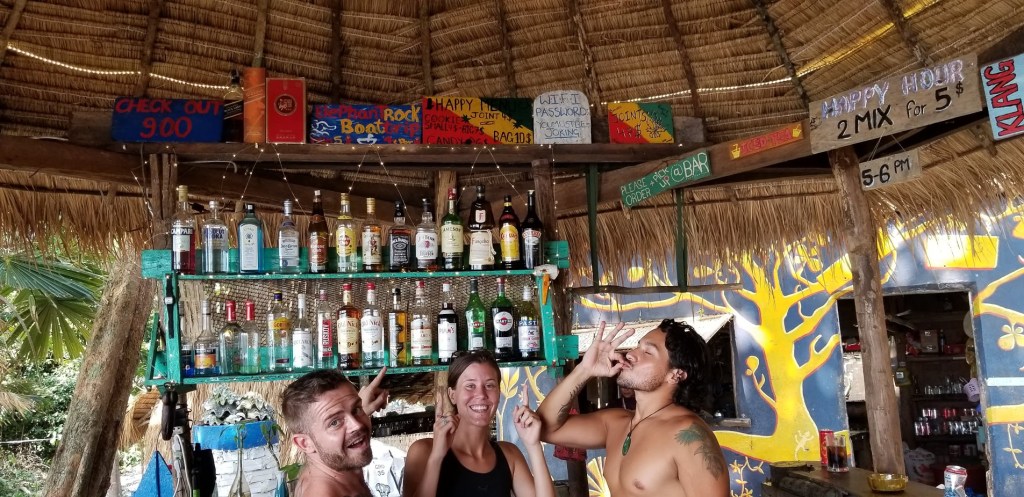
Kactus resort
Happy Songkran!
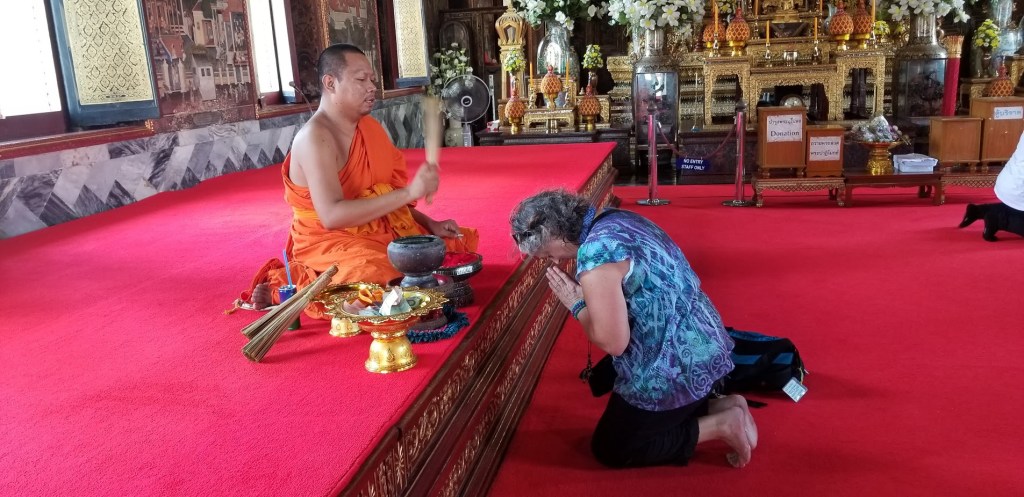
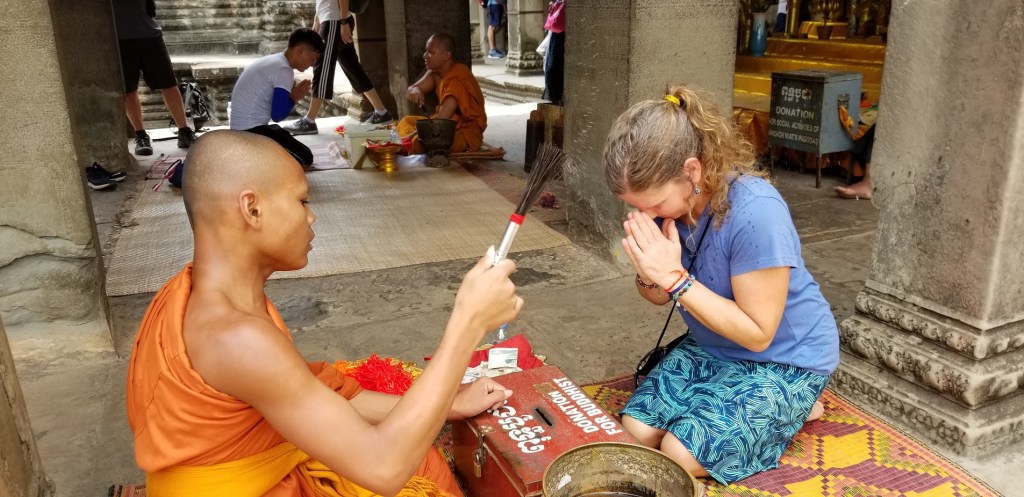
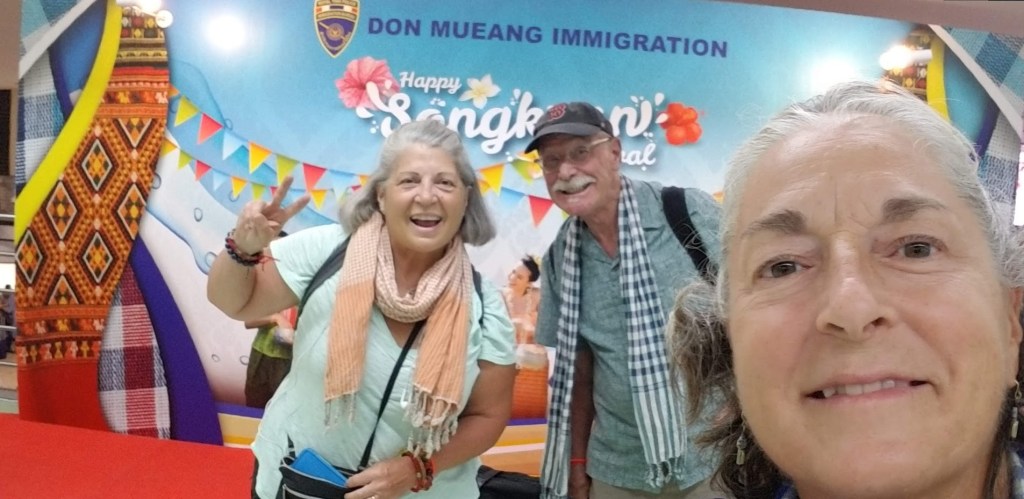
We returned to Bangkok before flying home during “Songkran” which is a major holiday in Southwest Asia. It is rich with symbolic traditions which pays special reverence to ancestors during this holiday. Thai people make their way to their hometowns to spend time with older relatives. Buddhists also visit temples throughout Songkran where water is poured on buddha images and on the hands of Buddhist monks as a mark of respect. Walking the streets of Bangkok we encountered some of the water gun action which was well received given the 100+ weather.
Home sweet home!
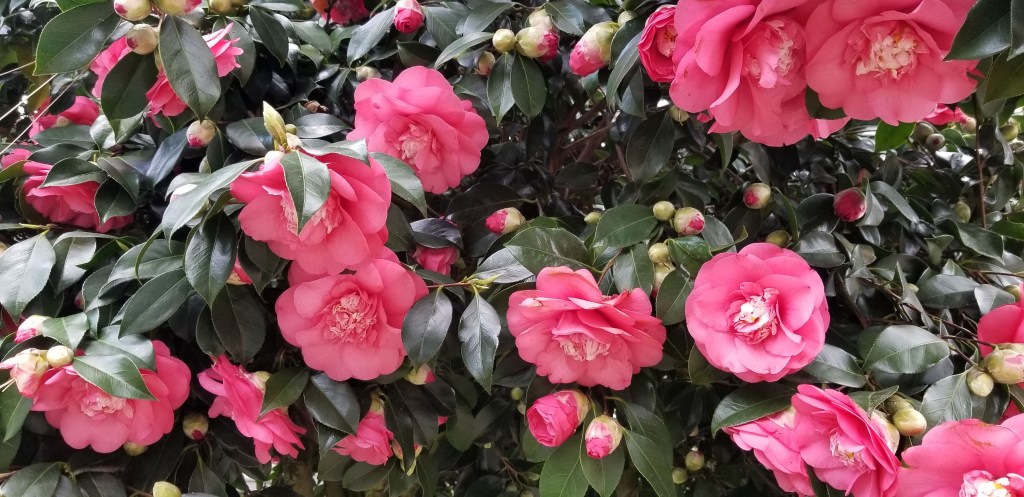
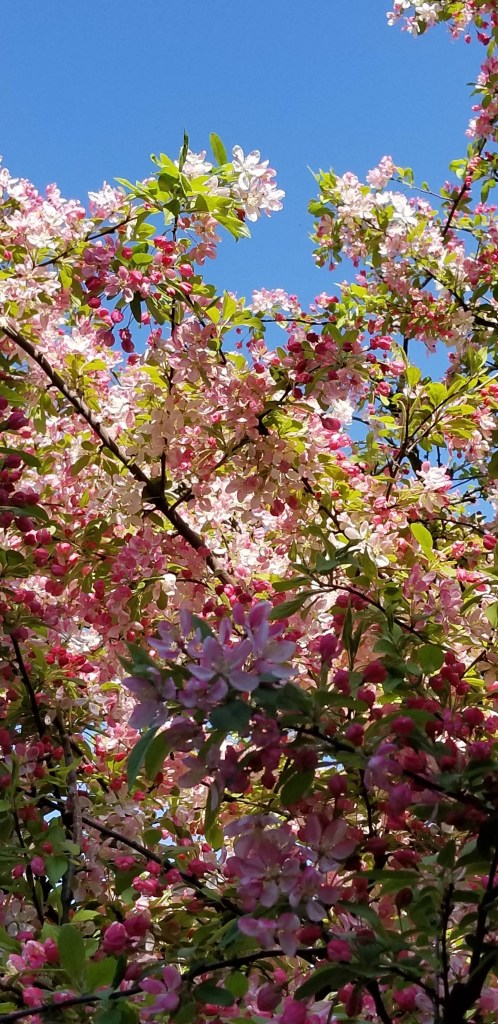
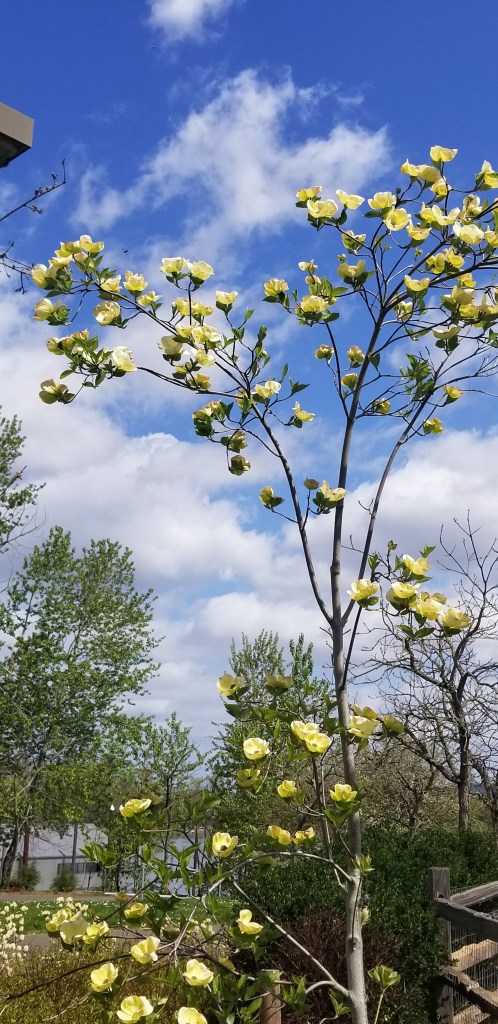
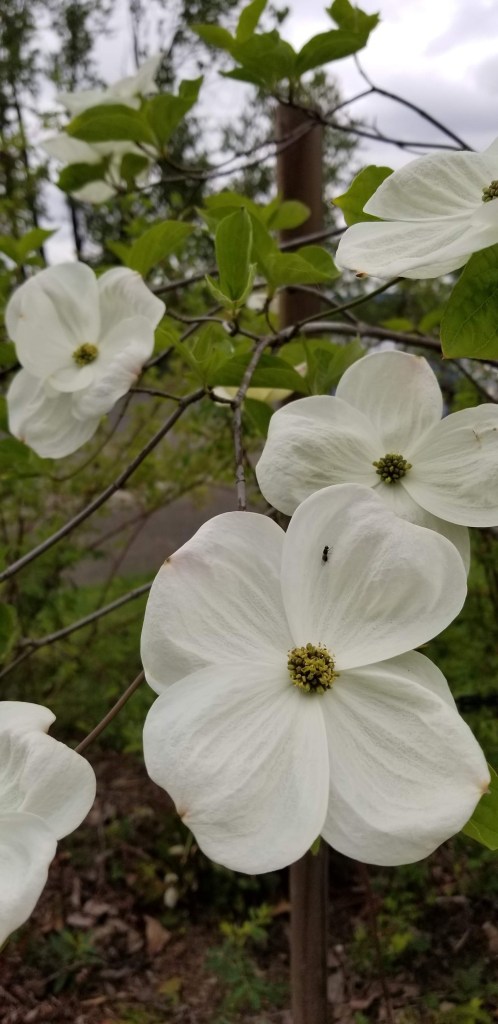
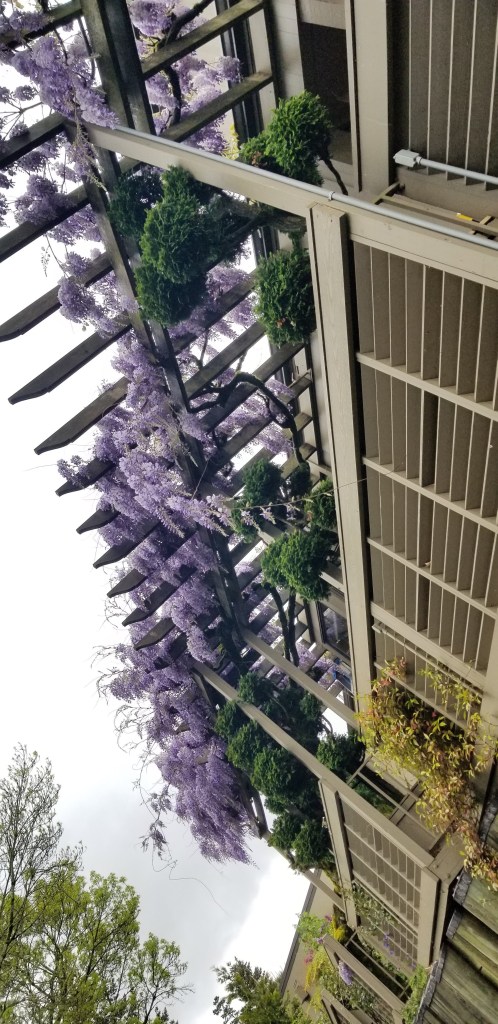
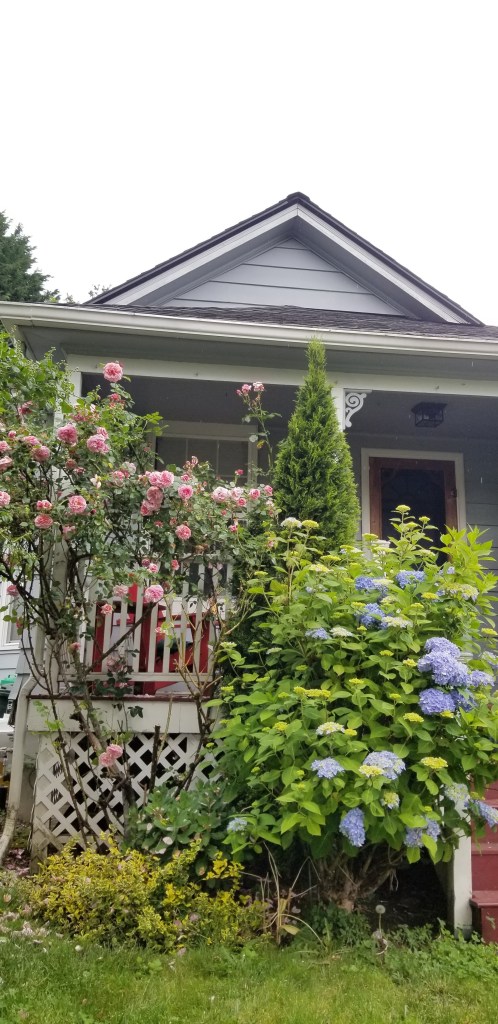
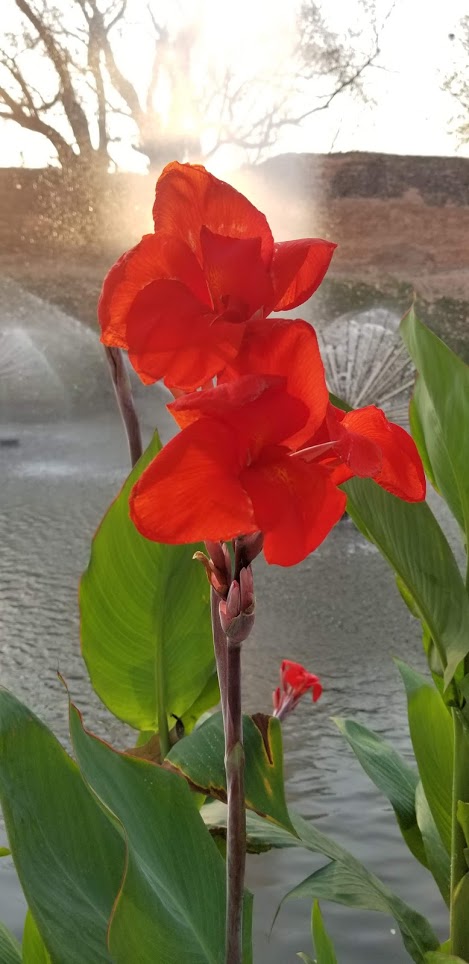
I was greeted at home by spring flowers and blue sky. It’s great to be home!
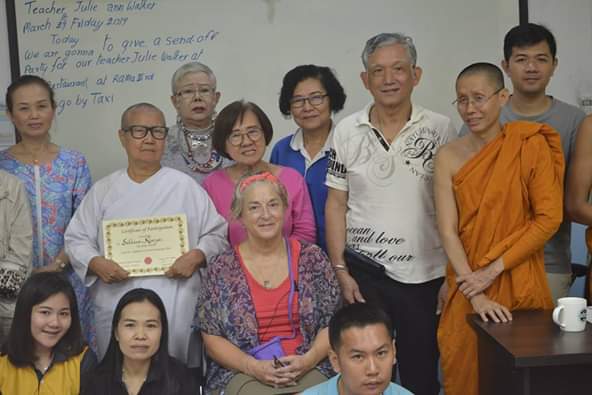
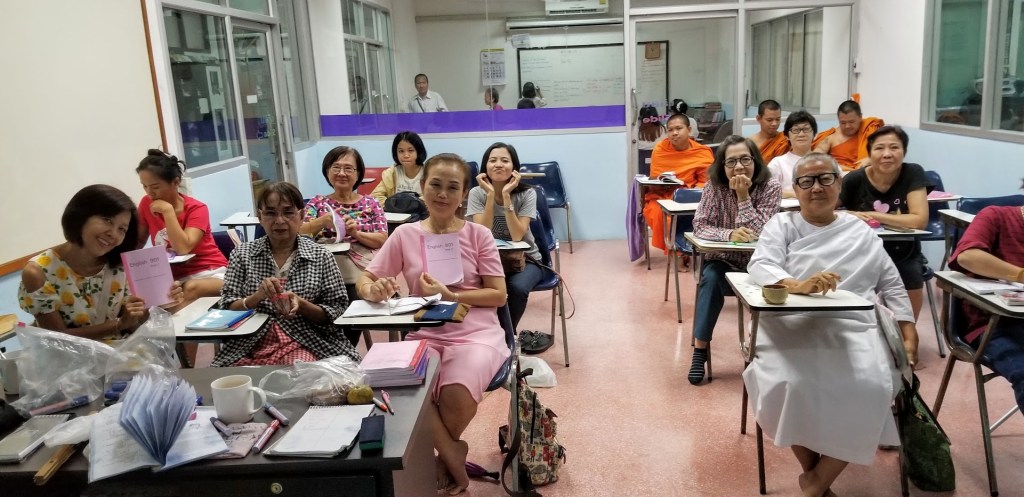
It’s hard to believe that 3 months went by so quickly and I have finished teaching English to students at Wat Vorajanyawat in Bangkok Thailand. I leave the experience enriched from the kindness of all the students, monks and nuns and from their profound Buddhist spiritual lifestyle. Thank you to the Maryknoll Missioners volunteer’s for the heartfelt fellowship and especially to Bro. John and Bro. Tim for your hospitality, patience and kindness during my stay in Thailand.
It’s so hard to believe that this is my last week to teach English in Thailand! I have learned as much from my students as hopefully I have taught them. In general, the Thai people are the most generous and kind hearted people I have met as a culture. Just this morning on my songtaew ride to the temple, an elderly lady was getting on the truck and others were quick to extend their hand to help her on-board. The younger generation is very respectful to elders and will readily give up their seat on a crowded songtaew or bus or other modes of transportation. My gray hair has even given me a seat at times . . . I’ll take it! I am already thinking about missing this place 😦
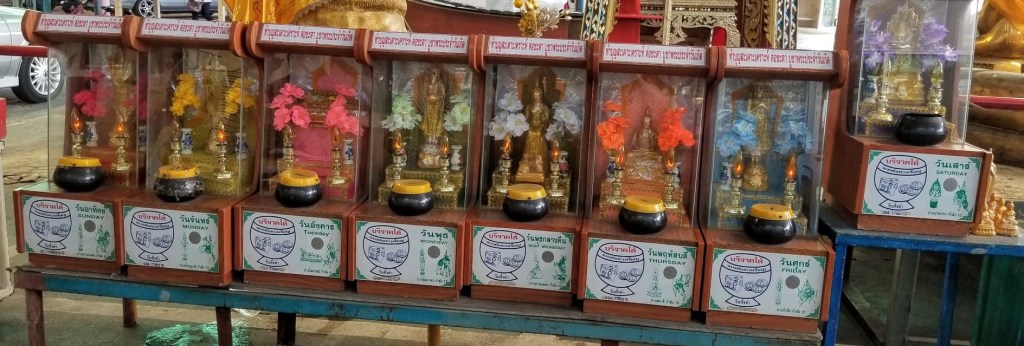
What Buddha Day were you born?
After class one day, I was talking to a couple students about the meaning of the Buddha for each day of the week that we see when we enter the Wat where I teach. One of the students said that she studied the meanings and gave me the following characteristics for the person born on each specific day of the week. I think I interpreted her descriptions okay below. I googled what day of the week my birthday/year fell and discovered I was born on a Saturday.
Monday: Charming
Tuesday: Confident
Wednesday: (daytime): Introvert
Wednesday: (night time): Secrets inside/keep to themselves
Thursday: Knowledgeable/teacher/loyal
Friday: Lover/Very friendly
Saturday: Passionate/strong willed/Integrity
Sunday: Very generous/very confident in themselves/honorable
Phetchaburi
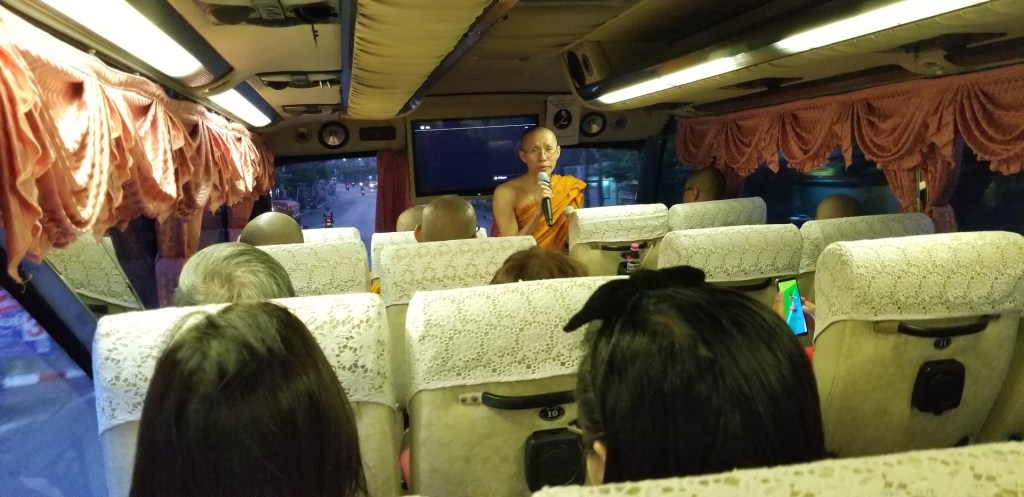
As part of the English teaching program, Maryknoll hosted the students and teachers on a field trip to the Phetchaburi region located about 84 miles from Bangkok. With Phra Suraphet at the helm of the bus, we learned about and toured Caves, Temples, King’s palaces and ended the day on The Gulf of Thailand.
1st stop: Wihara Phranon Temple
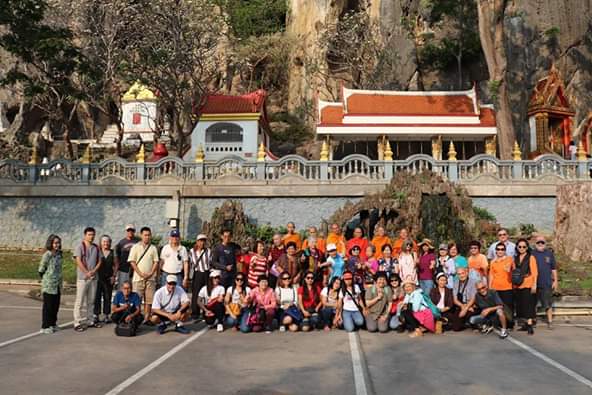
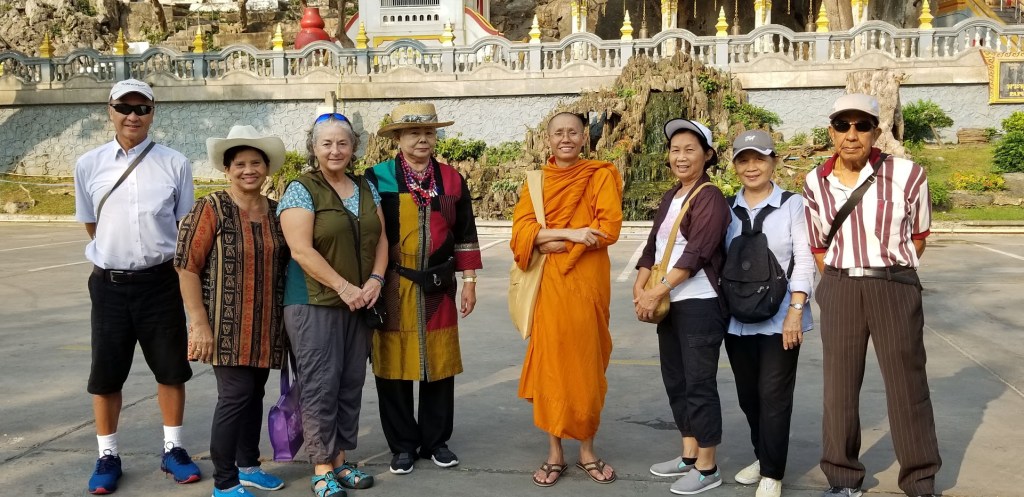
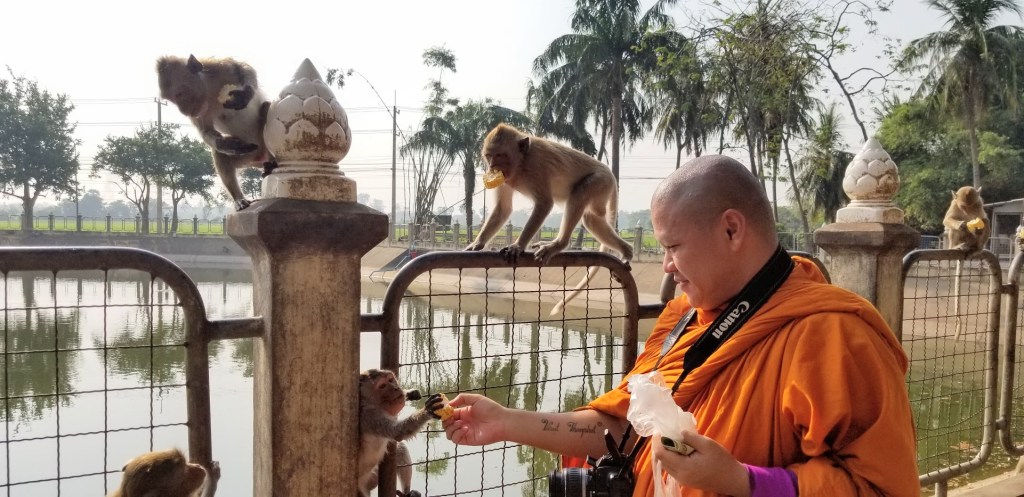
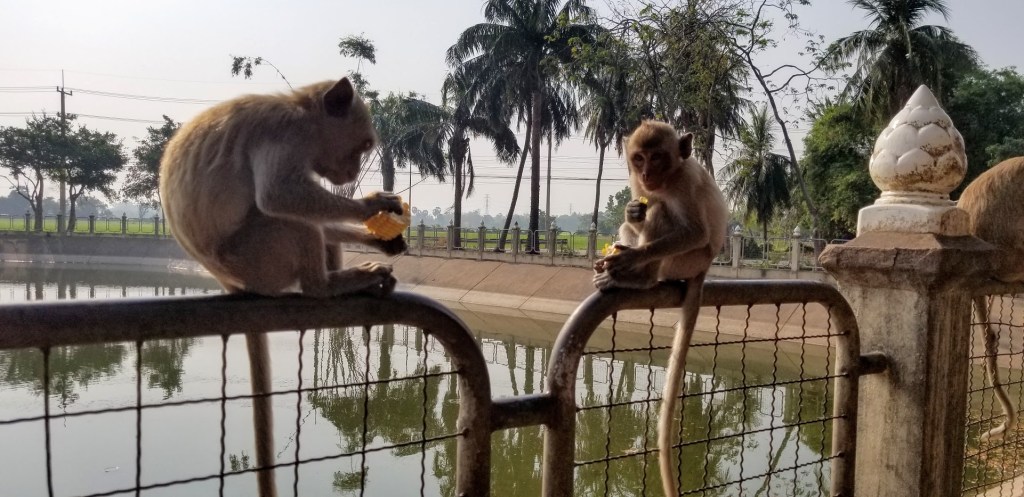
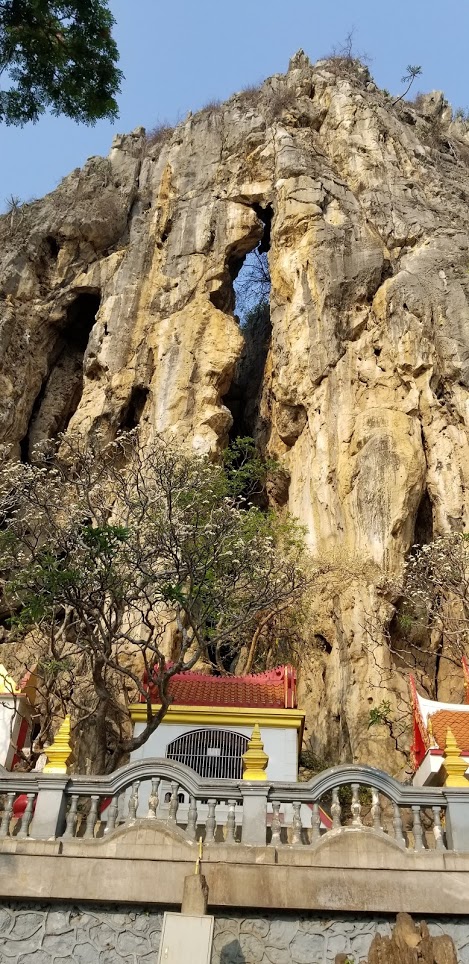
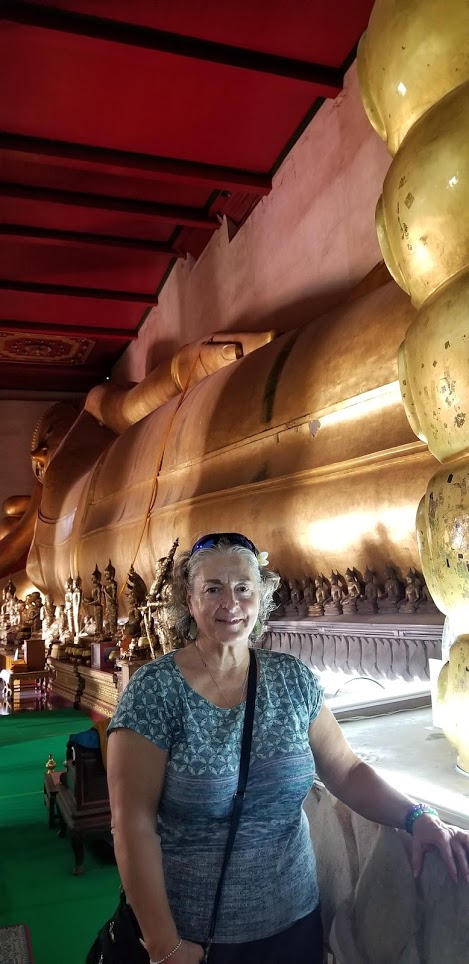
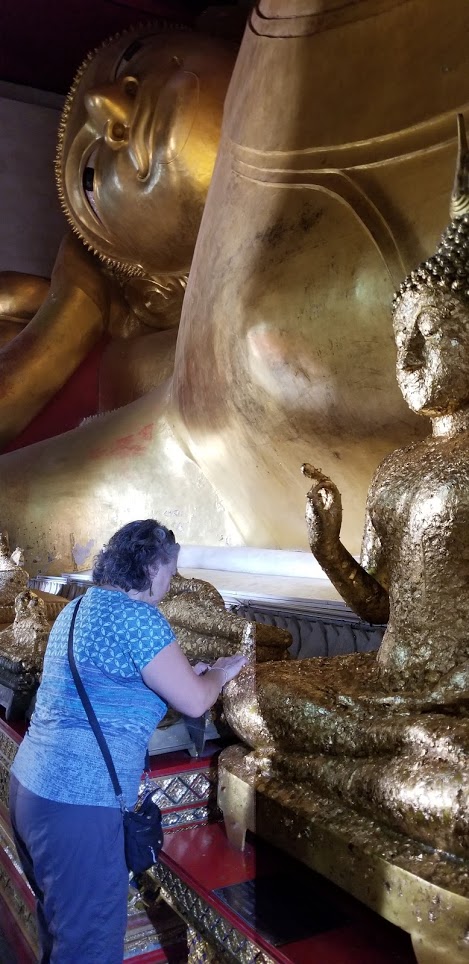
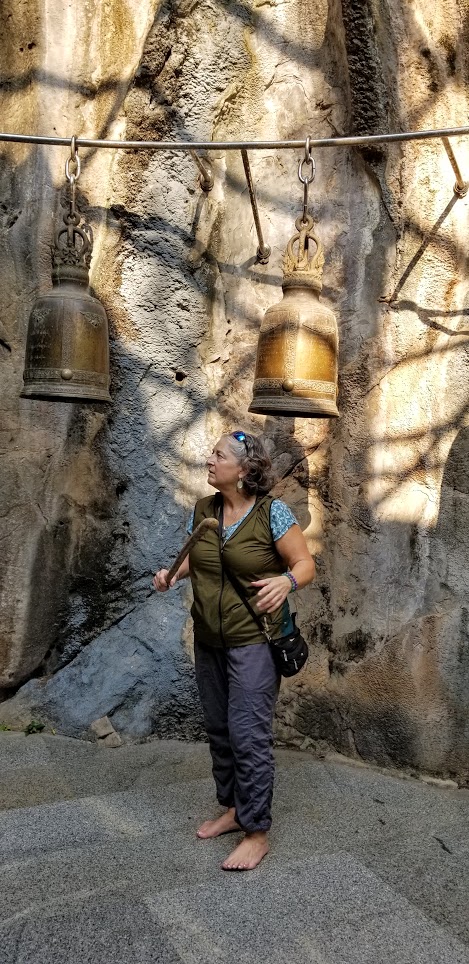
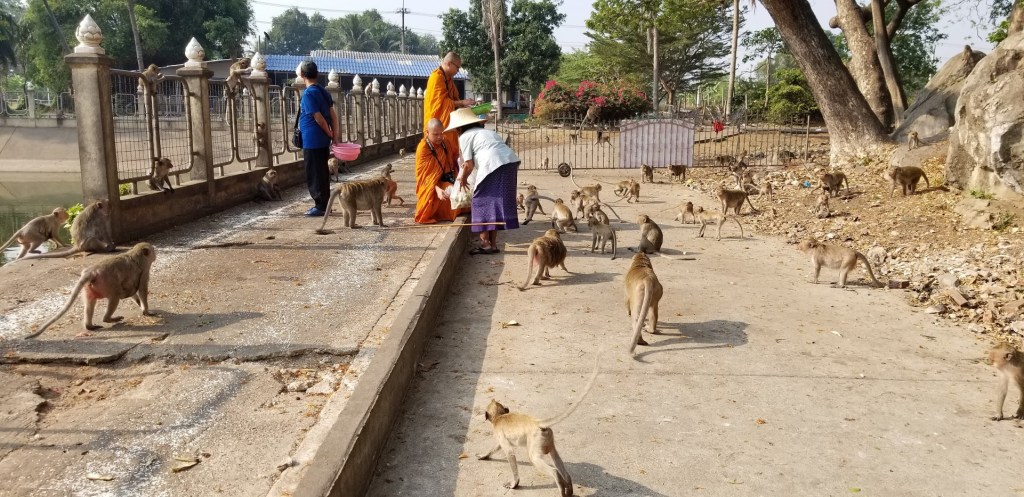
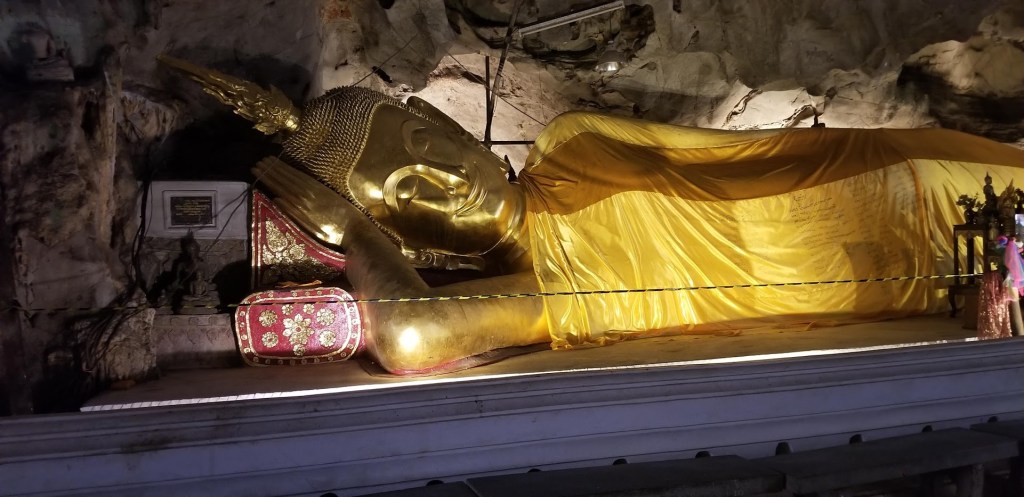
As we approached the temple there were monkey’s everywhere! We took an all group picture then climbed to the temple that was built in to the rock wall and had a very large reclining Buddha inside.
2nd stop: Phra Nakhonkhiri Historical Park
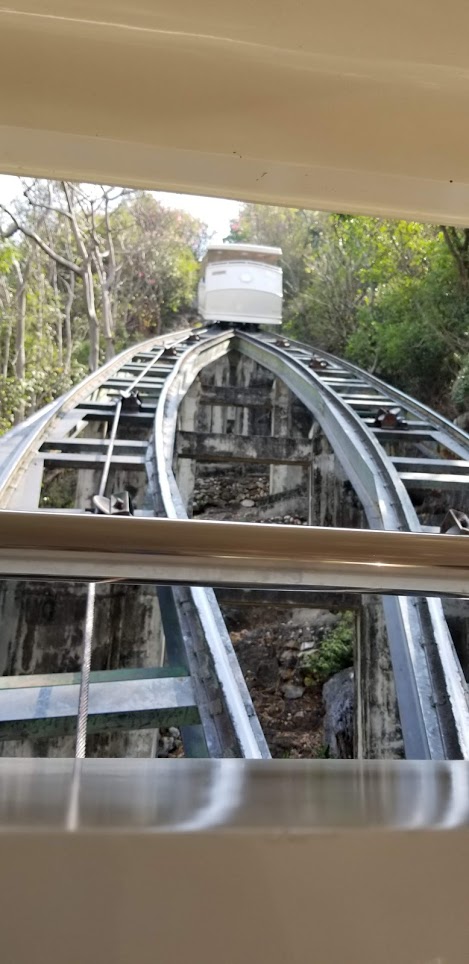
We took a cable car up the hillside and toured the beautiful grounds and summer palace of King Rama IV who lived there 1851 – 1868. You may remember this King who was portrayed in several books and the film The King & I. We were warned not to take food with us since the hillside is populated by potentially aggressive monkeys.
Bamboo Tubes
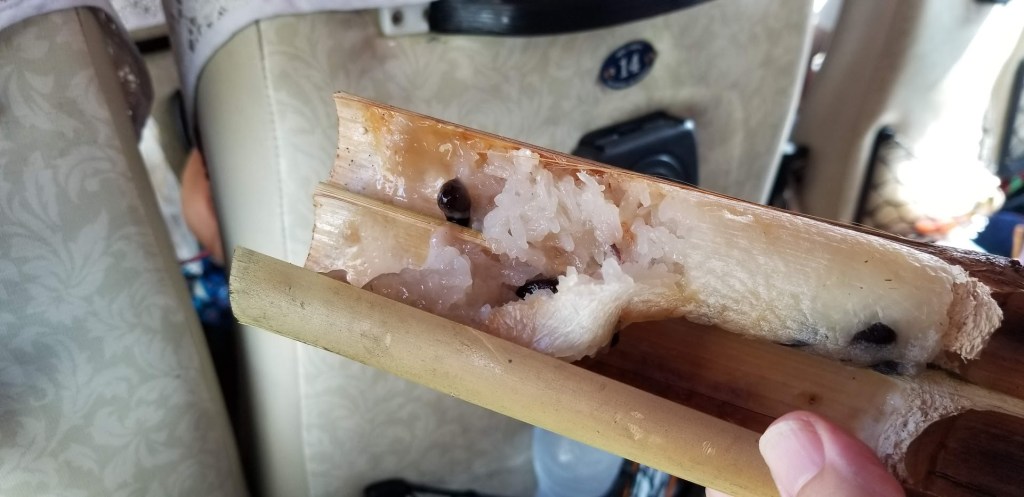
Back on the bus, I was given a warm Bamboo Tube that was delicious! Stuffed inside the bamboo is sticky rice mixed with sugar, sweet red beans and coconut cream, then slow roasted over coals to slowly cook and mix the ingredients together. Yummo!
3rd stop: Khao Luang Cave
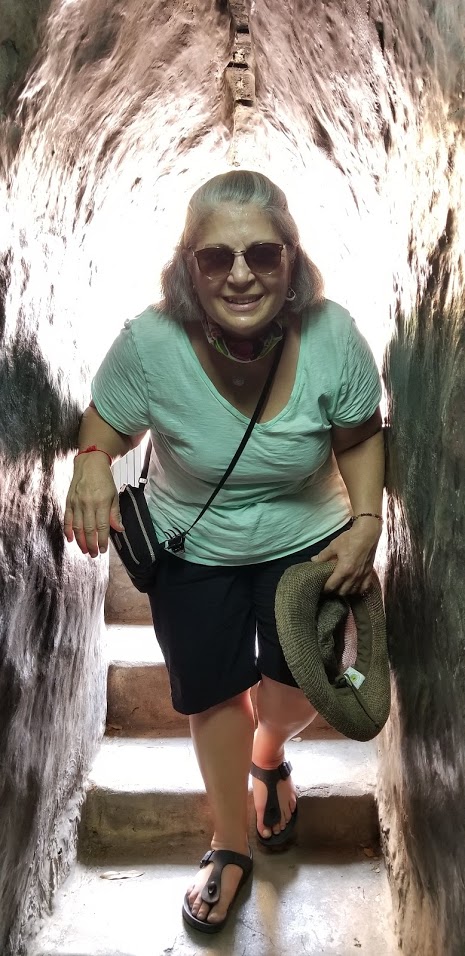
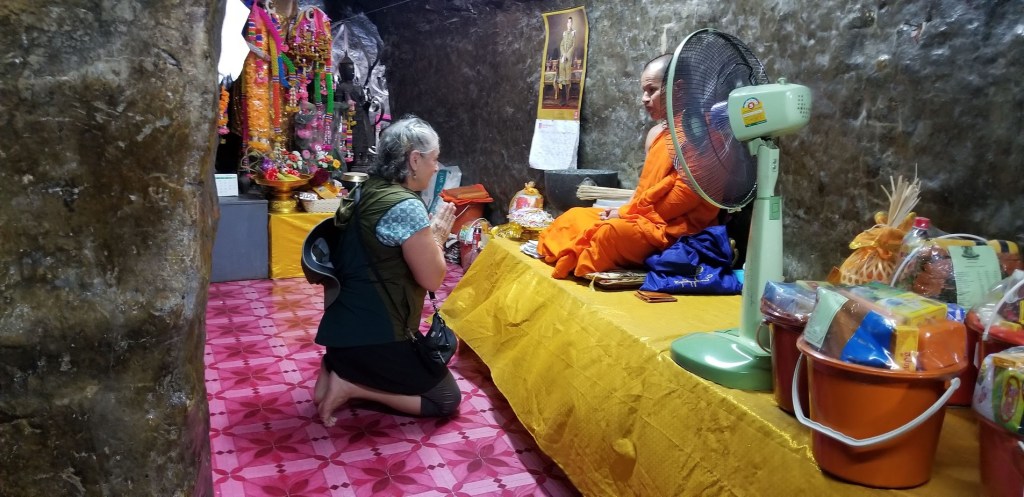
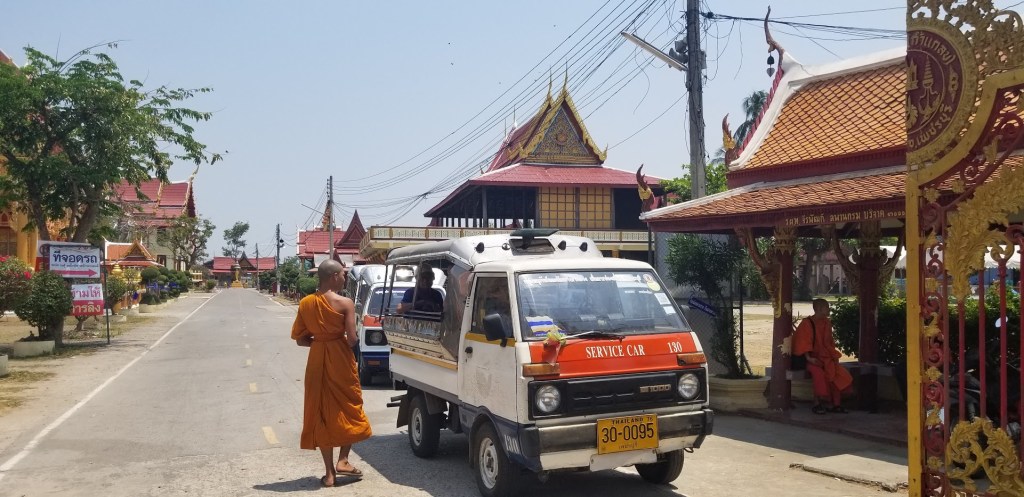
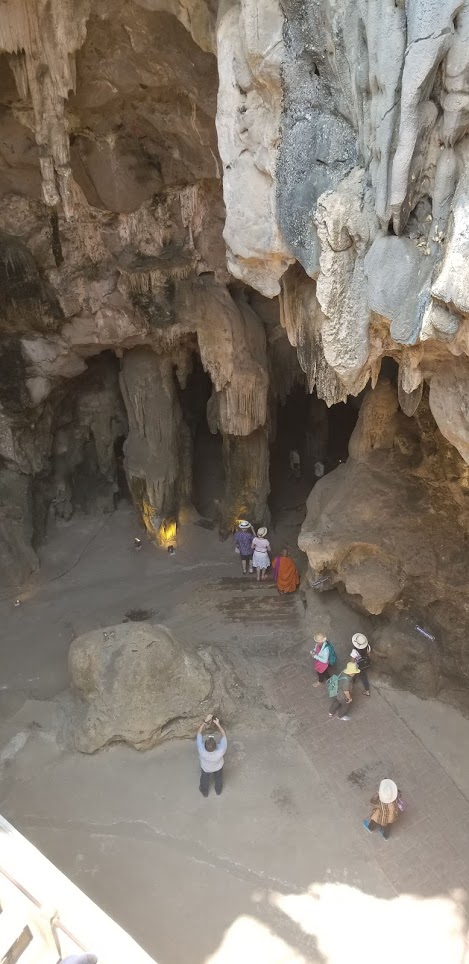
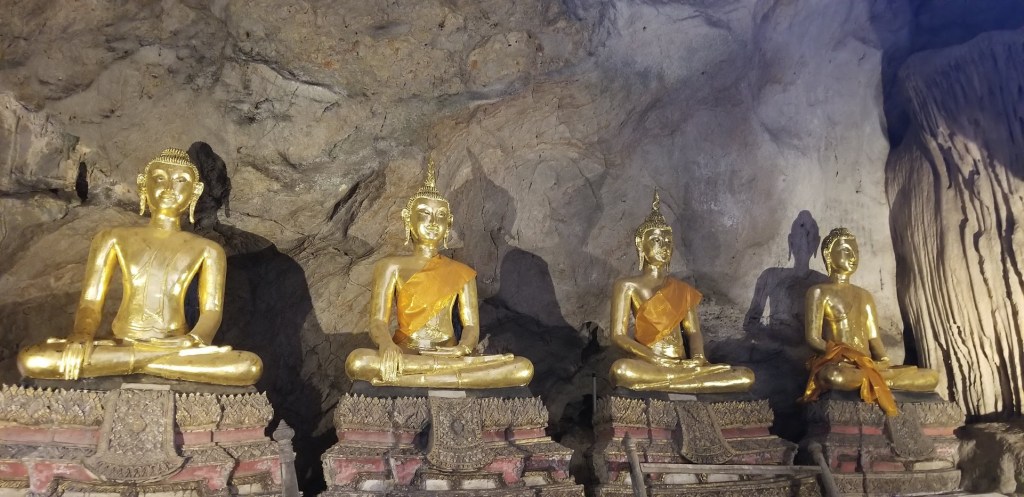
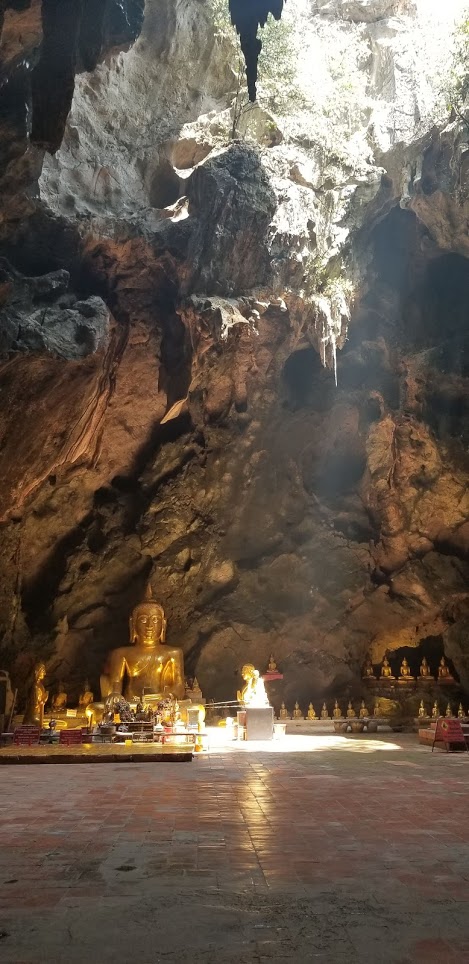
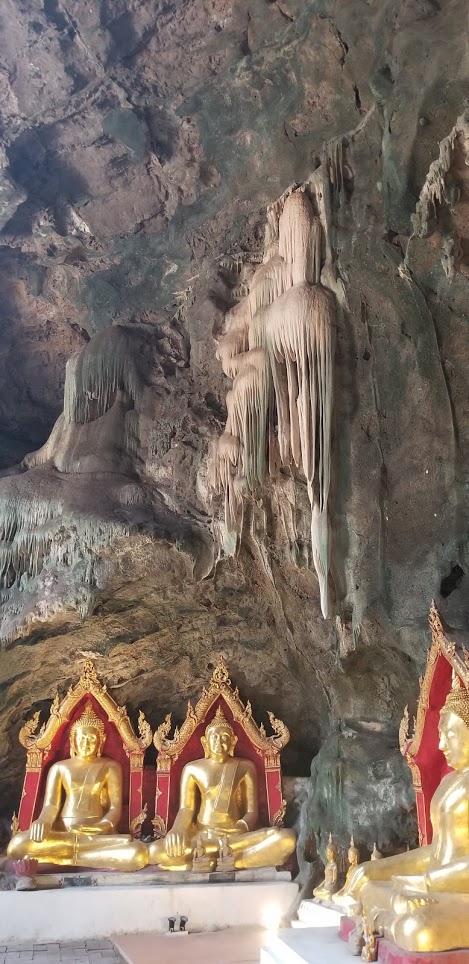
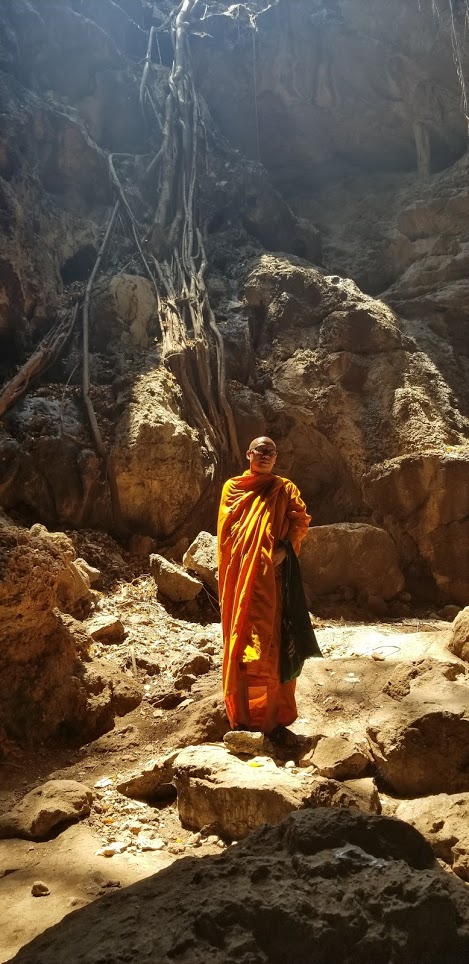
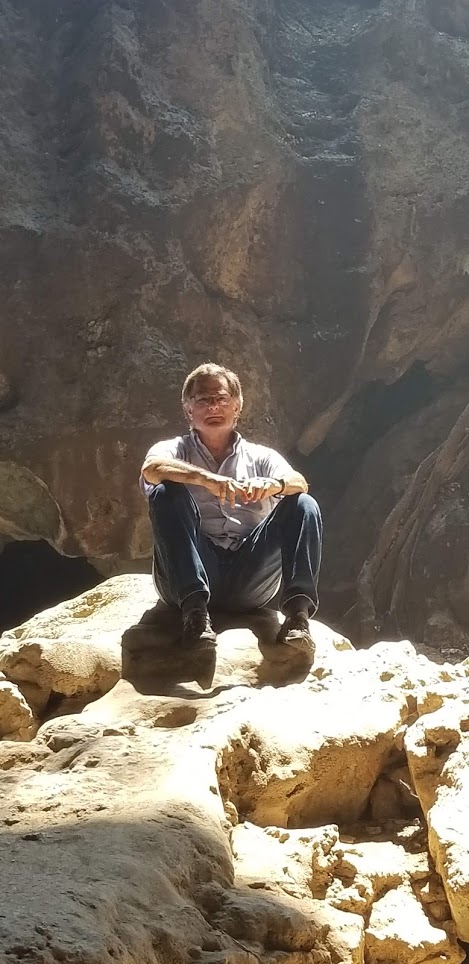
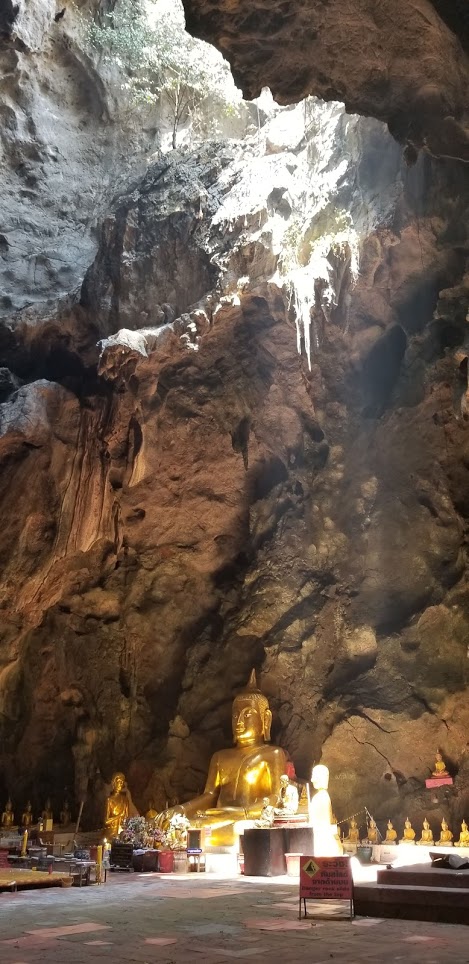
We loaded in to several songtaews that would drive us up the windy narrow roads to the cave entrance. Major restorations were made to the cave during King Rama IV’s reign and it is said that he used the cave to study Buddhism and to meditate. We walked down stairs about 100 meters in to a cool and serene atmosphere filled with caverns and beautifully illuminated golden Buddha images. The stalactites hanging from the ceiling were amazing.
Bro. Tim
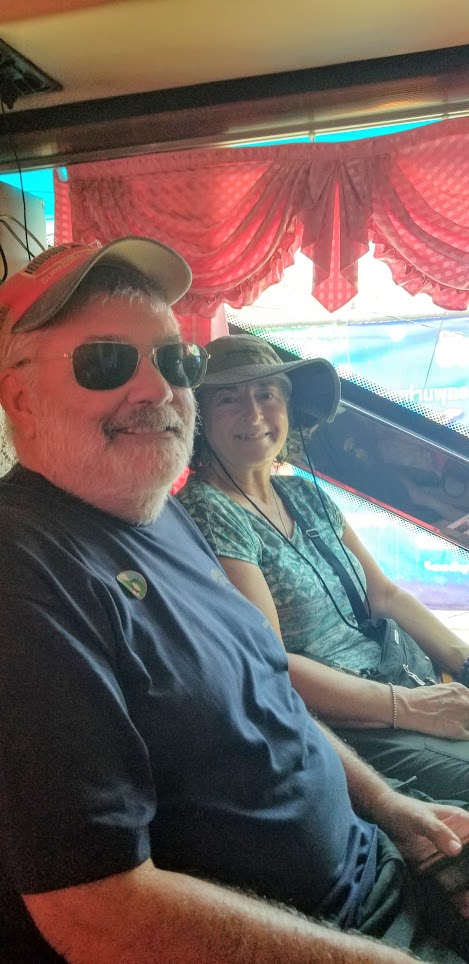
On the pathway walking back to the songtaew, there were many monkeys on the guard wall and trees. I witnessed a monkey try to grab one of the students backpack but only came away with some Kleenex. Then I learn when I got back to the bus that my seating partner got bit by a monkey! He is doing ok, but is taking the rabies shot series to be on the safe side.
The culprit I think
4th stop – Phra Ram Ratchaniwet Palace
5th stop – Mrigadaya Van Palace
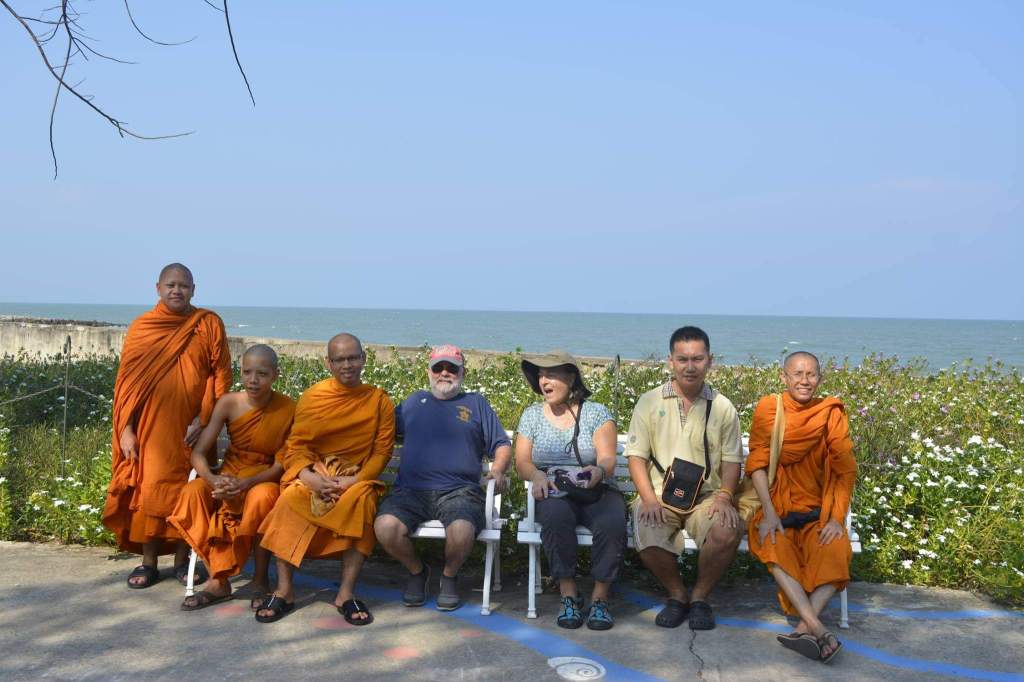
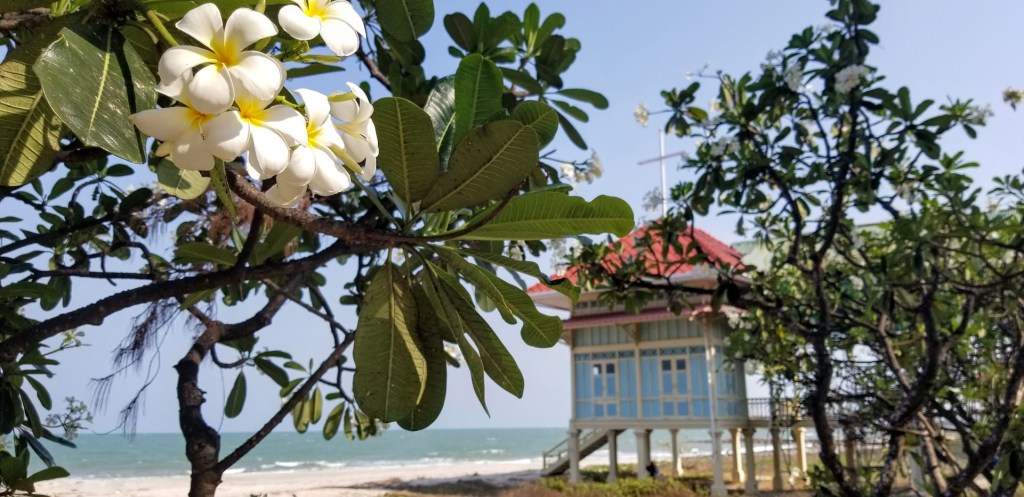
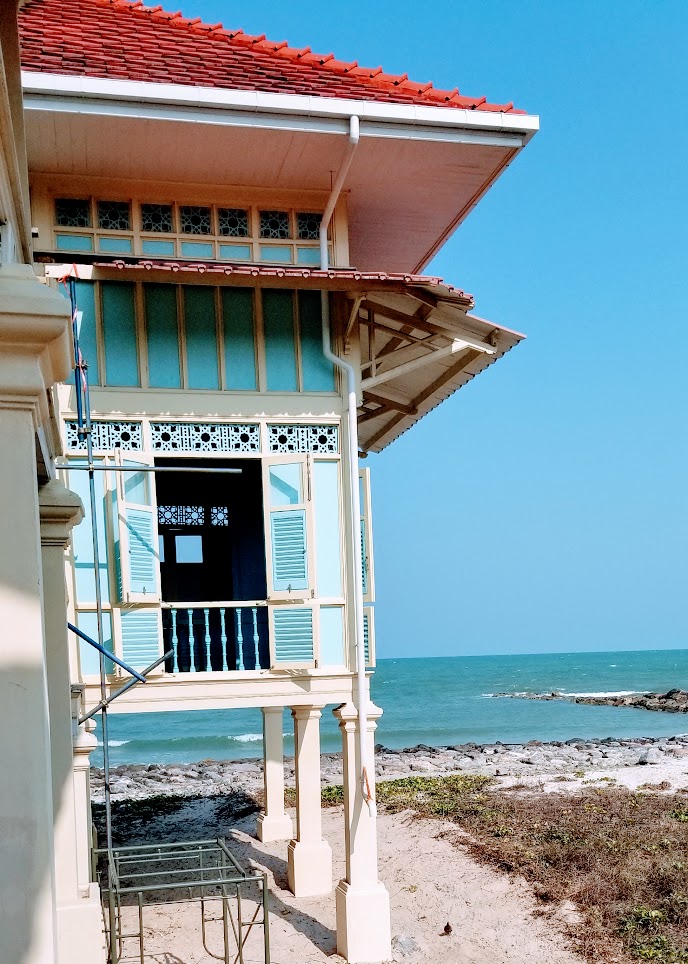
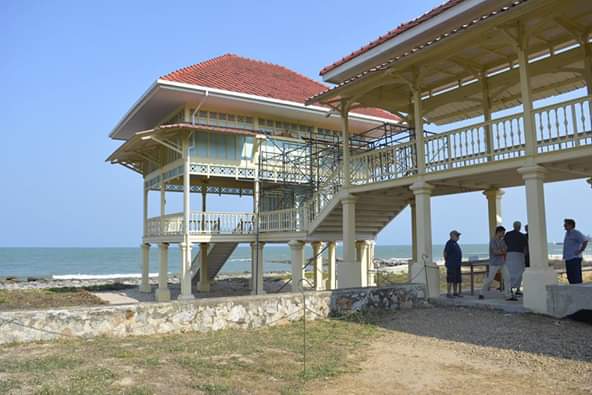
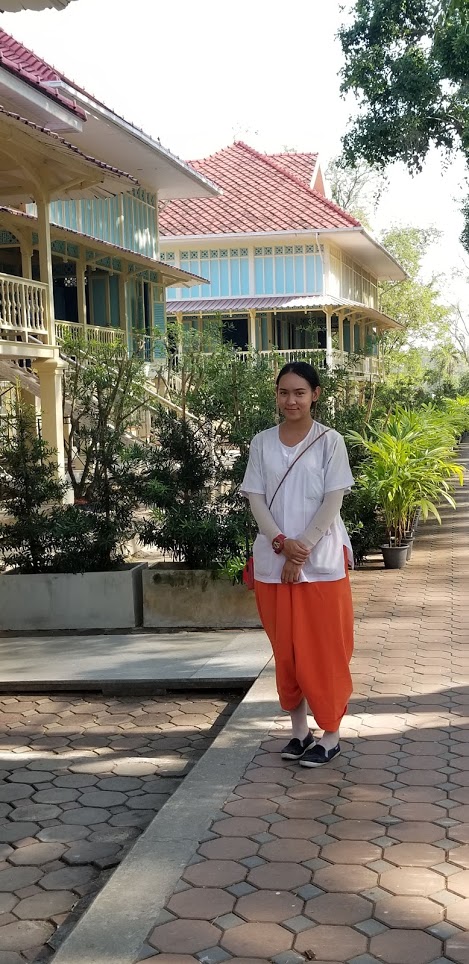
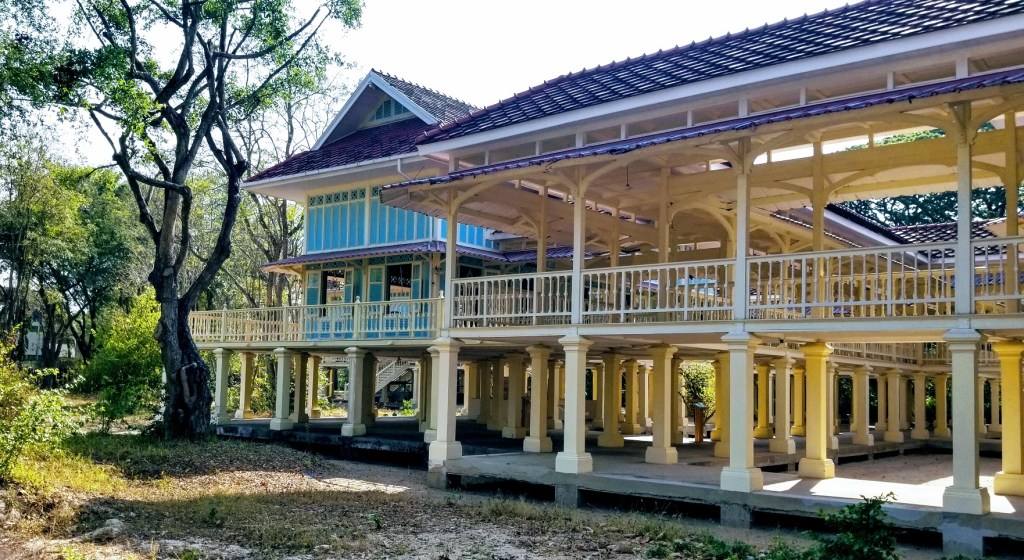
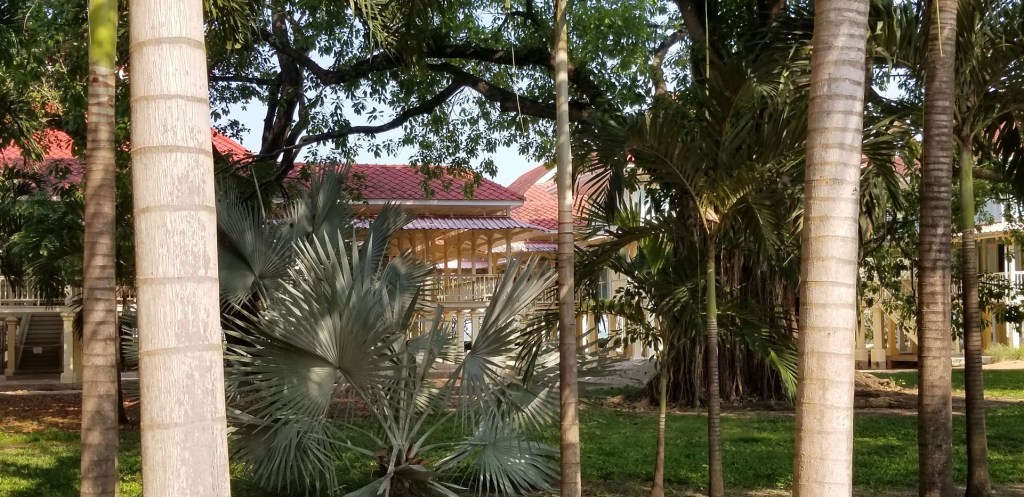
This beautiful beach side palace was the former residence of king Rama VI who ruled Siam from 1910 to 1925. Although this was not a temple, there were high standards for respectful dress. Teacher Harry’s shorts or shirt (we’re not sure which) apparently were not appropriate and he was provided a skirt to tour the grounds. I was so excited to see the coast for the first time since I’ve been in Thailand.
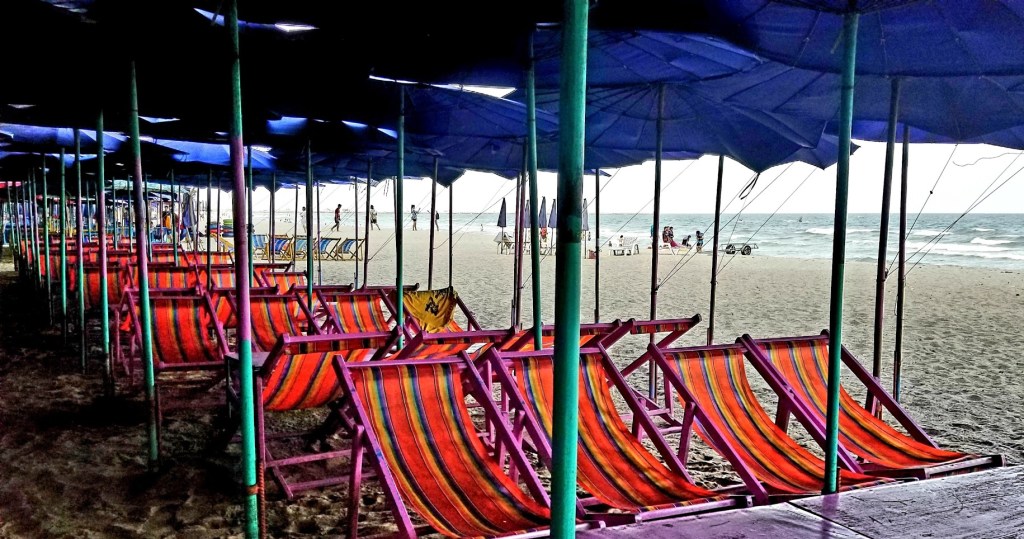
6th and final stop – Cha-Am Beach
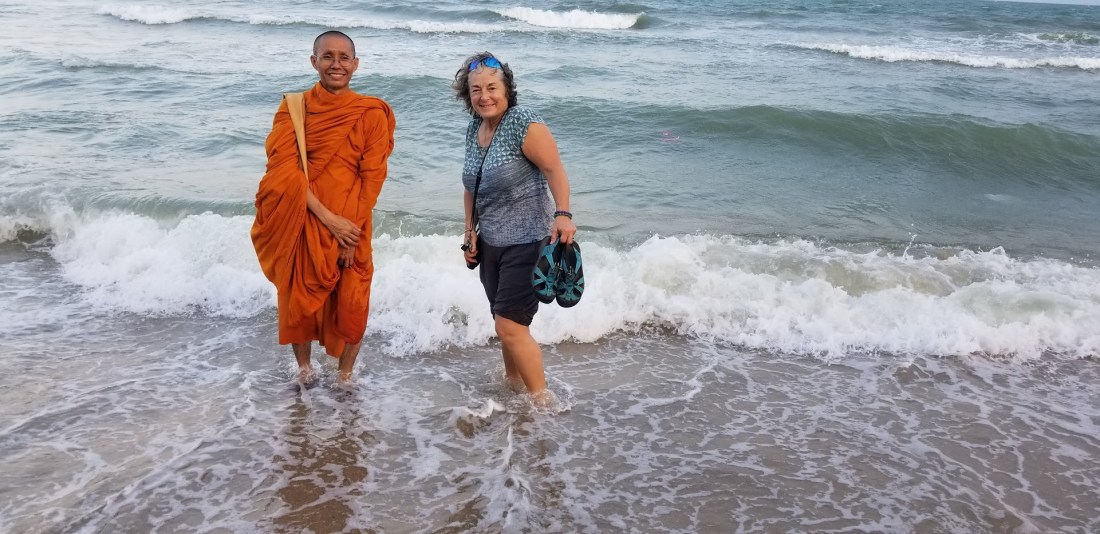
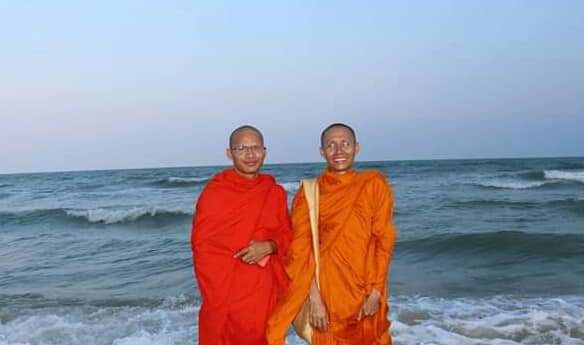
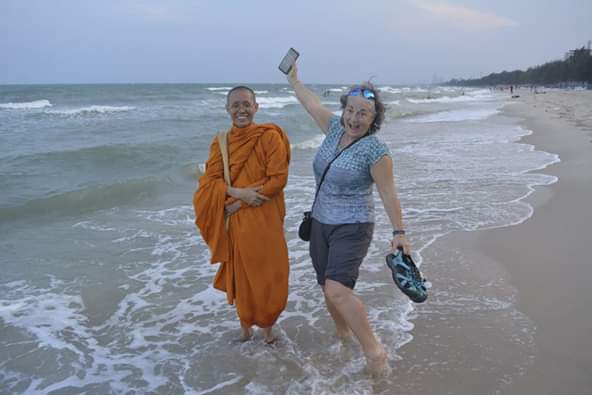
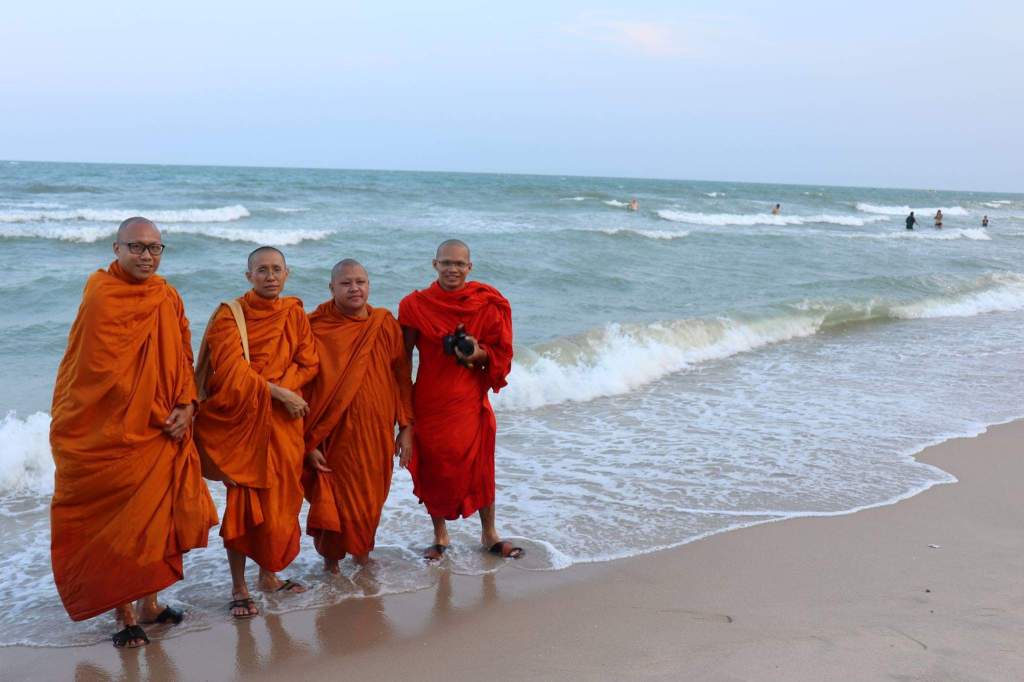
It felt amazing to put my feet in to the Gulf of Thailand . . . it felt like bath water it was so warm. A wonderful way to end the trip with fresh fish and other seafood items available to take home. Thank you Maryknoll for an amazing trip!!!
“Human creativity evolves in two realms: culture and religion”.
book: Spiritual Co-Pilgrims-chapter 13 TOWARDS A CULTURE OF HARMONY
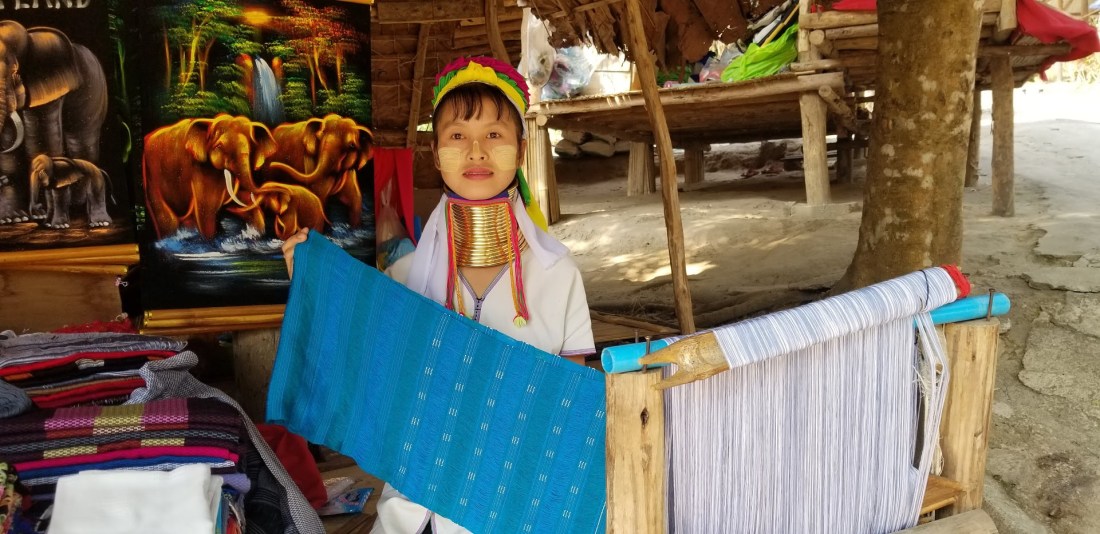
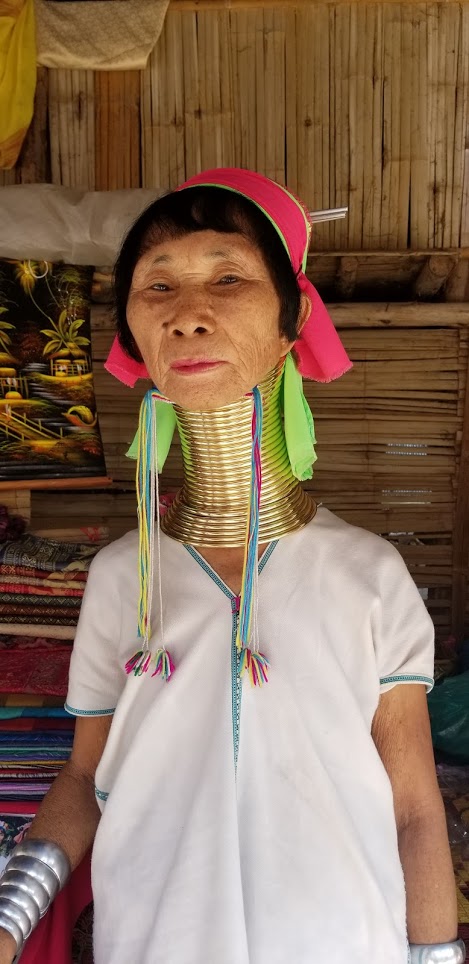
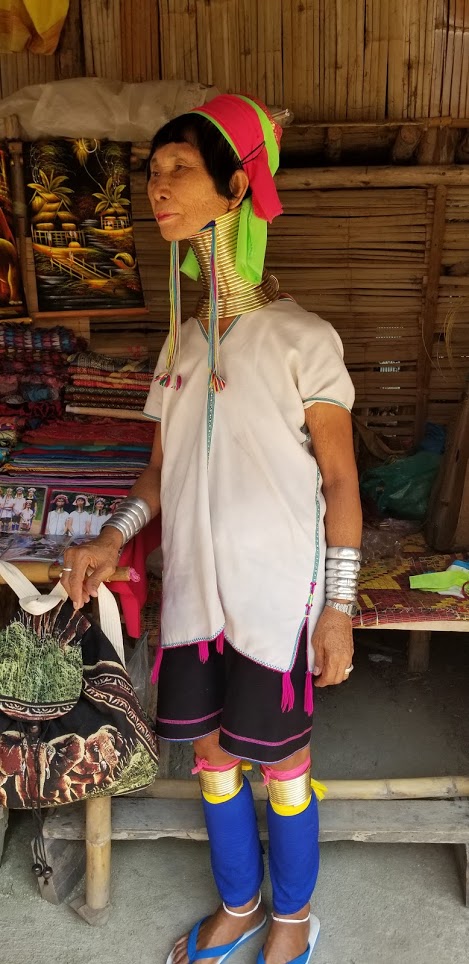
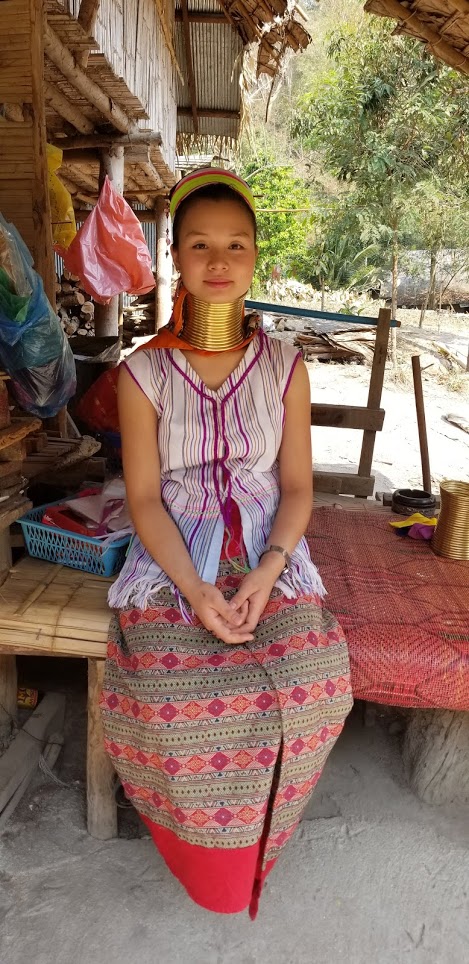
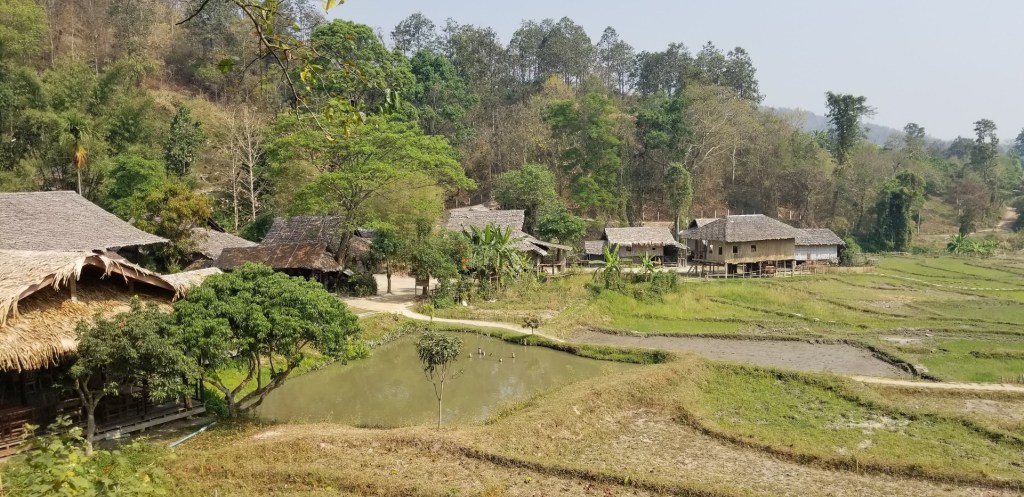
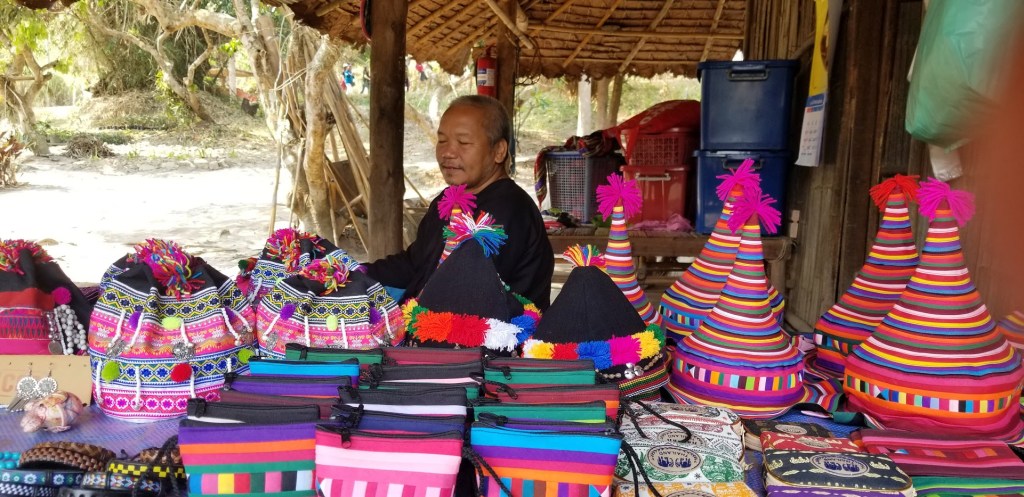
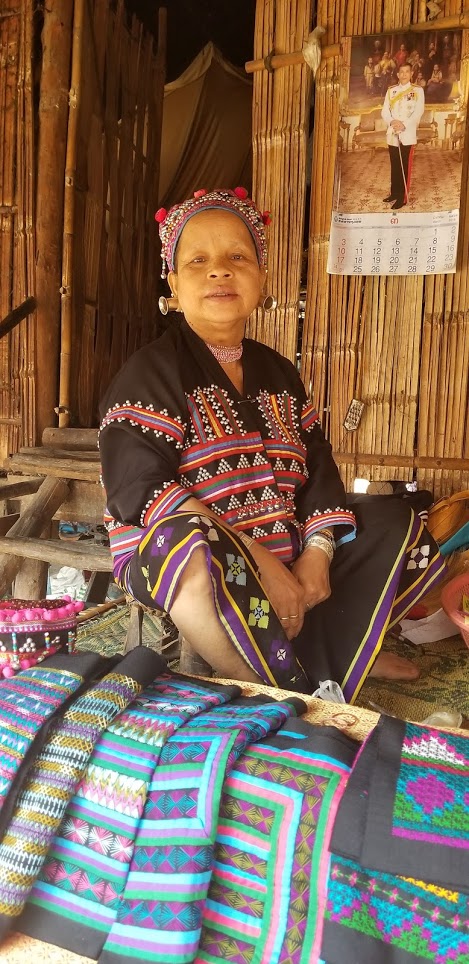
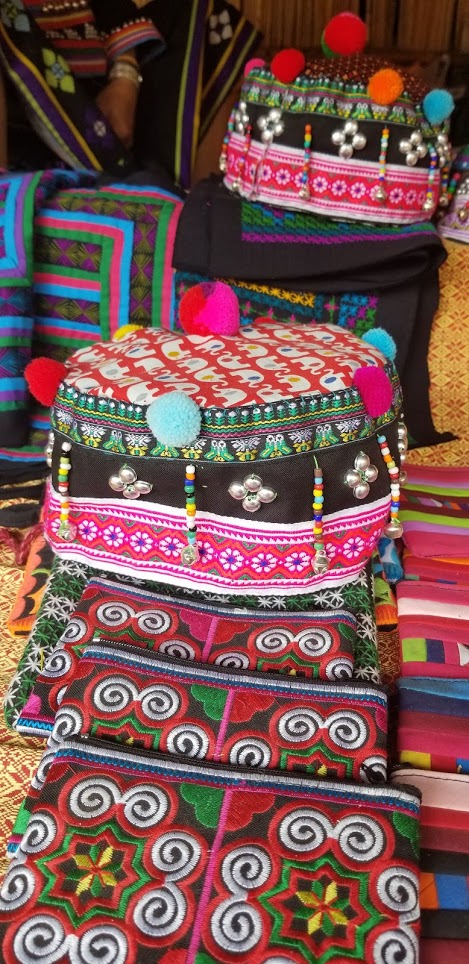
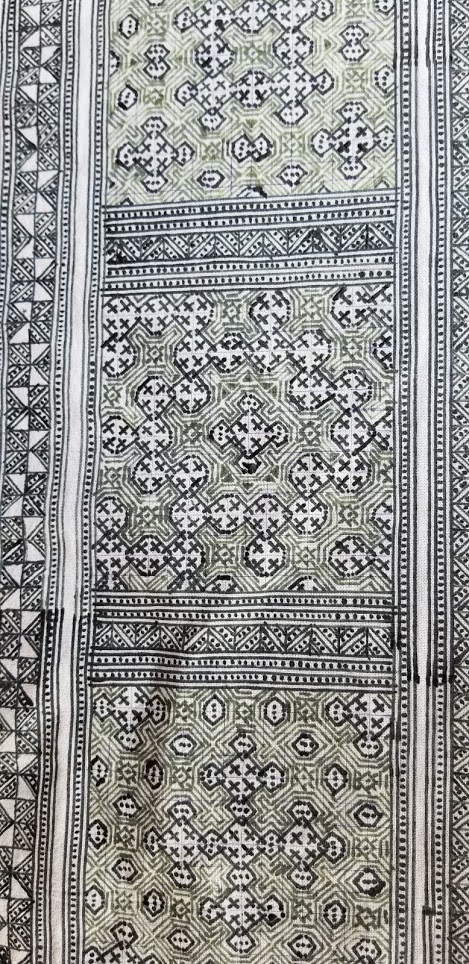
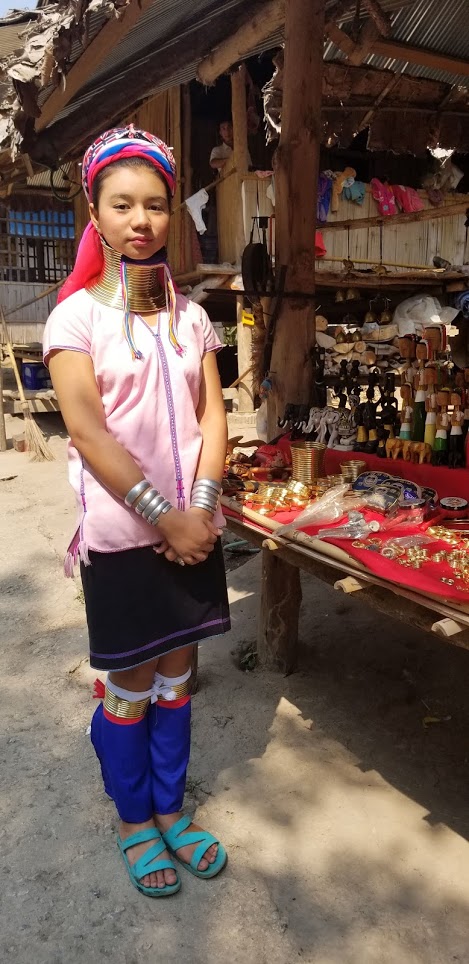
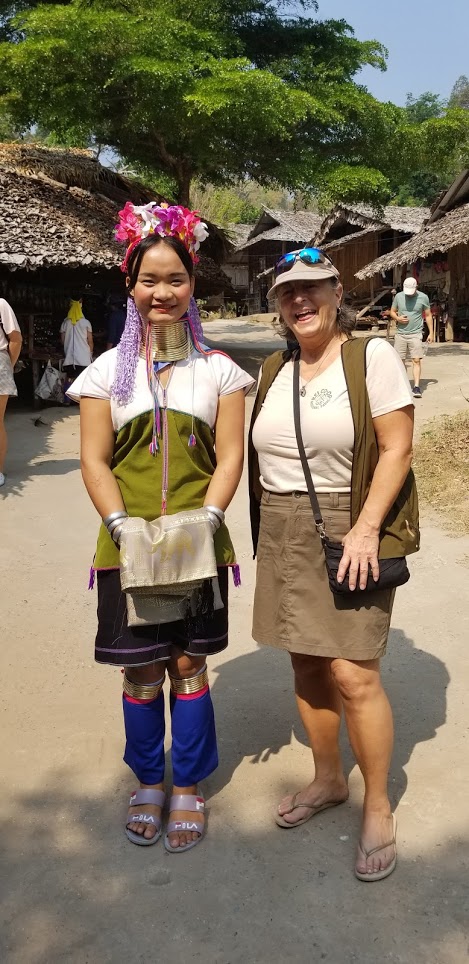
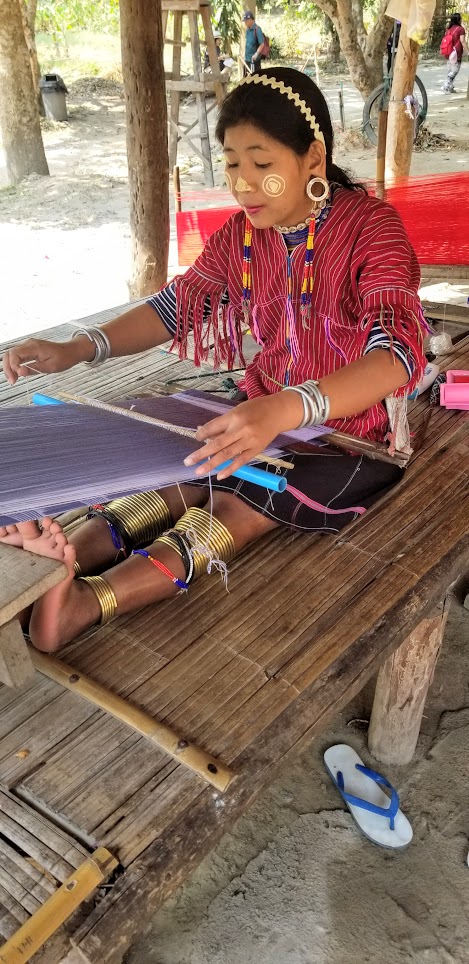
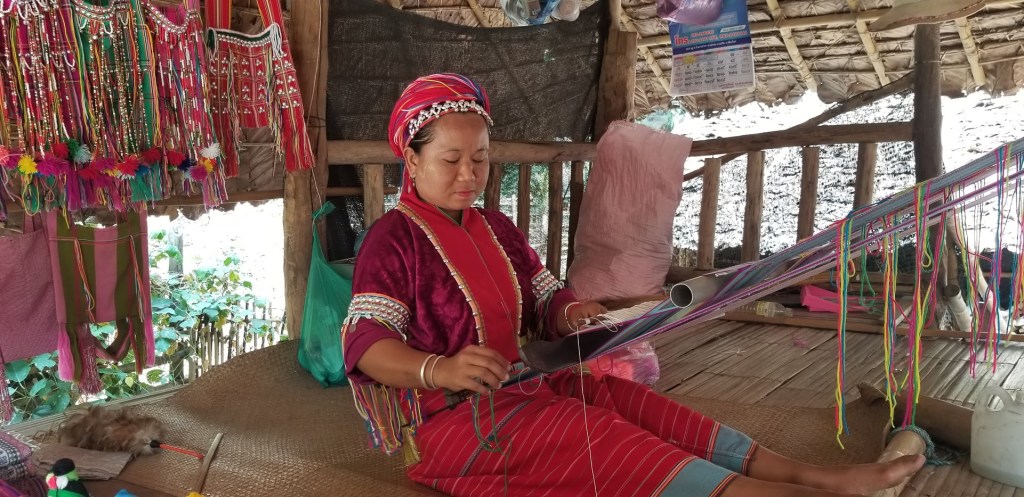
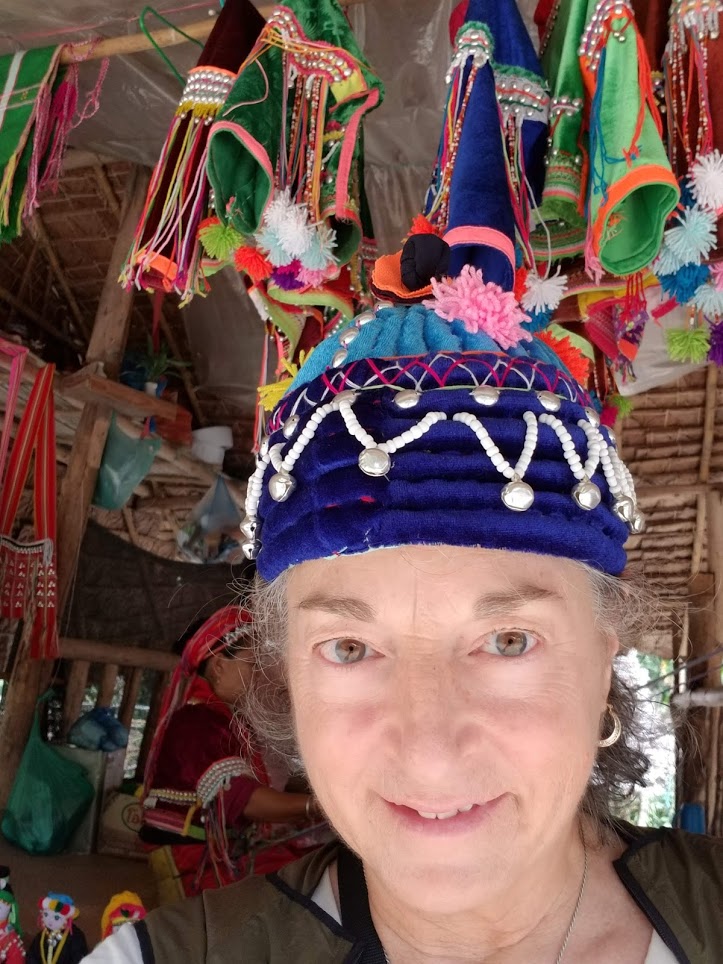
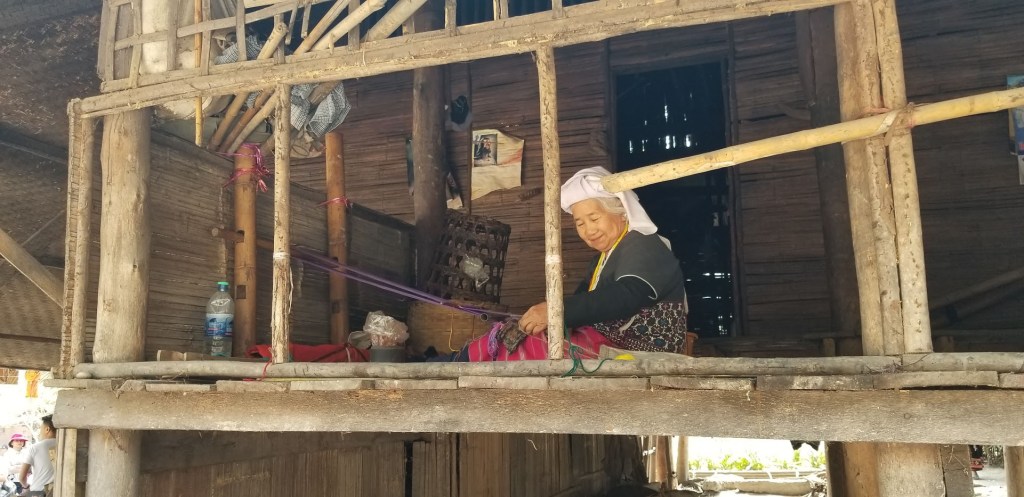
The city of Chiangmai located in northern Thailand has the strongest sense of place and unique characteristics than any city in Thailand. It’s a city that continues to hold fast to its strong sense of Northern Thai or khon meuang (‘people of the principality’) identity. I had not planned to visit Chiangmai but travel plans changed and I was thrilled to be presented with the opportunity to see this amazing city. Just outside of Chiangmai, I went to Baan Tong Luang, an eco-agricultural hill tribes village, where eight different ethnic tribes live in a community separated by rice paddy fields. It was an incredible experience to witness the various tribes in their traditional environments, wearing vibrant colored costume and making handmade woven scarves and hand dyed indigo wears. I was happy to support the preservation of their wonderful lifestyle by purchasing several handmade items.
PADONG TRIBE Often referred to as “long necks”
HMONG TRIBE
LAHU TRIBE
LAHU women wear big earrings and many silverwares
HMONG TRIBE
KAYAW TRIBE
PAYLONG TRIBE
yes! I bought the hat
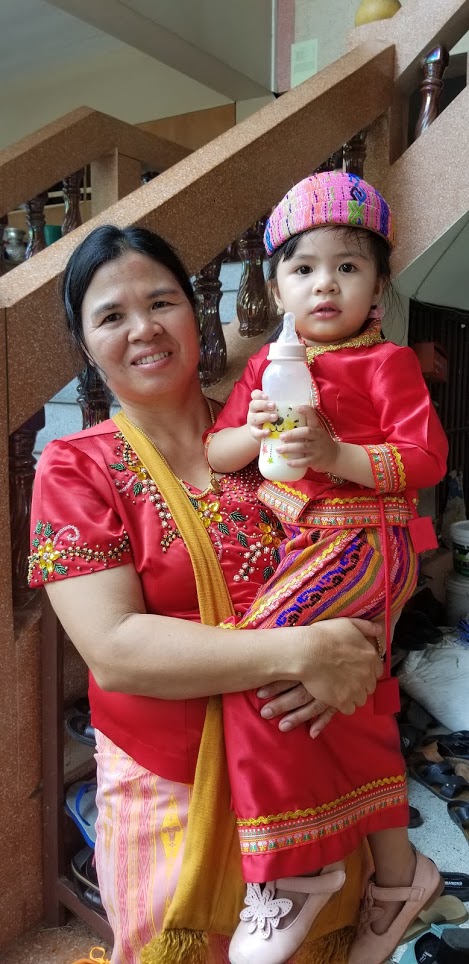
KAREN TRIBE
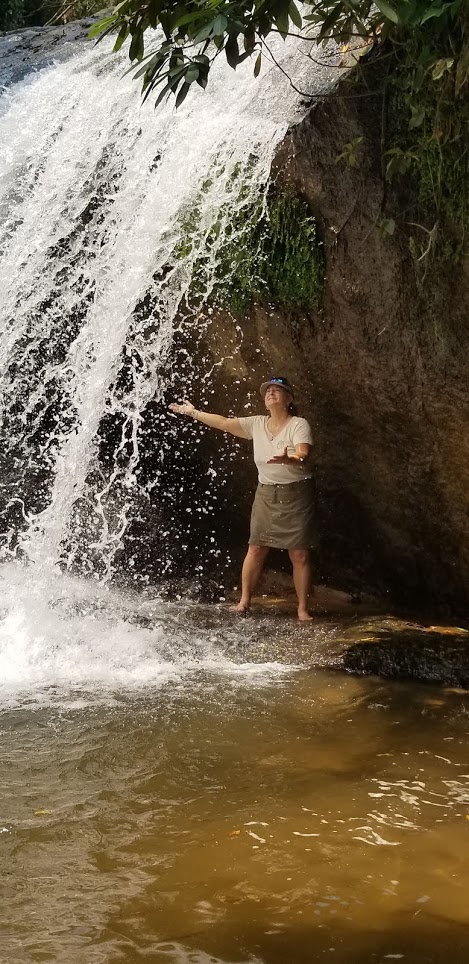
On the way back to Chiangmai, we stopped at the Mae Sa Waterfall #reiemployee. We hiked up to waterfall #5 of the 10 levels to the beautiful cascading falls.
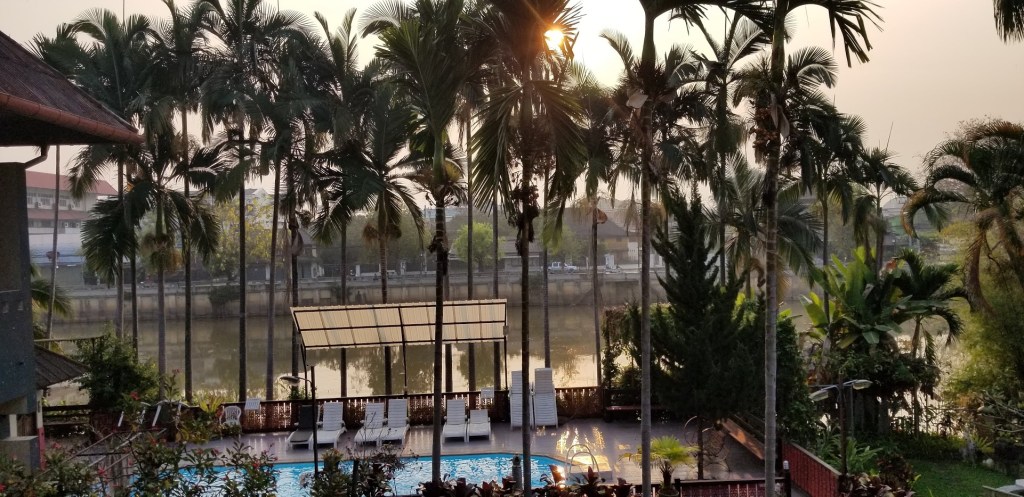
I stayed at a wonderful hotel, River View Lodge recommended by Bro. Tim that was located on the Mae Ping River. It felt like I was in a museum with beautiful Asian inspired antiques throughout the lodge and outdoor landscape full of pots with unique tropical plants. The lodge was well located within close proximity to the night bazaar, Muslim area, Anusarn Market and the ancient walled city. Chiangmai has 121 Lanna-style Buddhist temples within the city limits and over 300 in the surrounding area. I felt like I was in Rome, Italy but with temples instead of churches! The Doi Suthep mountains behind the city provide a picturesque backdrop but dangerous levels of air quality made it hard to see them. My driver said the pollution is common this time of year due to the jungle fires set off in Myanmar, some of which are deliberate and some acts of nature.
Chiang Mai
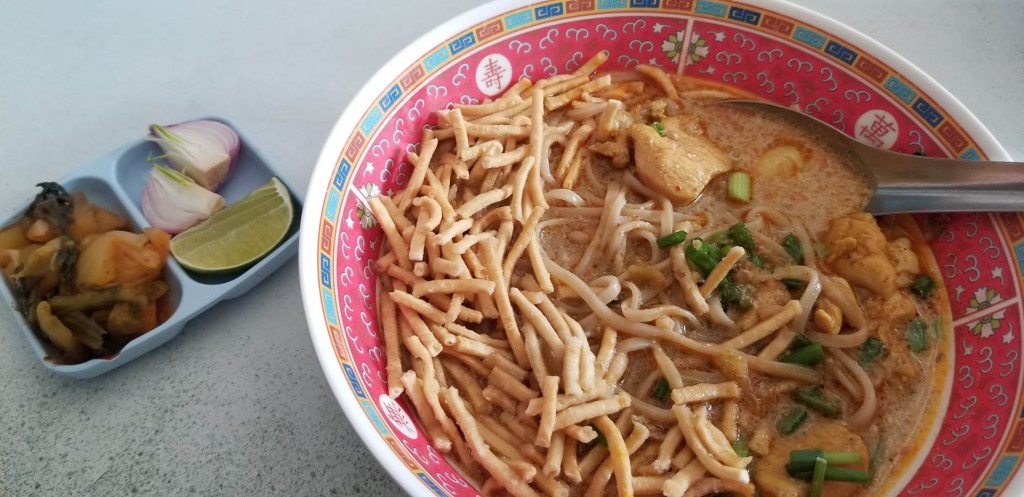
Halal food egg noodle with curry & coconut milk
Good-bye’s
It’s so hard to believe that two months have flown by and we are starting to say good-bye to the Maryknoll missioner volunteers. Most of the short-term volunteers are leaving to their home lands by the end of March 😦
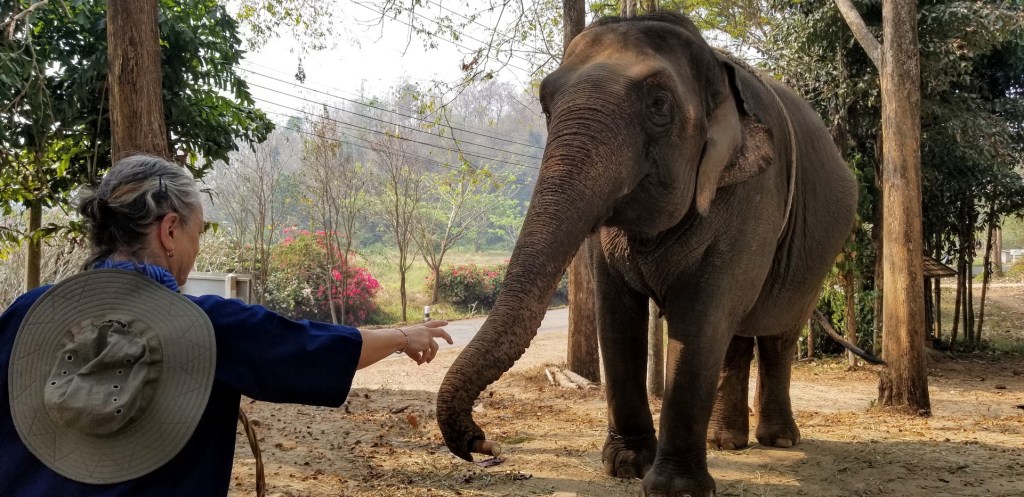
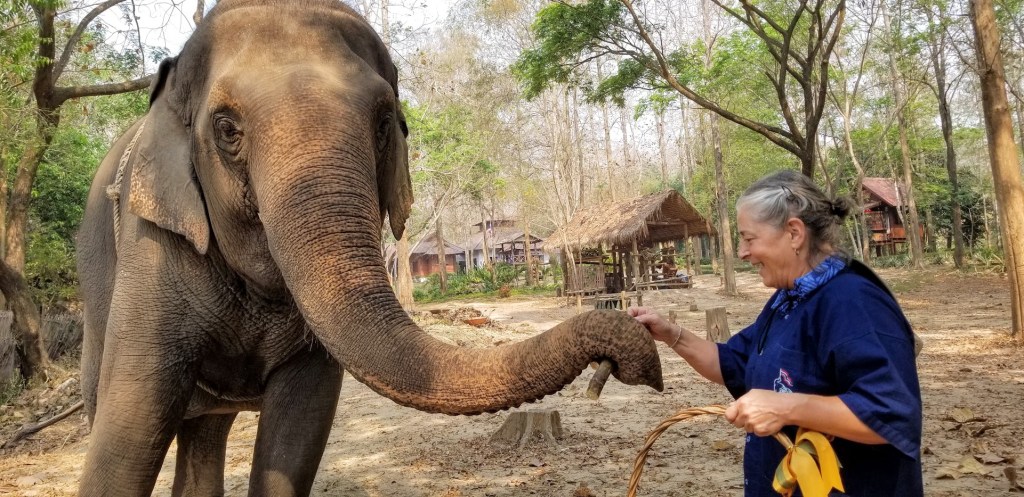
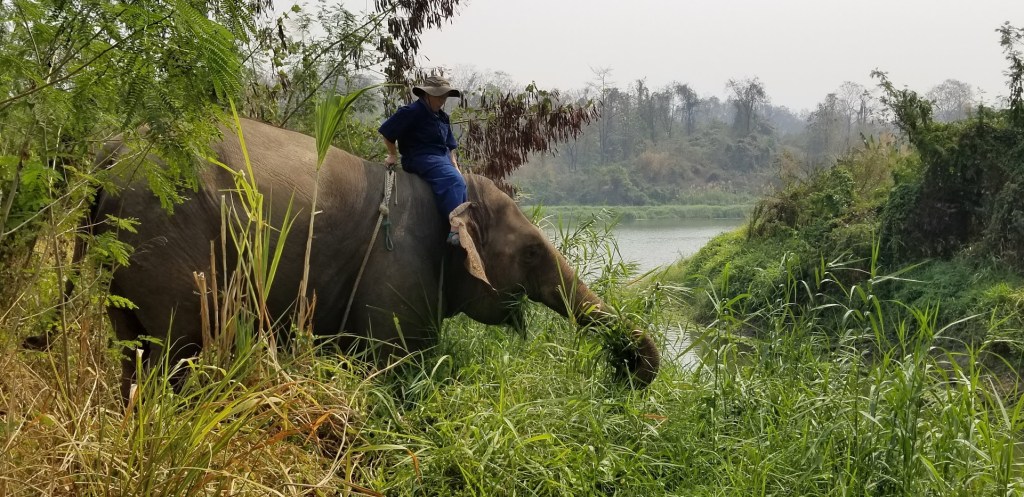
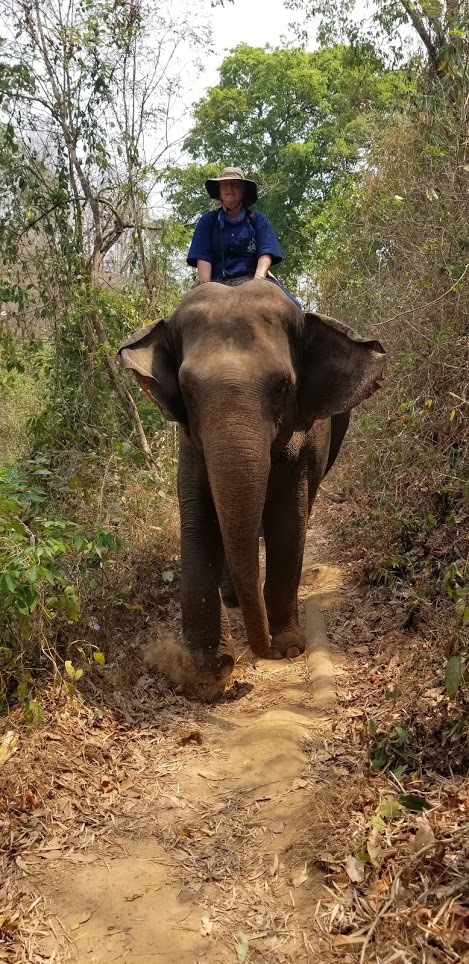
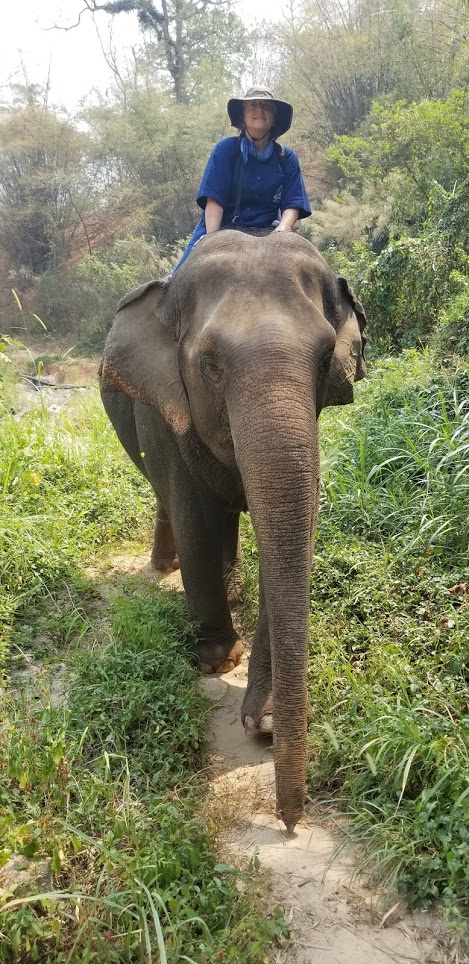
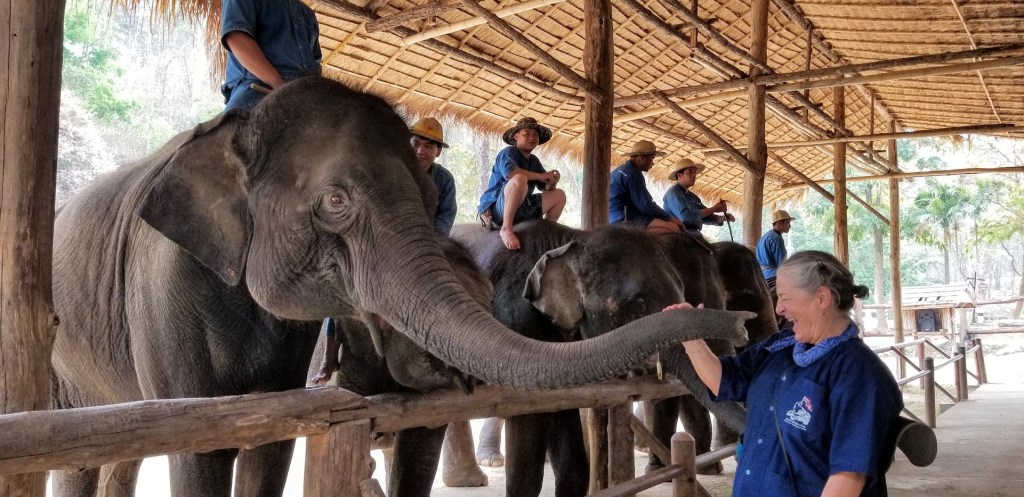
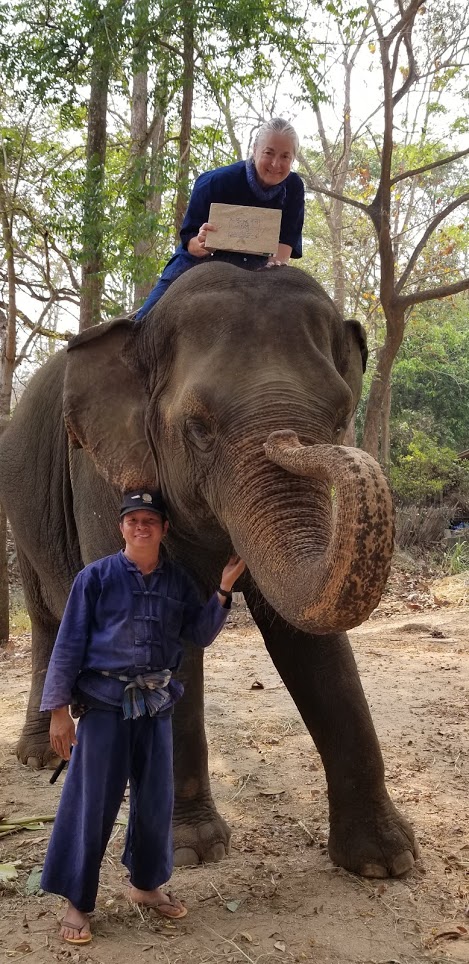
Thailand’s current population of domesticated elephants is around 2,700. I was thrilled to spend the day with some of these ‘gentle giants’ at the Thai Elephant Conservation Center http://www.thailandelephant.or/en located in Northern Thailand just outside the city of Lampang. The center is operated by the Forest Industry Organization which is a State enterprise of the government of Thailand. They house 50 Asian elephants as well as ten of the King’s revered ‘white’ elephants in the royal elephant stables. Not to be mistaken for a ‘white elephant’ where a gift of little intrinsic value is exchanged, the Thai ‘white elephant’ has inexpressible worth to the people of Thailand.
Airavata – is a white elephant who carries the Hindu god Indra
Did you know White Elephants are not white?
I arrived at the Conservation Center at 8:30 in the morning and was greeted by my guide and educator for the day, Fern. After changing in to clothing provided, I settled in at the outdoor classroom area to learn how to handle and care for elephants before being introduced to “my” elephant for the day. Since I was the only attendee, Fern indulged my curiosity about ‘white elephants’ and indicated that they do not breed white elephants so most are captured in the wild and gifted to the King. The male white elephants are housed separately from the female white elephants and these royal mammals are not available for public viewing. I asked the big question . . . if white elephants are not white, how do you know it’s a white elephant? Fern said that there are many characteristics and it can be a combination of different things but in general, there are seven things that must be present when the royal experts identify a white elephant:
white toe nails
white eyes
pink palette
white hair on the body
white hair on the tail
earthen (ceramic pot) color
every pore has three hairs
There are many other characteristics but my favorite was that they have a unique snoring pattern when asleep! Maybe MY snoring is considered royal?
offering to Indra for a good day
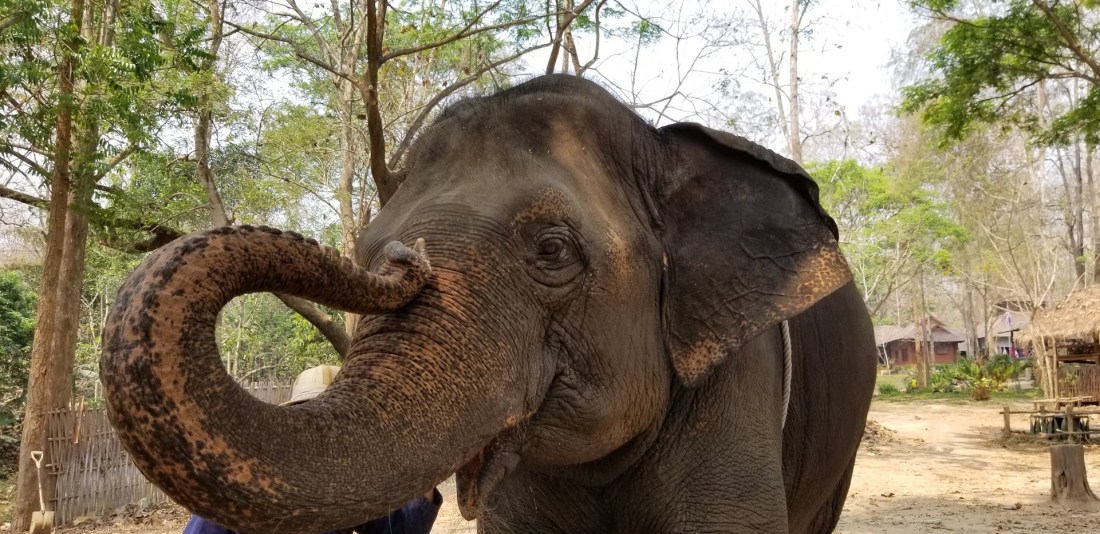
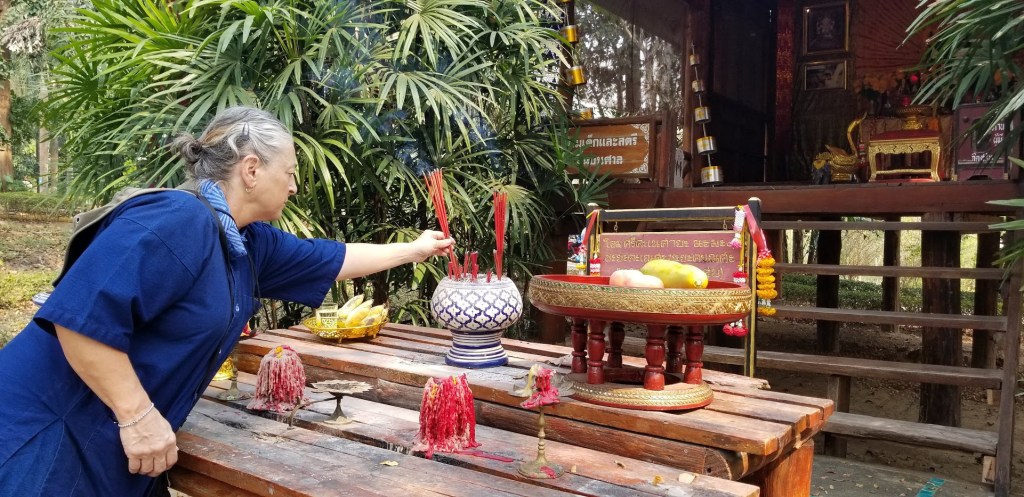
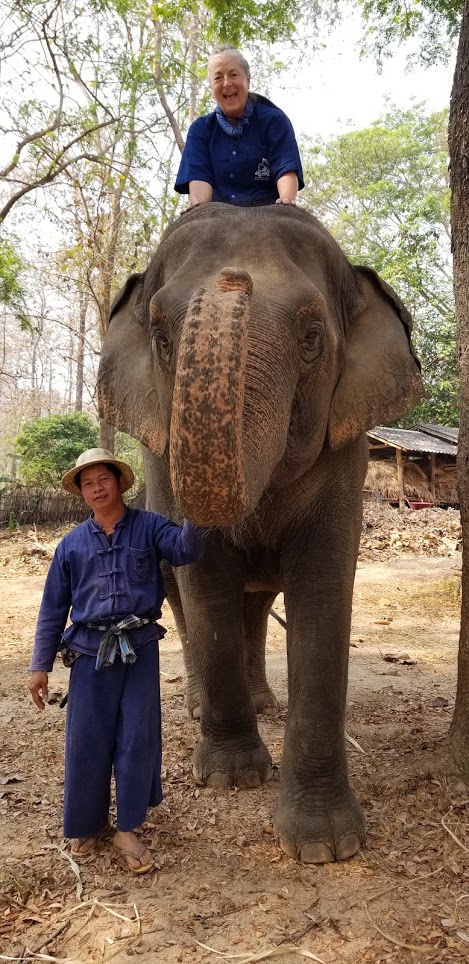
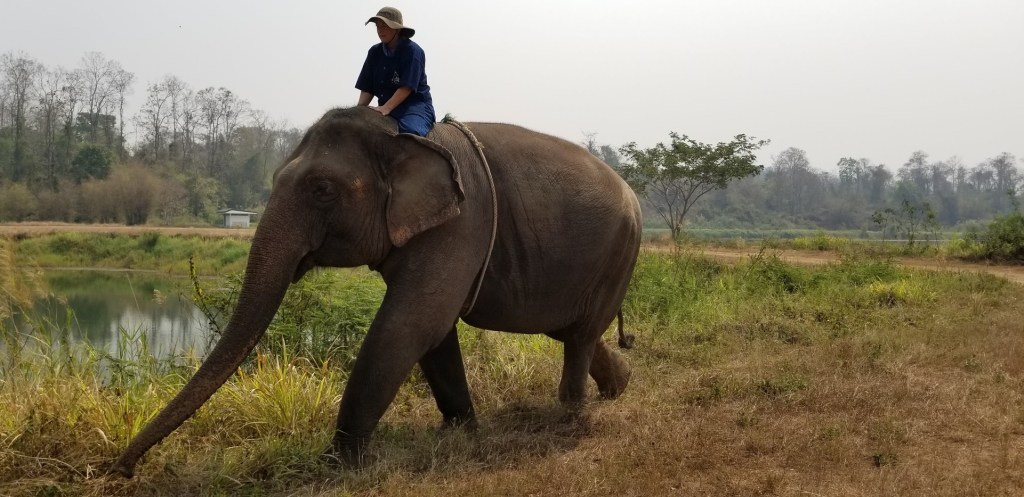
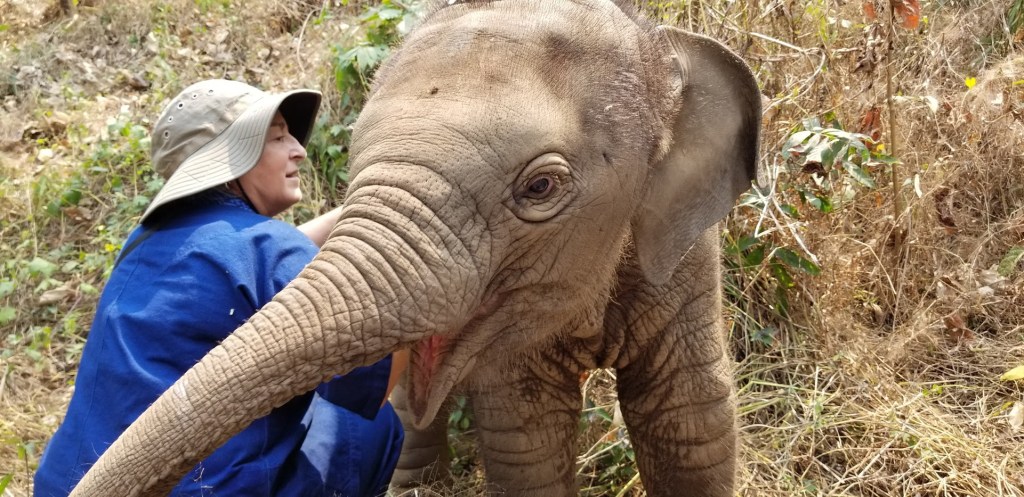
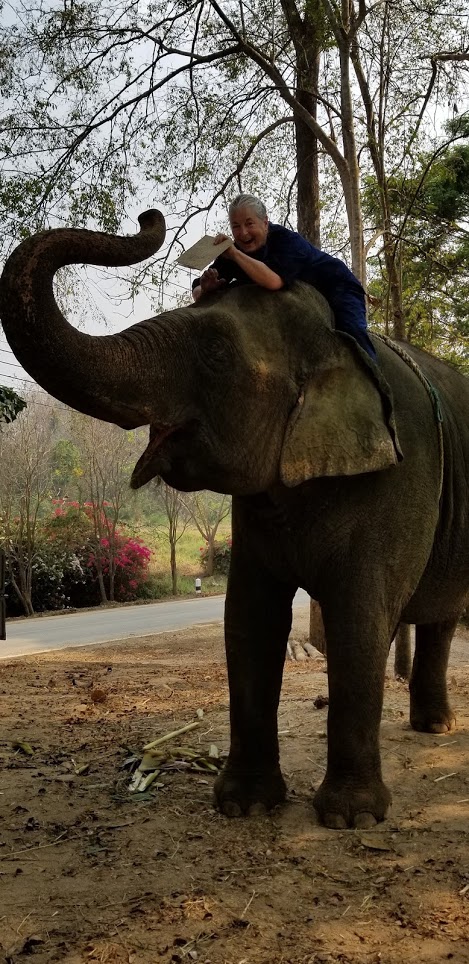
After seeing video’s on a couple methods to get on/off the elephant and learning the basic elephant commands such as “Soon Soong” = Get on from the side, “Hup Soong” = Get down from the side, “Bai” = Go forward, “How” = stop, “Ben” = Turn left or right, “Soke” = Walk Backward and “Geb Bone” = Pick up thing, we made an offering of incense and prayed to the Indra god to have a good day with the elephant. I was so excited to meet my elephant named: Pang Pumpuang who is an adorable 37 year old girl with freckles between her eyes and on her trunk. Pumpuang and I bonded over the basket full of sugarcane I fed her! Her mahout, Taworn, stuck close by. A mahout is a professional who works with, rides and tends to an elephant. Currently, only males may be mahouts and usually are assigned an elephant at an early age and remain bonded throughout their lives.
“Geb bone”
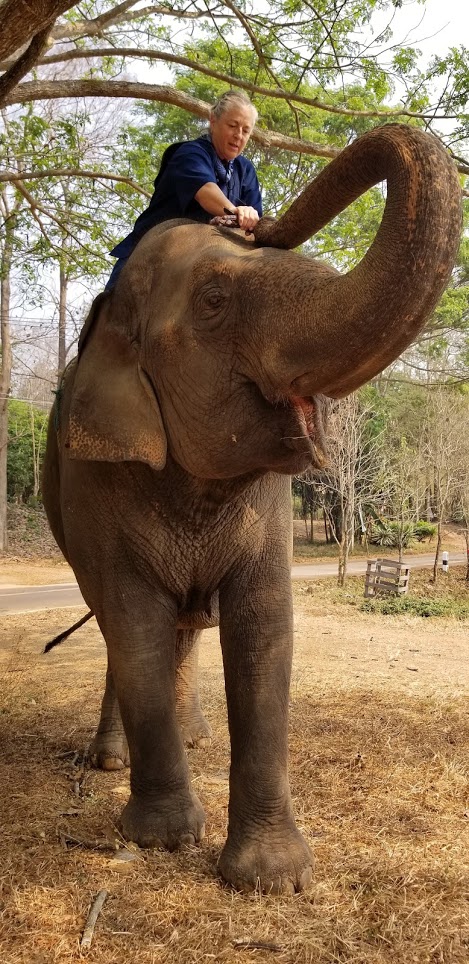
I went on my first of three rides along the river. She liked eating the grass along the river bank and I thought she was going to go in the water!!! I was told: “hold onto the rope in back of you when she goes down hill”. I opted for the ‘get down from the side’ method opposed to jumping on over her head from the front – yikes, that’s one BIG animal. I was a good mahout in training by cleaning up her dung!
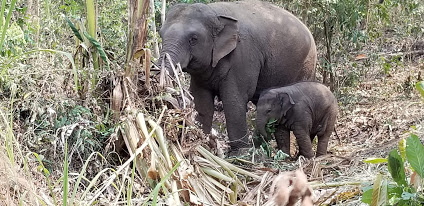
Next, we hiked in to the jungle to view a Mama and baby elephant. Fern said that many babies die when left in the jungle because they are so curious and playful with not such nice friends like poisonous snakes and other dangerous wild animals.
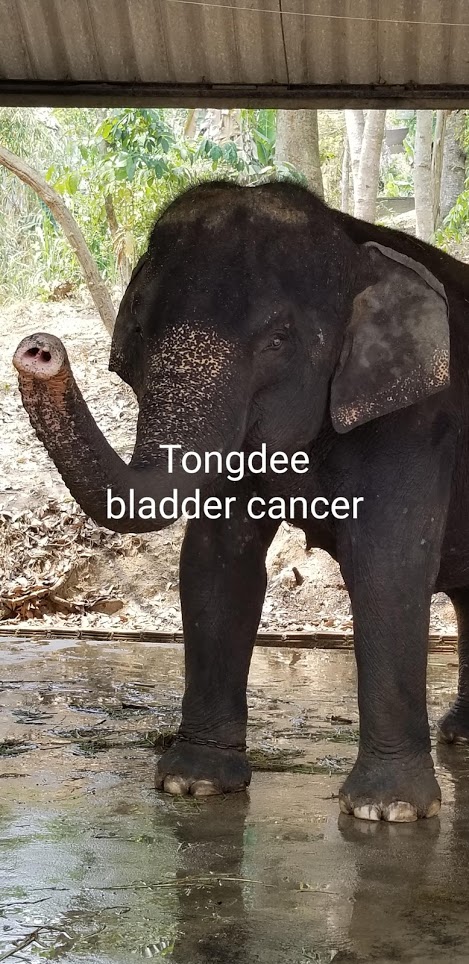
I re-mounted Pumpuang and trekked about a mile to the main part of the center to tour the elephant hospital. On the way, the terrain was very rocky and steep in places and I had to keep repeating “Bai” = Go forward since she liked to stop along the way to feed on the enticing vegetation. It may have been my imagination, but I felt like Pumpuang embraced her ears around my legs tightly to hold me on when climbing up hills. As a government run organization, the hospital treats any elephant whether privately owned or housed on the property free of charge. There were elephants with cancer, teeth issues and even a baby elephant getting an IV who had stomach problems. Next door to the hospital, we visited the ‘old elephant home’ and saw “Daoreuag” who is the oldest elephant housed there at 75 years old.
Bai, Bai, Bai, Bai, Bai
incline on the trek
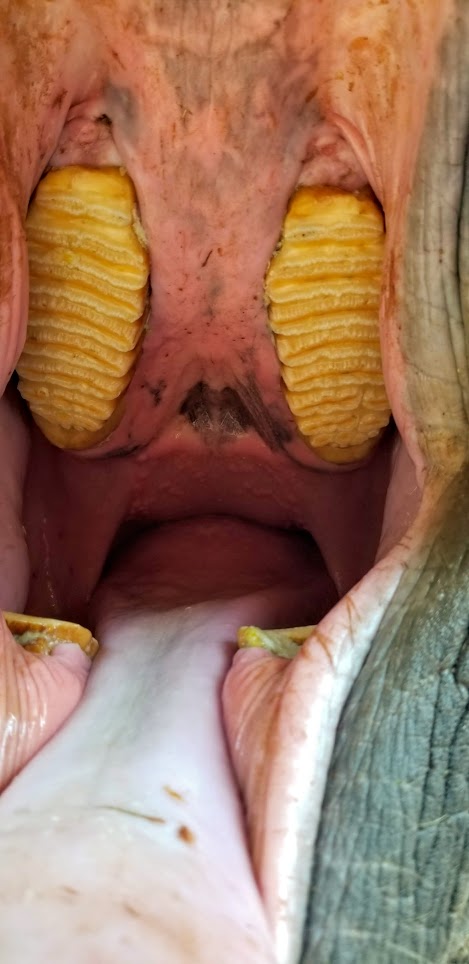
After visiting the hospital we had lunch then visited with the elephants that perform for visitors to the center and watched them get bathed by their mahouts. I was shocked to see the inside of this young (4 year old) elephants mouth with so few teeth to chew the hard sugarcane and whole bananas!
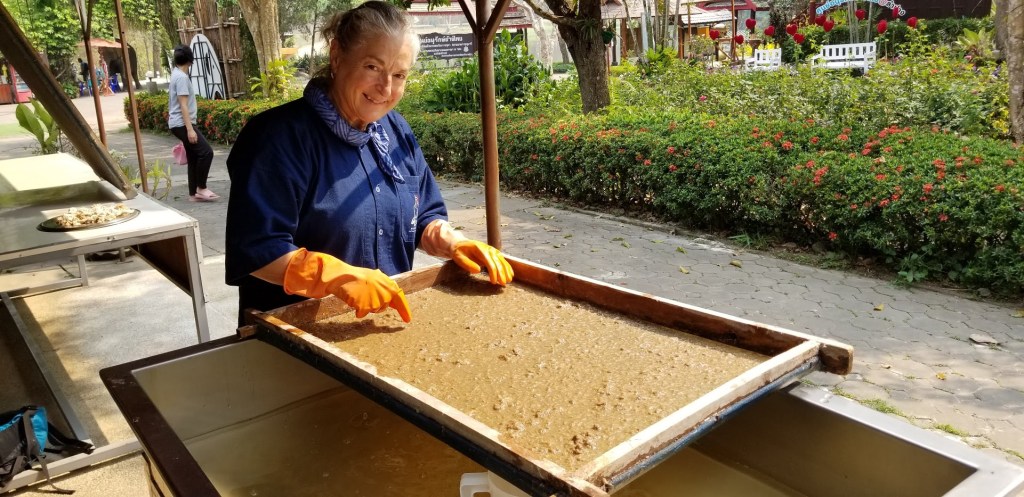
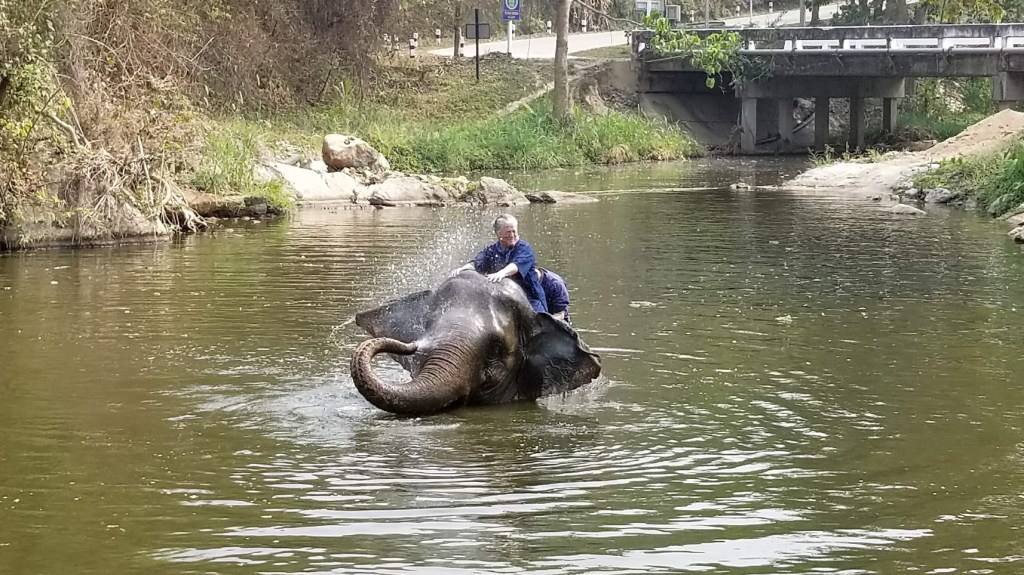
I can add to my resume that I learned how to make paper out of elephant dung! Afterwards, I mounted Pumpuang for the third time and bathed her before trekking back to our starting point a mile away. I’ve never laughed so hard and was completely soaked after being sprayed with water during the bath, but it felt so good on our hot trek back to the training center.
Pumpuang presented me with a certificate of appreciation for completion of the amateur mahout training course on non other than dung paper! Thank you Fern, Taworn and especially Pang Pumpuang for an unforgettable experience 🙂
Kanchanaburi is a town about 130 km west of Bangkok. Several Maryknoll Missioners and three students made the trek in a hired van with a driver. The town is mostly known for the Bridge on the River Kwai, waterfalls and Tiger Temple.
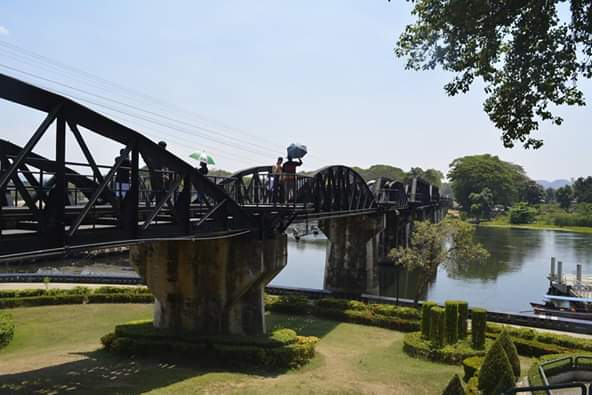
The Bridge on the River Kwai
Japanese Temple in background
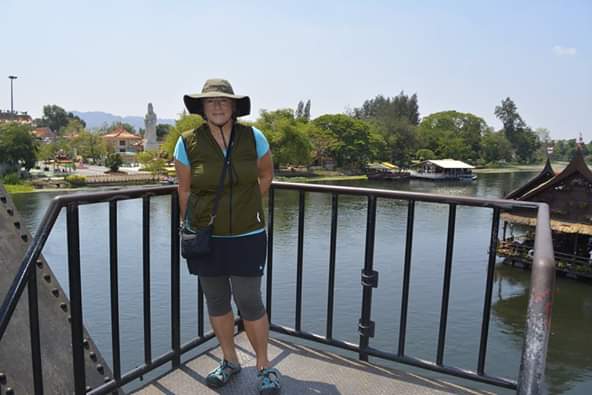
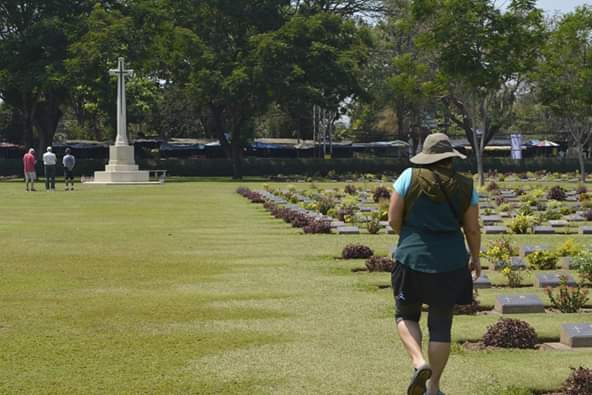
The bridge we visited on the River Kwai looked so placid, so beautiful against a backdrop of a tall majestic Japanese statue and ornate temple. It was hard for me to learn that this bridge was part of the ‘Death Railway’ built by prisoners of the occupying Japanese forces in World War II. In June 1942, 61,000 British, Australian, American, New Zealand, Danish and Dutch POWs as well as an estimated 200,000 laborer’s from India, China, Indonesia, Malaysia, Singapore, Burma and Thailand were put to work by the Japanese Imperial Army to construct a railway line 415km long to link Kanchanaburi, Thailand to the Japanese Base Camp in Thanbyuazyat in Burma.
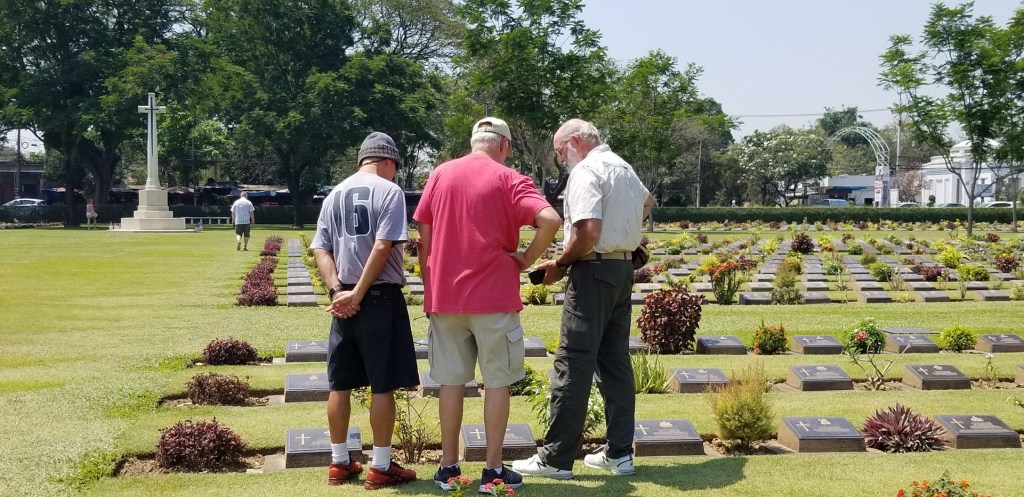
The working and living conditions were wretched, comparable to a genocide. Some 16,000 Allied POWs and up to 100,000 Asian slave laborers died during the construction of the railway. I need to watch the 1957 film Bridge on the River Kwai, directed by David Lean and starring Alec Guinness now that I’ve been there.
“When you go home, tell them of us and say we gave our tomorrow for your today.”
Excerpt of a talk by Fred Seiker to the Kwai Railway Memorial at their October 1997 Annual General Meeting
It is said that one prisoner died for every sleeper laid . . .
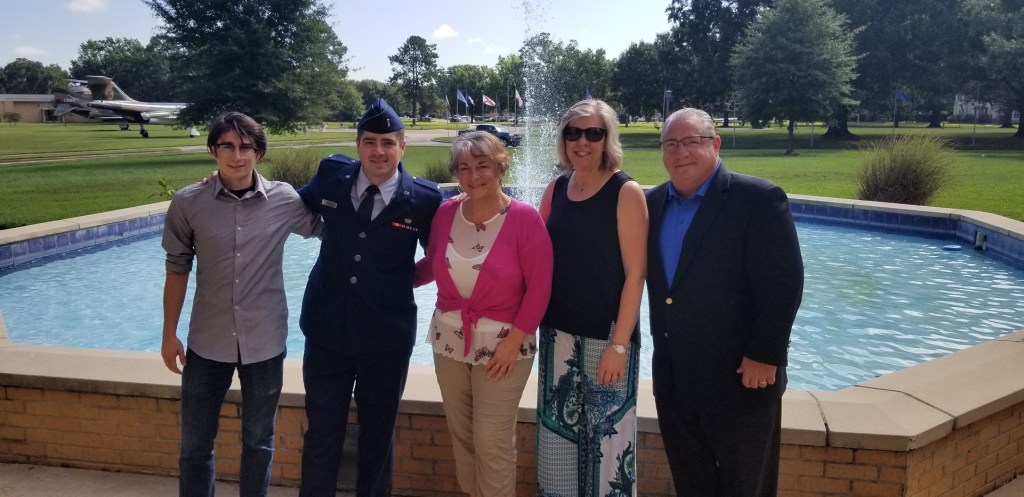
I have not always been as supportive of the military as I should be. I just always believed (or wanted to believe) that there should be another way to solve our differences than killing one another. Regardless, I want to say here and now, THANK YOU to all of the brave men and women for risking your lives to protect our dignity and freedom. Please indulge me while I give a special shout-out to my Dad, who was a Staff Sergeant in the Army in WWII, my good friends and former neighbors, Jeremy and Kim Howard, who served in the US Airforce and their son, Seth, who is currently serving in the US Marine Corps. Most especially, I am so proud of my son, Captain Marcus Walker, who is currently serving as a JAG in the US Airforce.
JAG Pinning ceremony September 2018 – Montgomery, AL My sons Eric & Marcus, me, Terri & Mike (My brother & his wife & Marcus’ Godparents)
Tiger Temple
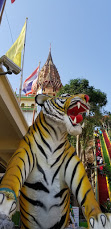
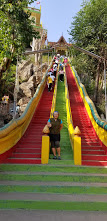
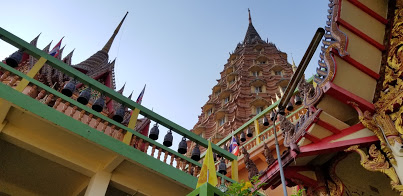
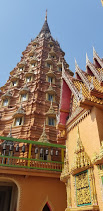
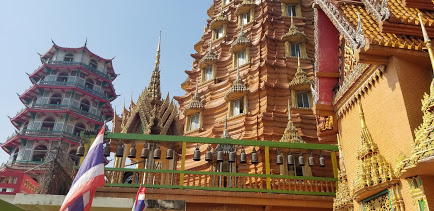
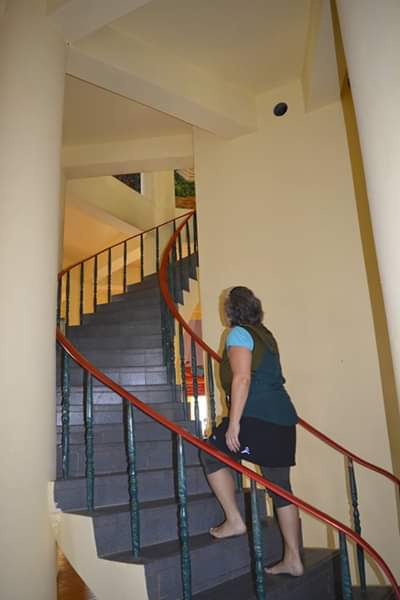
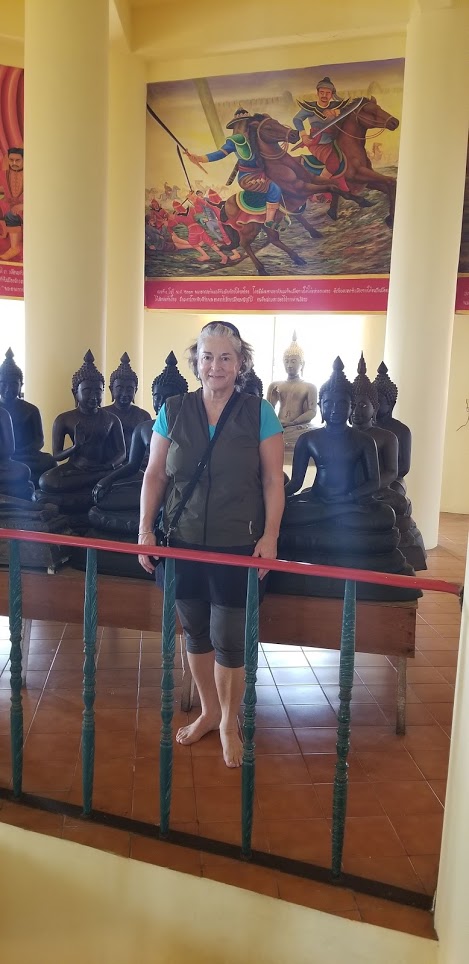
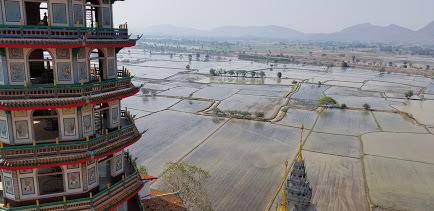
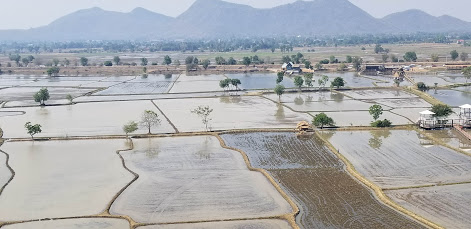
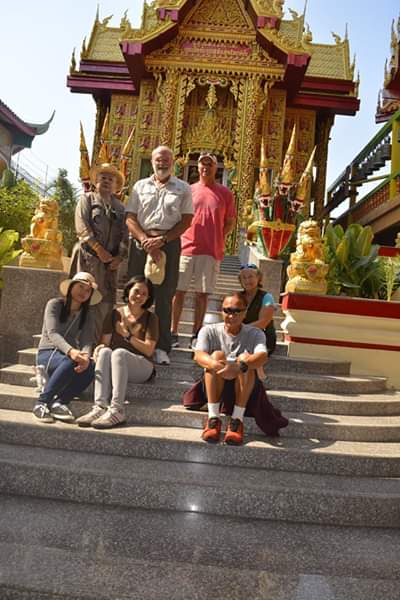
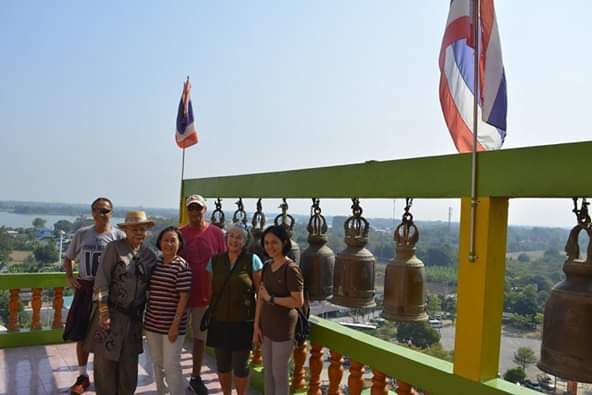
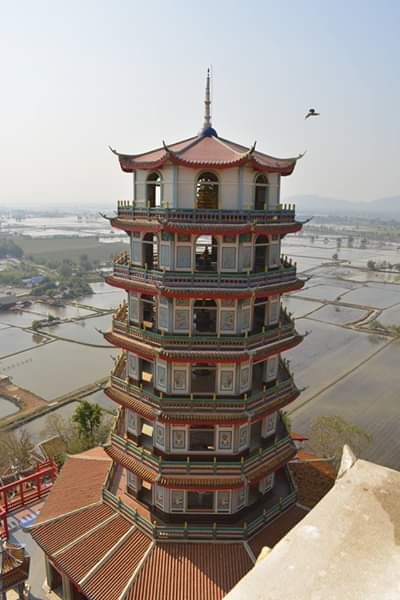
We stopped at a wonderful restaurant on the Kwai river for lunch and visited the Tiger Temple. There are actually several temple’s that are built high up on a mountain top that can be reached by climbing the steep colored staircase or you can choose to ride the funicular. Once I climbed to the top of the stairs, several of us climbed nine floors to the top of a beautiful pyramid shaped Temple. The winding staircases led us to unique art pieces, Buddha statues and mural paintings on the walls depicting Thailand history on each floor. The Duomo shaped ceiling at the top enclosed what looked like a golden ornate alter. One of the students on the trip indicated that there were actual Buddha relics inside. The views of the rice paddy fields below were spectacular.
Temple with nine floors that we climbed to the top
I took this pic of ‘everyone’ else who rode the funicular back down to the van 🙂
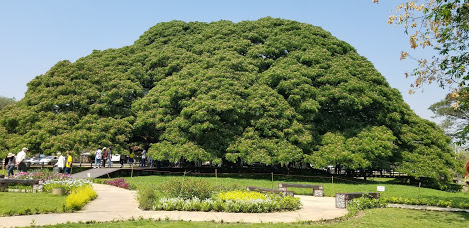
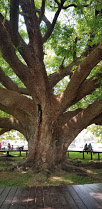
The Big Tree
We did not go to the waterfalls since we were told that they would be dried up at this time of year. Alternately, we went to see another masterpiece of nature, a giant Monkey Pod tree. The pictures don’t do justice to show the size of this massive specimen of a chamchuri (rain tree) that is over 100 years old. On the way out of the park we ran in to some unexpected traffic on the road . . .
“I want to know God’s thoughts, the rest are details”
Albert Einstein
Food for Thought
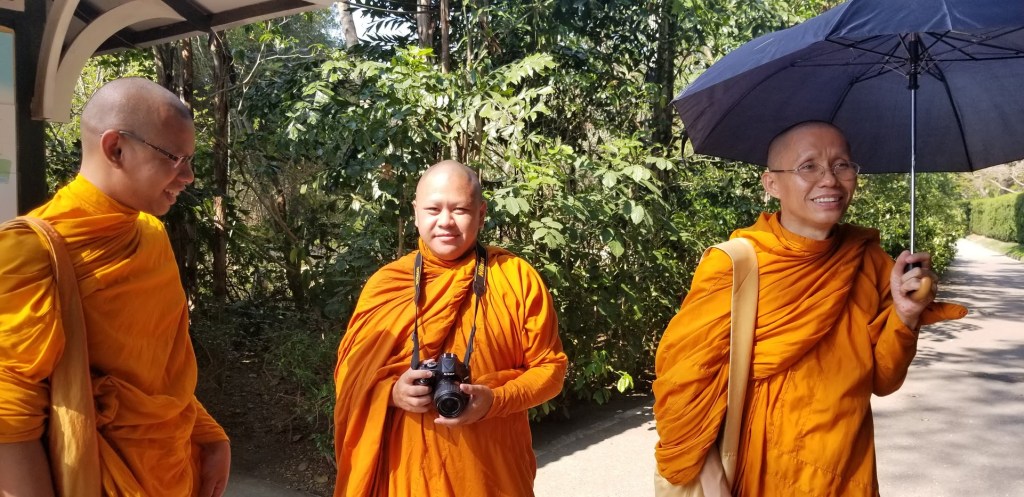
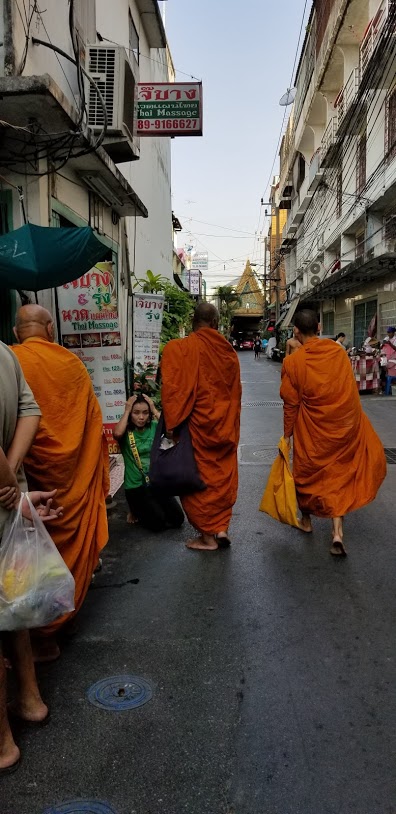
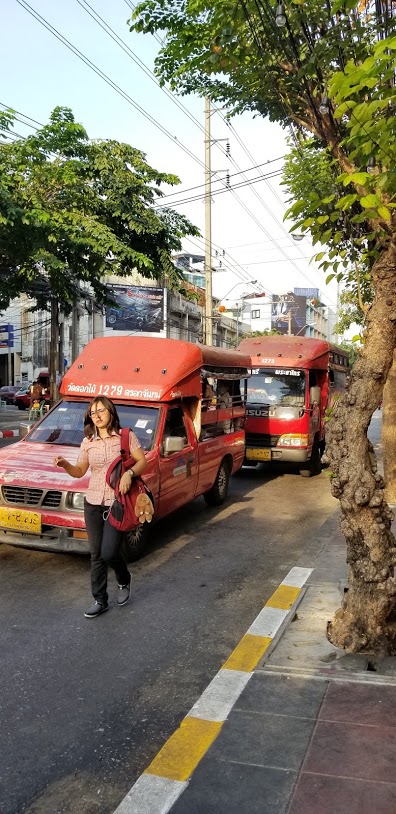
Yesterday was Ash Wednesday. During this time, we prepare for the death and resurrection of Jesus Christ and observe the three pillars: prayer, fasting and almsgiving. On most mornings as we ride on the back of the songtaew (red pick-up truck with two benches in the back) to the Wat where we teach class, we see the monks from our Wat making their food-gathering rounds. On their morning rounds, each monk walks silently, eyes downcast, barefoot, along the neighborhood streets. He carries his alms bowl, often suspended by a sling across one shoulder.
The monk stops only when he is respectfully and quietly addressed by a layperson waiting at the side of the road to place food offerings in his bowl. Since it is an important part of Buddhists’ belief that they earn merit by their generosity to monks, they place in the monks’ alms-bowls ready-to-eat food of the best quality.
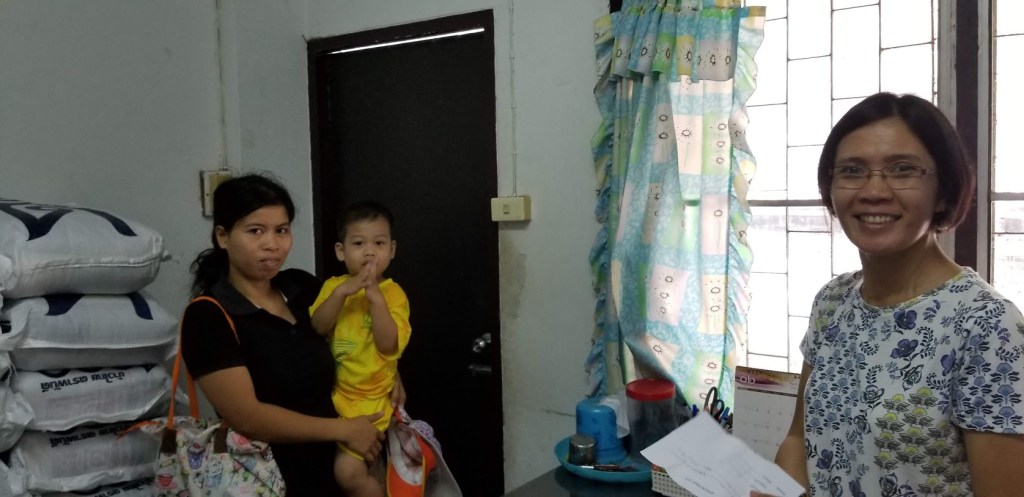
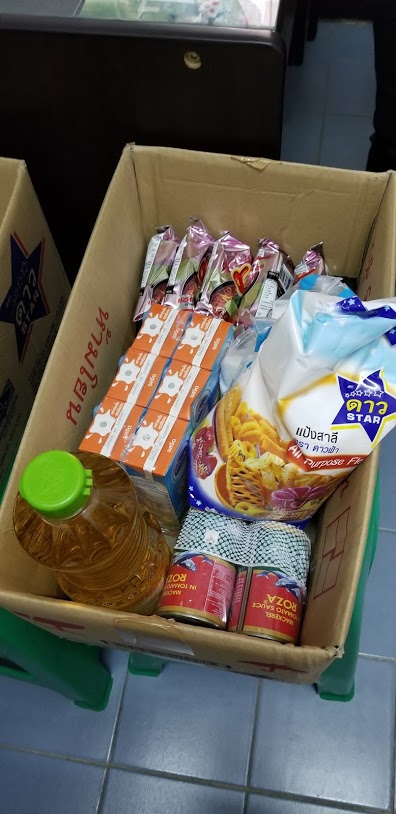
This week I visited the Maryknoll Urban Asylum Seeker/Refugee food distribution office. It’s one thing to learn and read about this work but to witness the refugees and to hear their stories first hand is very emotional. Arlene and Tik do a wonderful job organizing the operation and attempting to fairly distribute food items. Maryknoll helps the Urban Asylum Seekers/Refugees, particularly the asylum seekers registered with the United Nation High Commissioner on Refugees (UNHCR). When they enter the office, they show their UNHCR ID and sign-in on the registration form which lists their UNHCR number, name, nationality, status (single/family), number of children and whether they are an asylum seeker or refugee. Each person gets rice, sugar, milk, noodles, and cooking oil, then, based on their nationality preference, they get either rice noodles or flour and sardines. On the registered list were people from Cambodia, Sri Lanka, Pakistan, Vietnam, Ethiopia, Somalia, Afghanistan, Iraq, Sudan and Tanzania. Mostly the woman pick up the food because they say it is safer since their husbands would be more likely to get arrested. The women are very strong carrying two big bags of rice, the food items and sometimes a child.
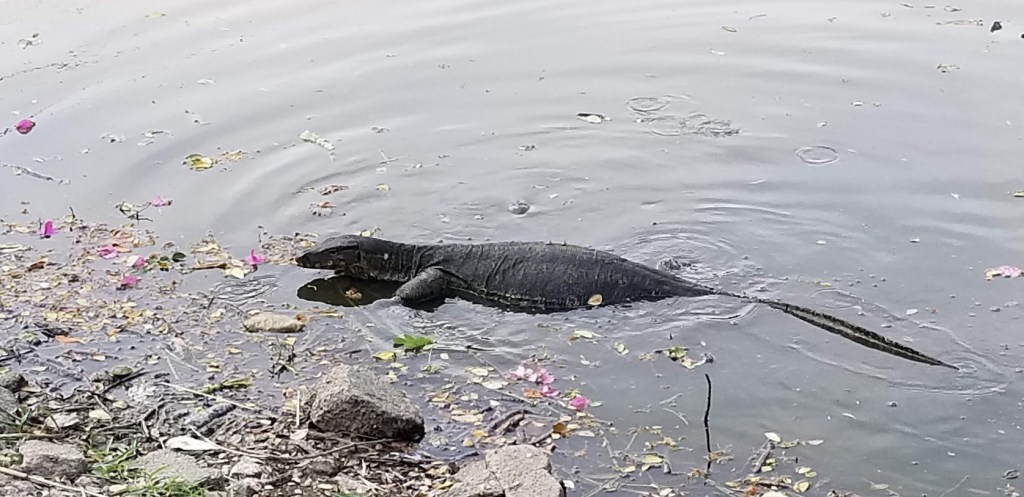
It took two hours to get to the food distribution office on two songtaews and two buses. On the way back at one of the transfer locations that was next to a canal, I saw a monitor lizard! Wow, it was probably 5 feet long including the tail.
Monitor Lizard
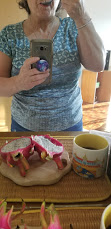
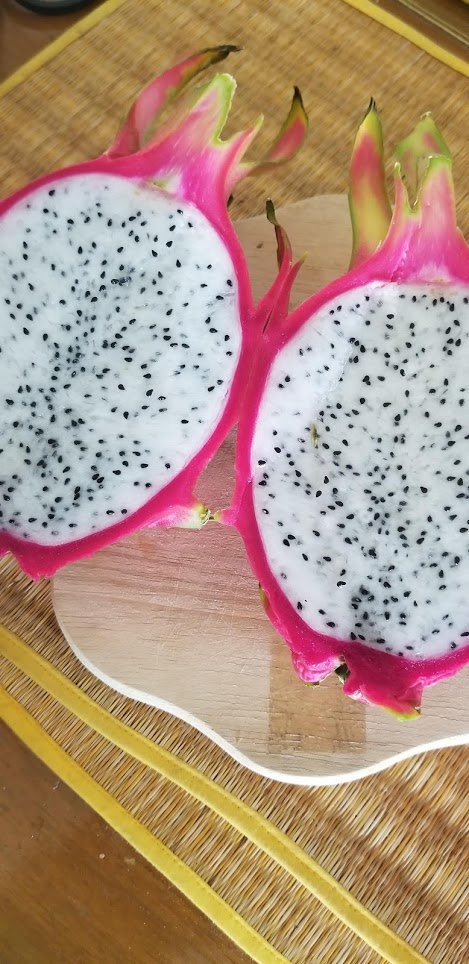
Dragon Fruit Follow-up . . . I like it!
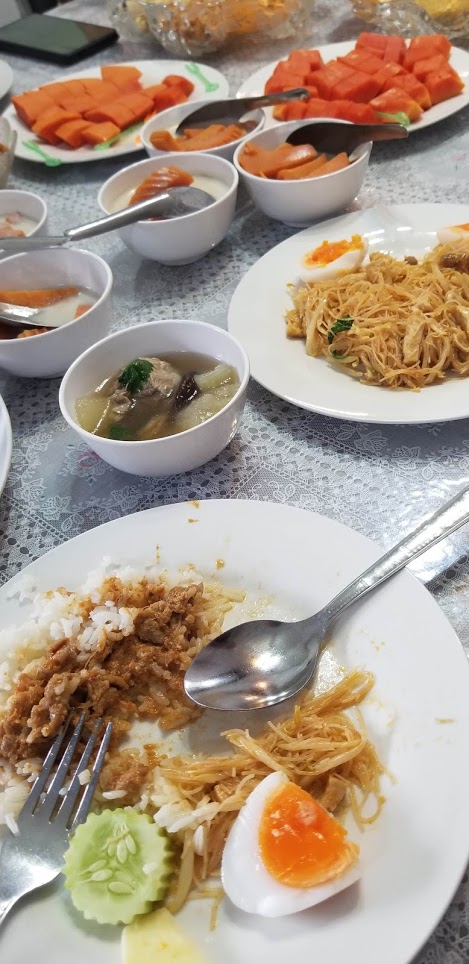
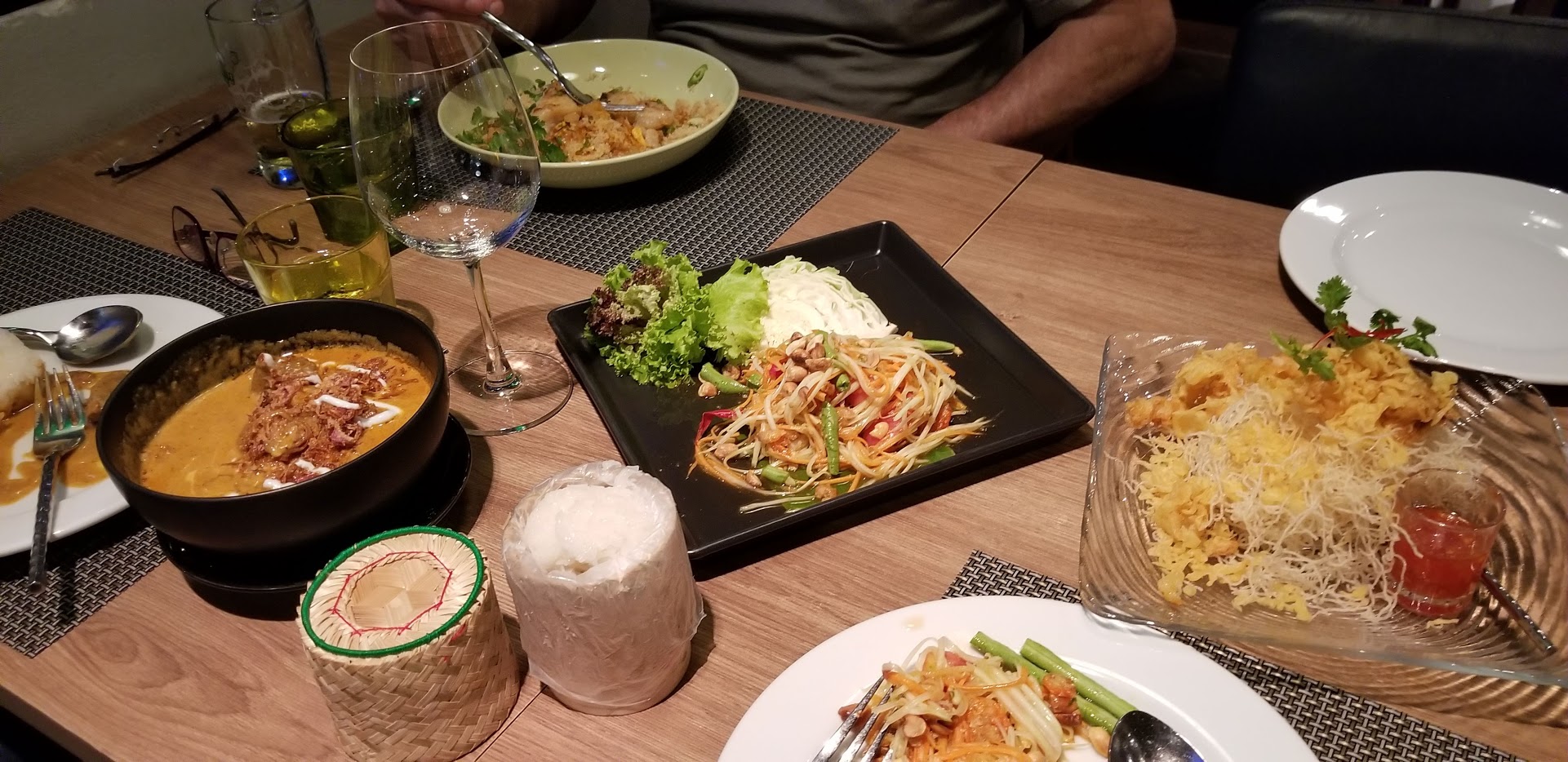
Amazing Food!
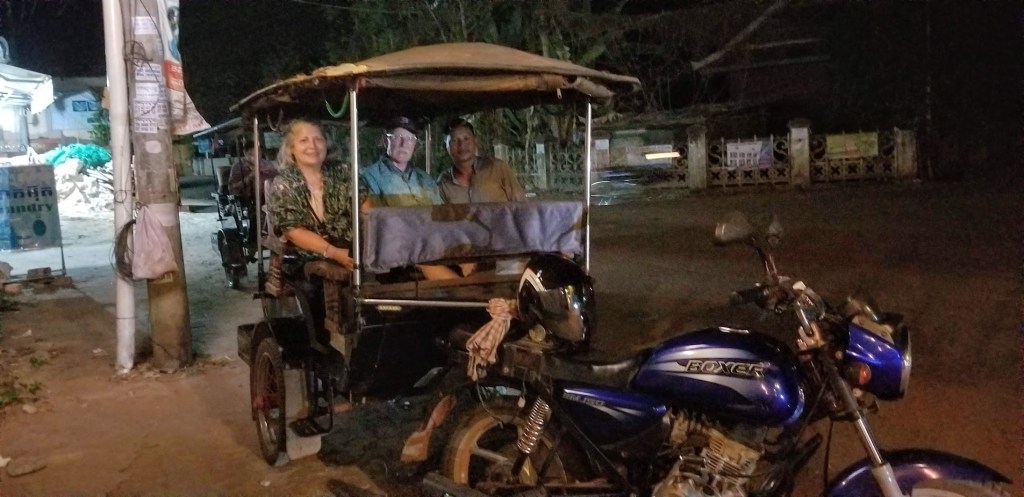
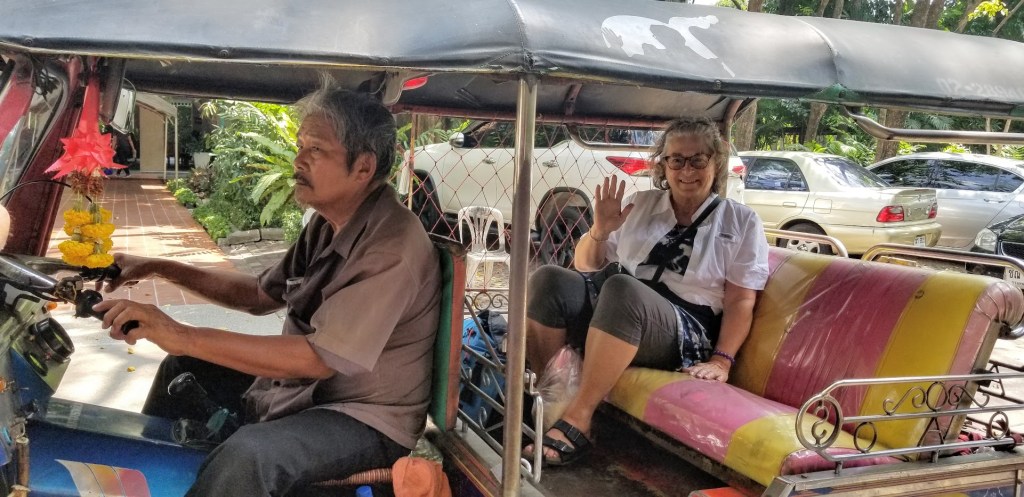
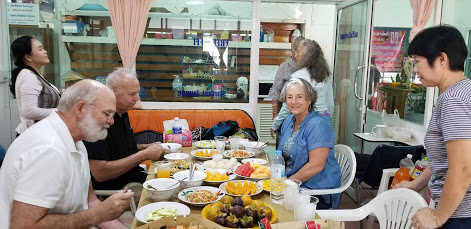
We were invited to one of my students home to help celebrate her husbands 80th birthday. When we arrived, the monks were there chanting over the birthday boy. Before the monks left, one of them provided holy water blessings on our heads, I mean not just a sprinkle like the Catholic Priests but a bunch of bamboo sticks slapped on your head! The food buffet was amazing, I especially liked the pumpkin in coconut milk dessert. At the dinner table were my students’ grown children who speak Thai, their cousins from China who only speak Chinese, and us Americans who only speak English. It made for interesting conversations . . . thank you “google translate”! I had my first tuk tuk ride back to our apartment. Locals don’t typically use tuk tuk’s since they inflate their prices.
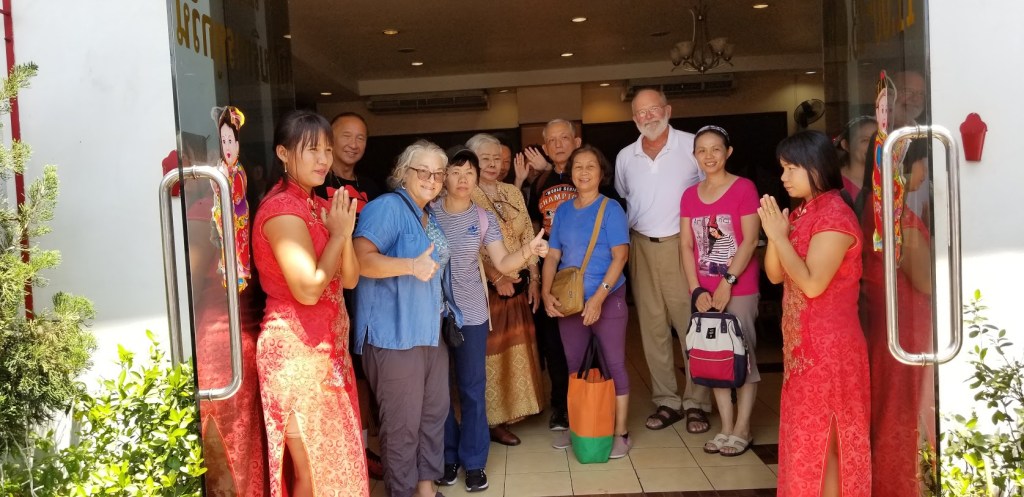
We were also hosted to a lunch at a Chinese restaurant for one of the teachers going away. Hard to believe I’ve been here for almost two months.
first tuk tuk ride!
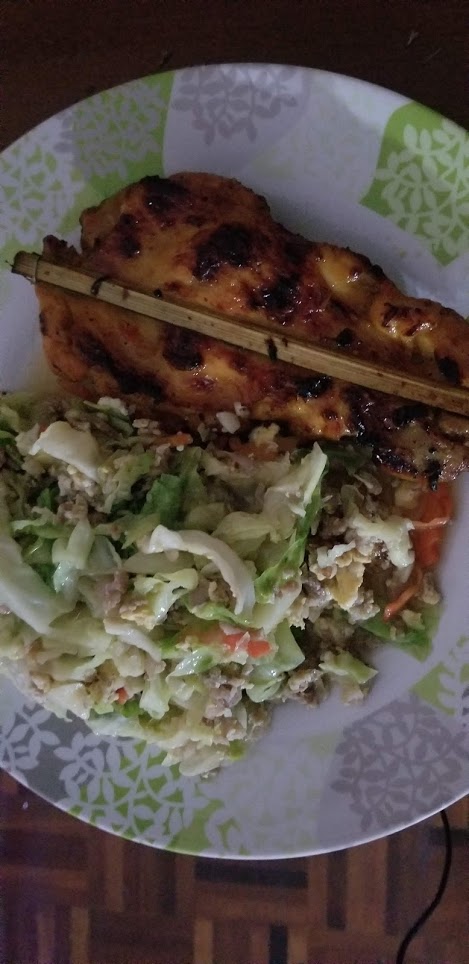
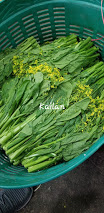
BBQ chicken between bamboo sticks and Vegi dish from the market next to our apartment
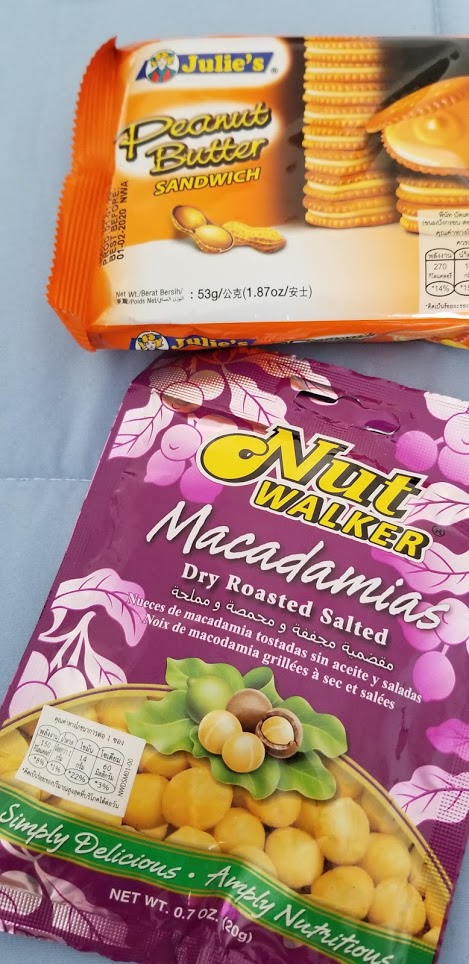
Julie’s Crackers Walker Nuts
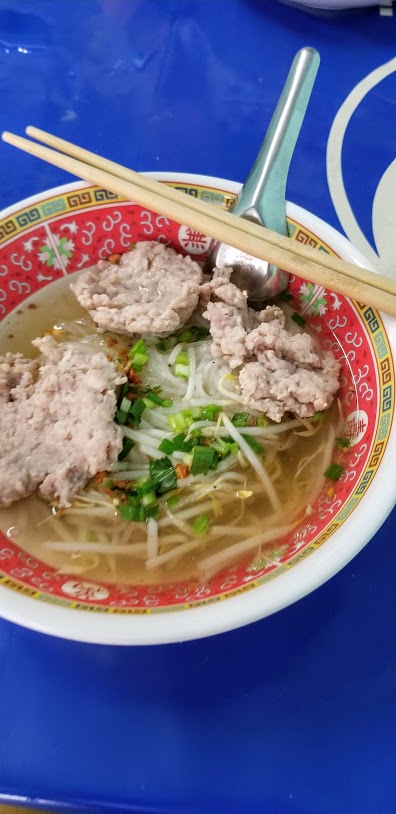
Ground Pork Noodles
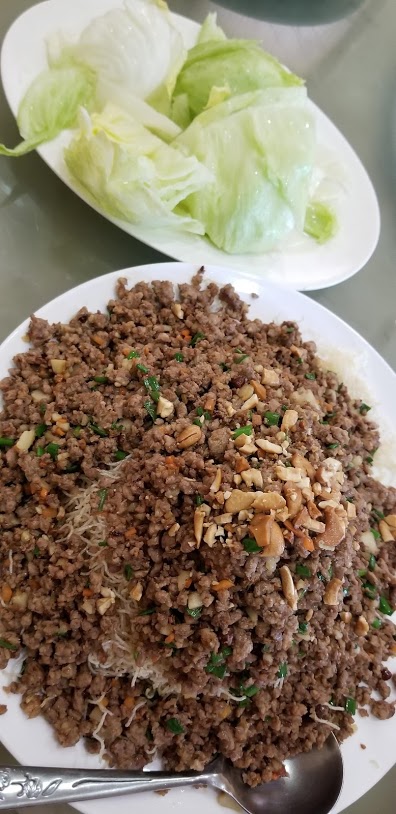
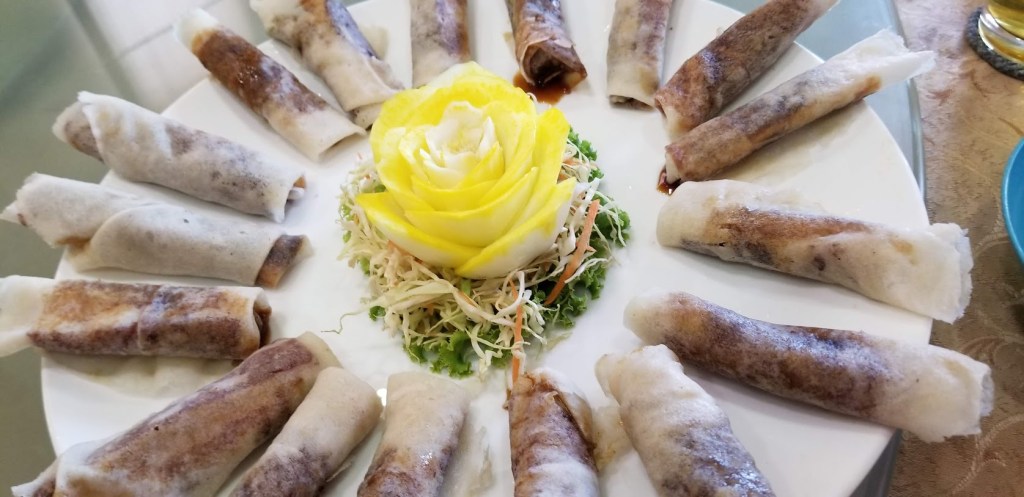
Duck Lettuce Wraps
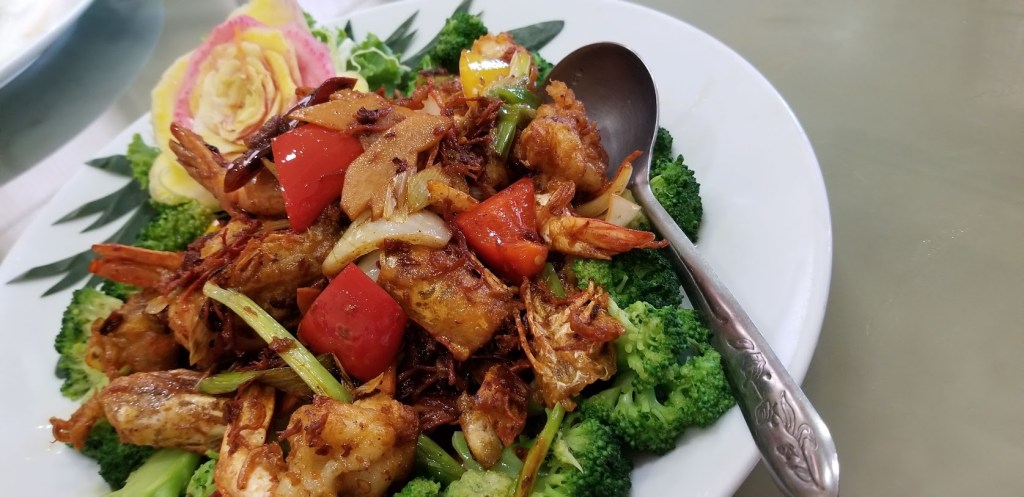
Spicy Prawns and Broccoli
Bamboo Soup
Duck Skin Wraps
Chinese Restaurant
US Embassy Visit
We met with the Regional English language Office to obtain resources and get tips for teaching English.
Chinese Calligraphy in Chinatown
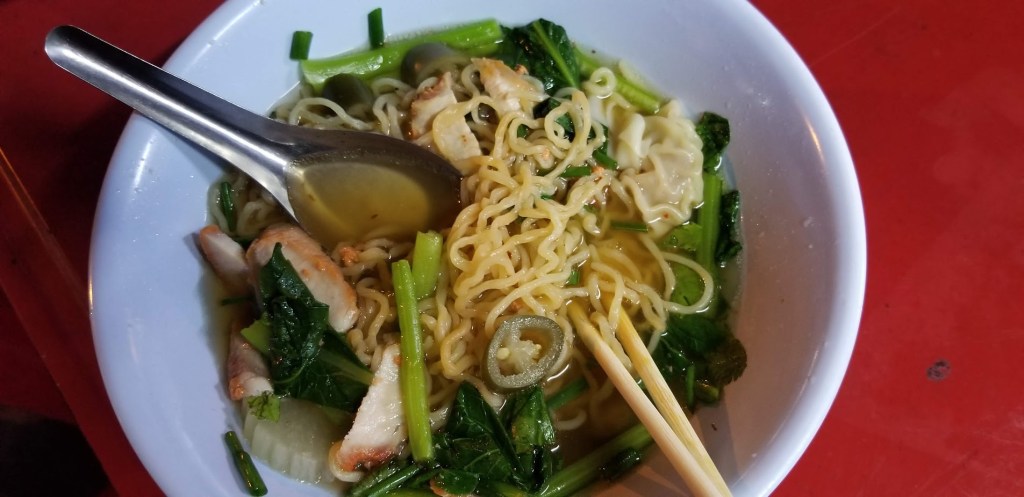
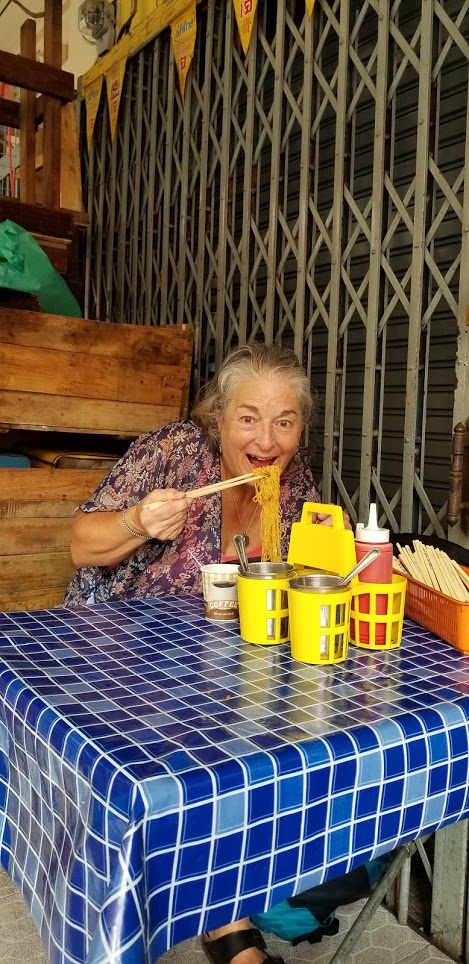
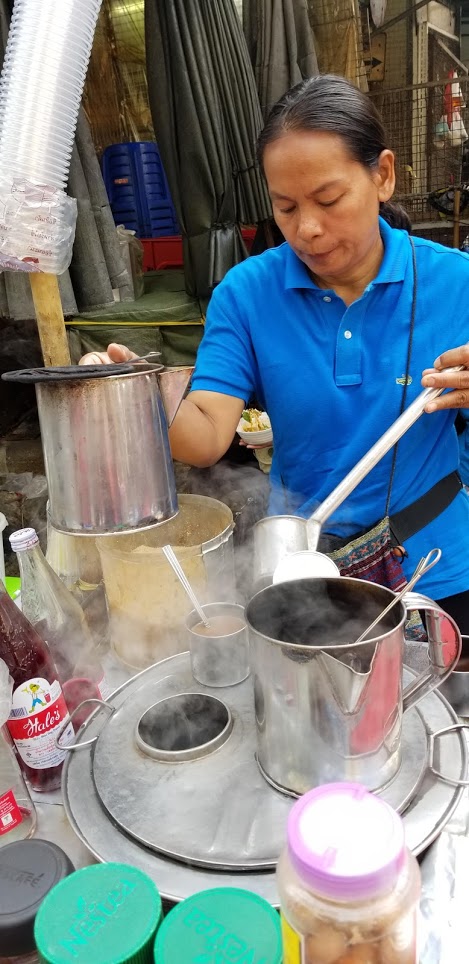
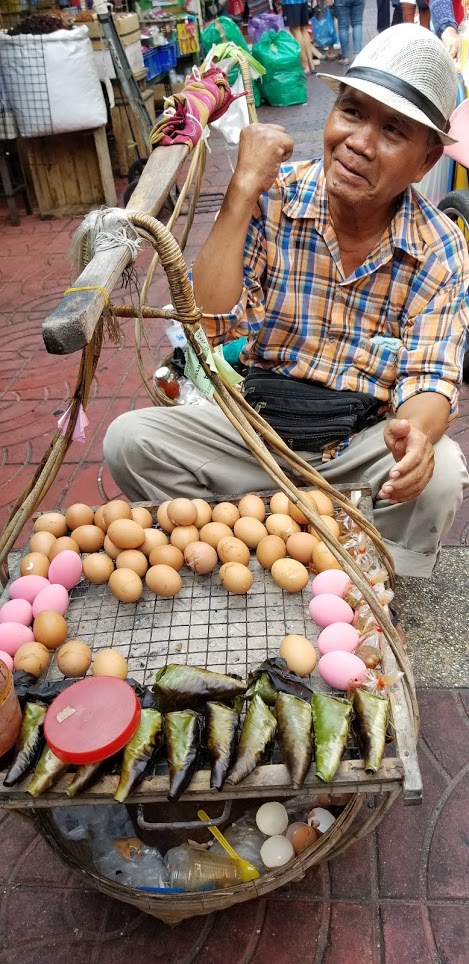
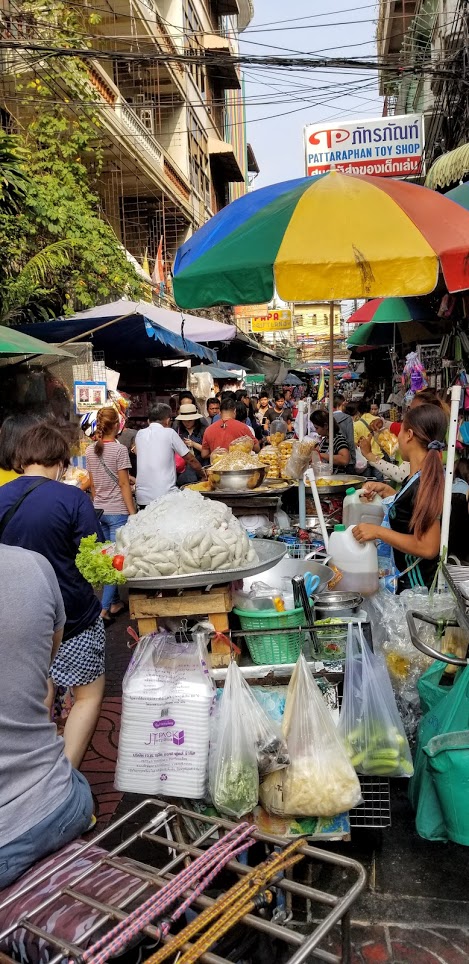
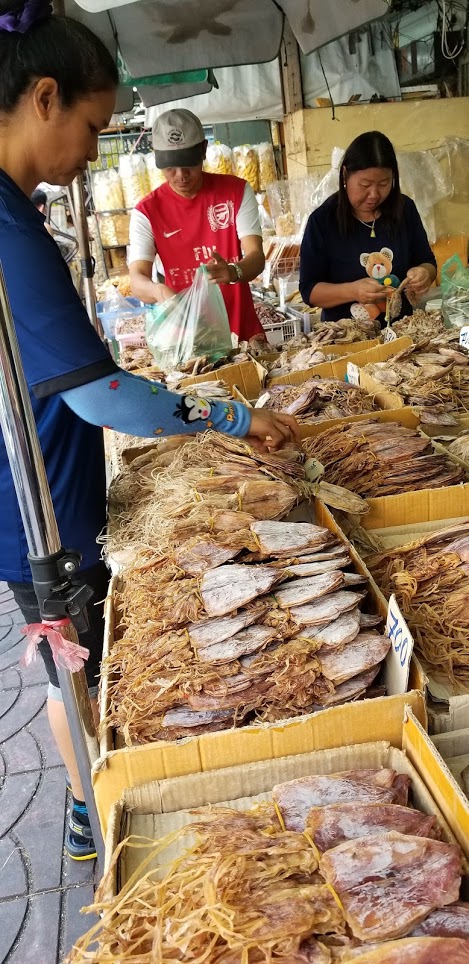
I had my first of two Chinese Calligraphy classes in Chinatown. Those of you that know me, know that I have a passion for western calligraphy. Since my brother brought back Chinese Calligraphy brushes from China, I have wanted to take classes to learn the art. I set out early not wanting to be late and was excited to walk the early morning markets in Chinatown. I thought about having raw eggs from a street vendor for breakfast who said it would make me strong, but settled for Chinese coffee and pork noodle soup for breakfast!
Chinese Coffee
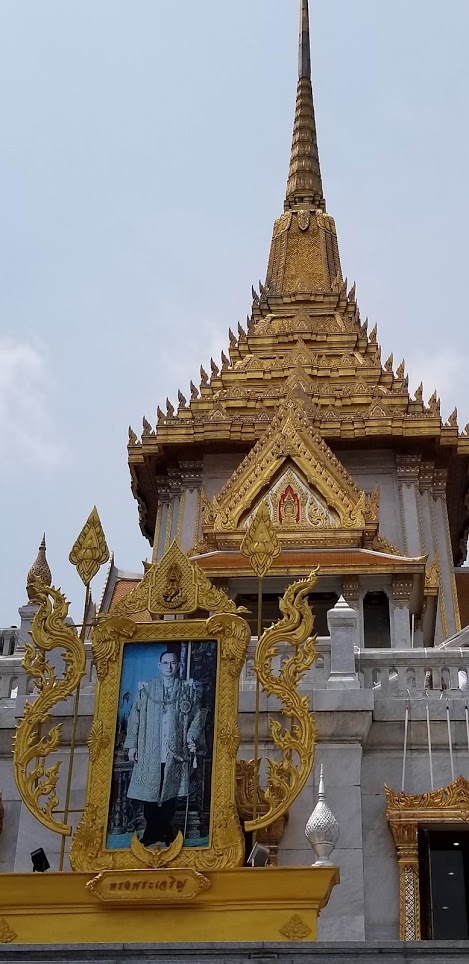
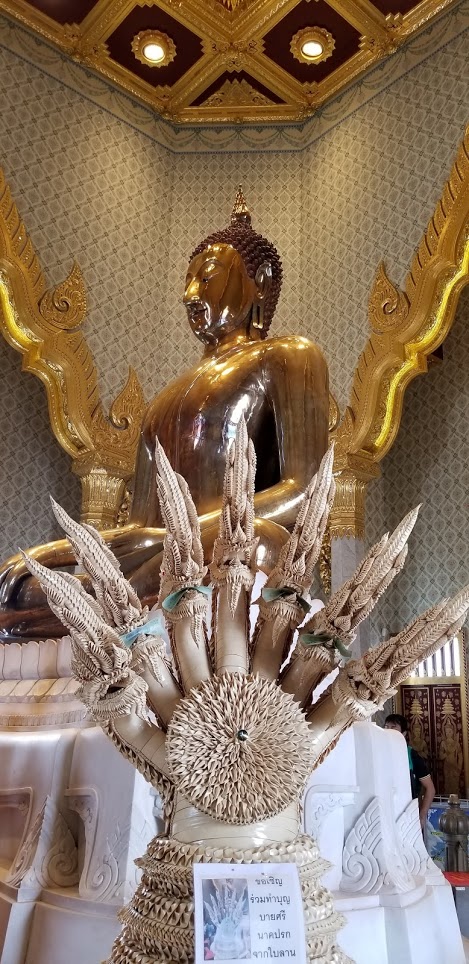
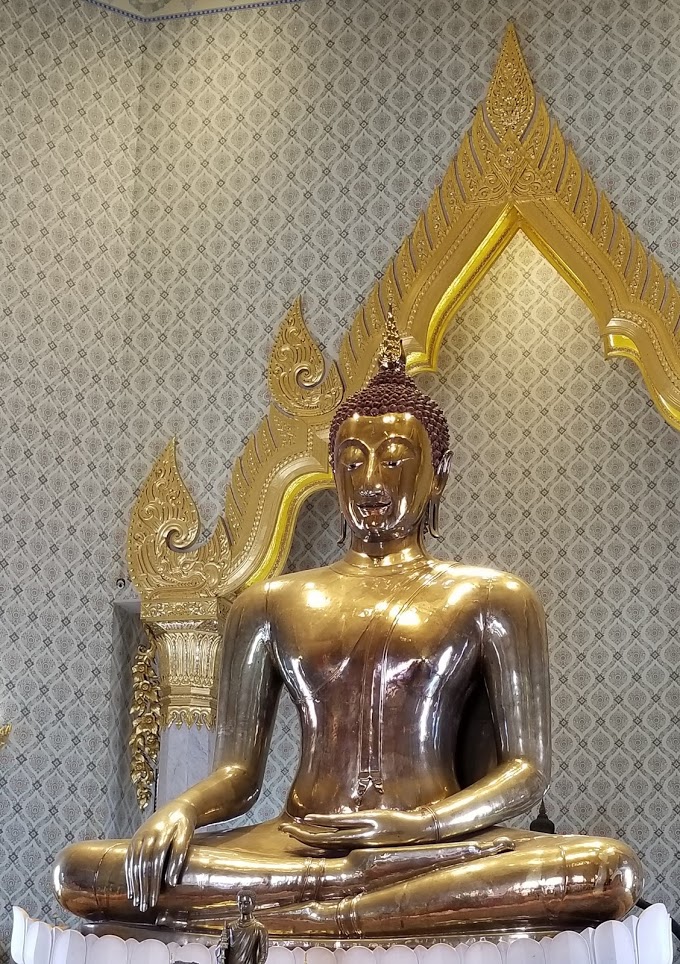
After my private class, I ventured to Phra Maha Mondop The shrine of the GoldenBuddha image and the Chinese Museum. The Golden Buddha Image is the largest golden Buddha in the world. It is 13 ft tall and weighs 5.5 tons with an estimated value of 37 million dollars.
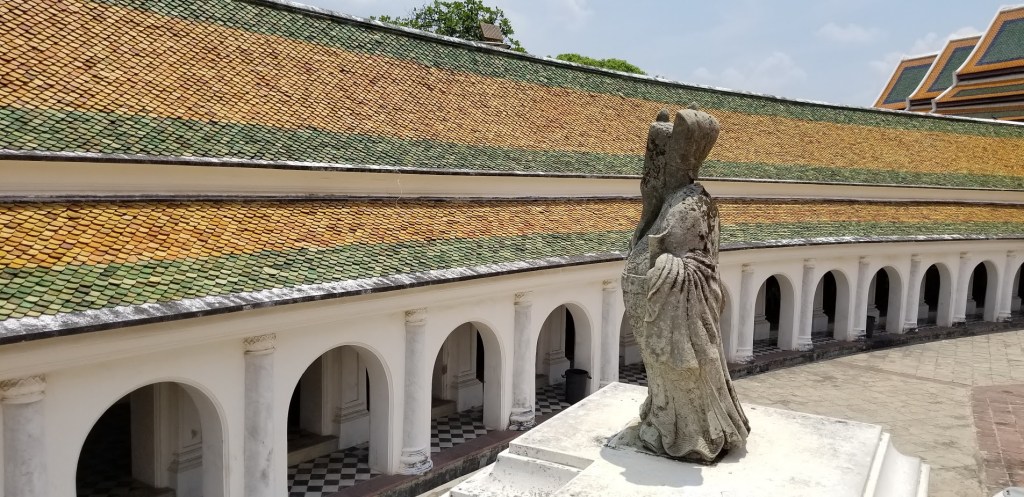
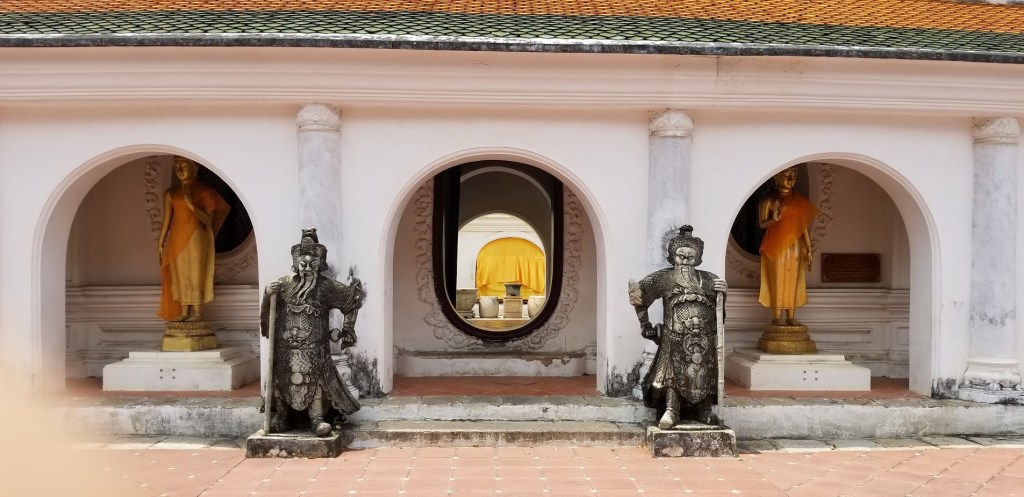
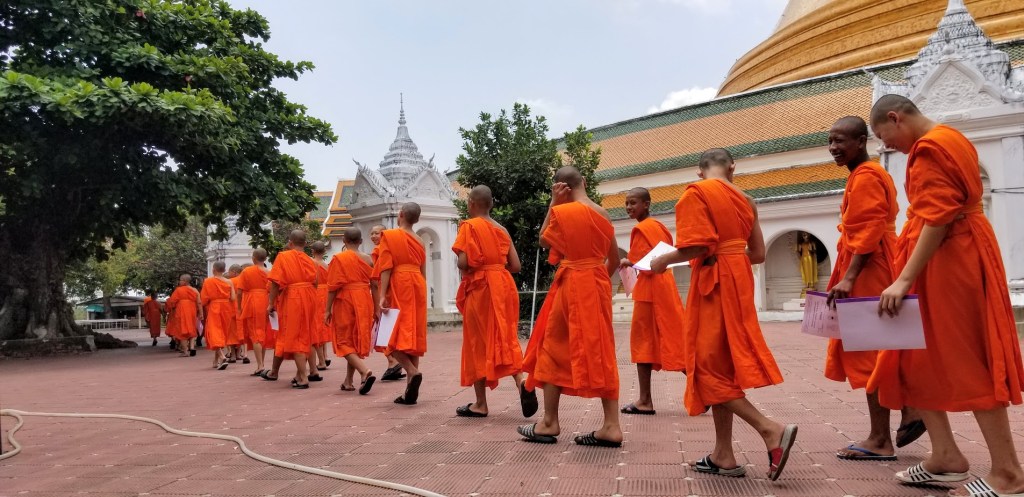
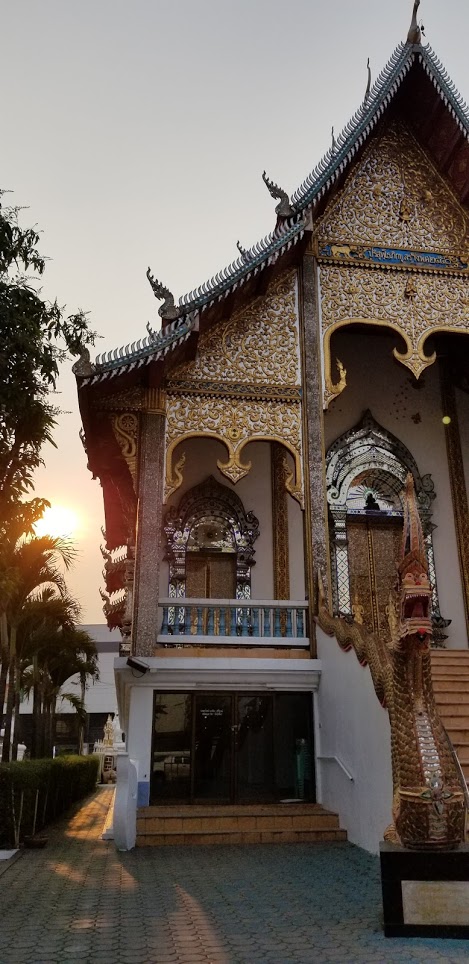
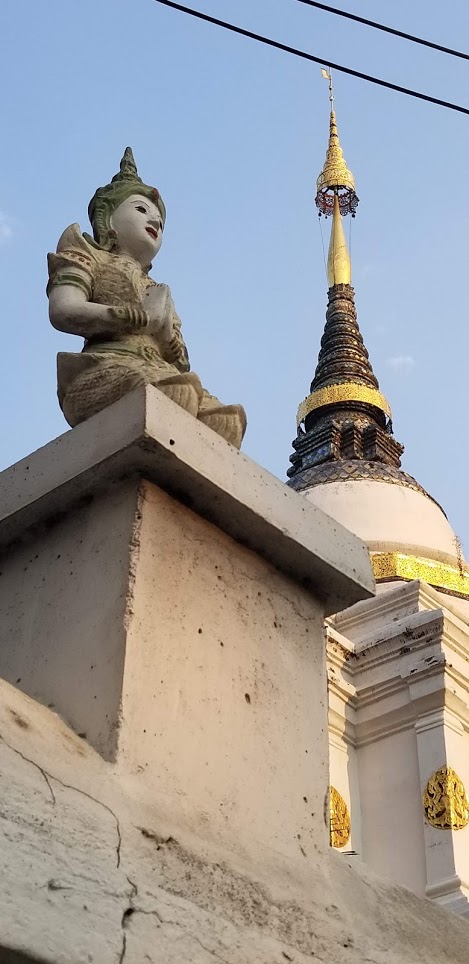
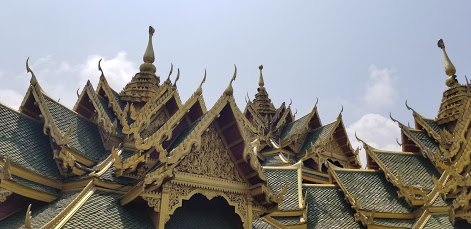
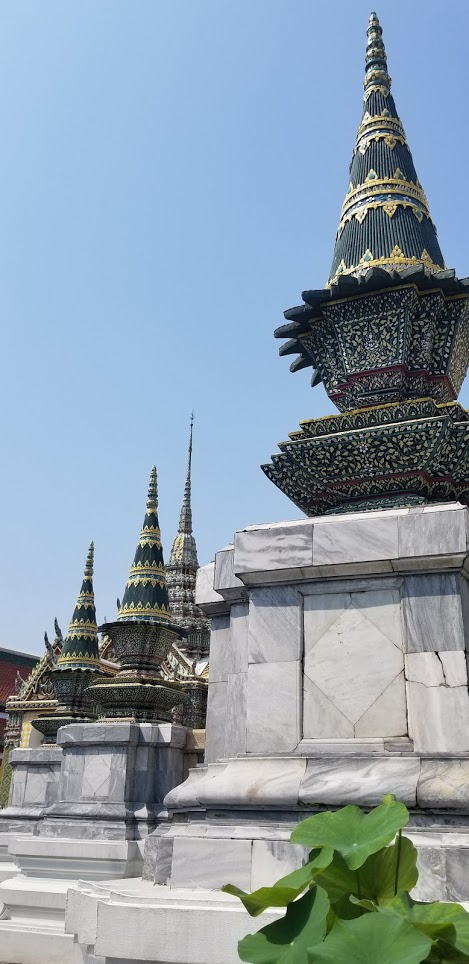
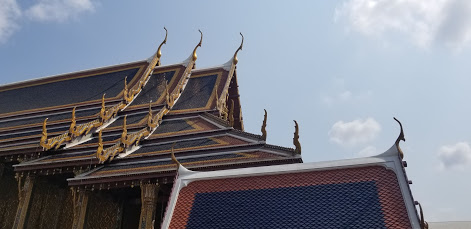
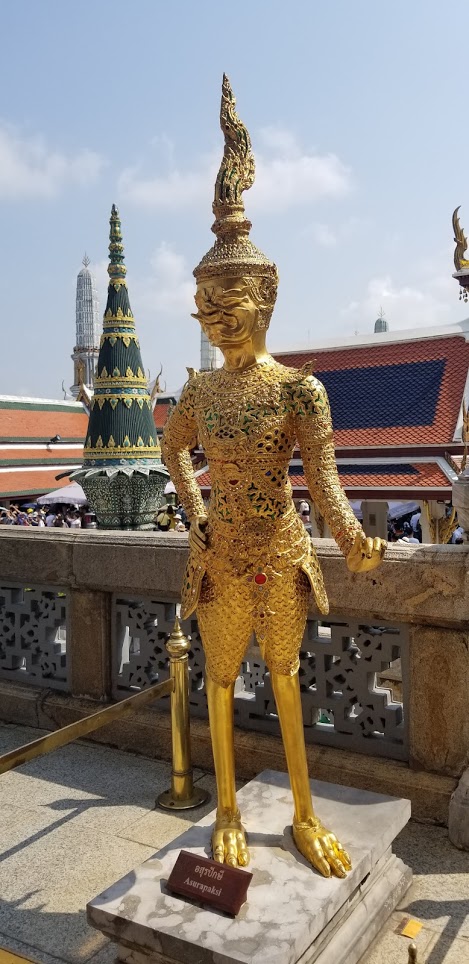
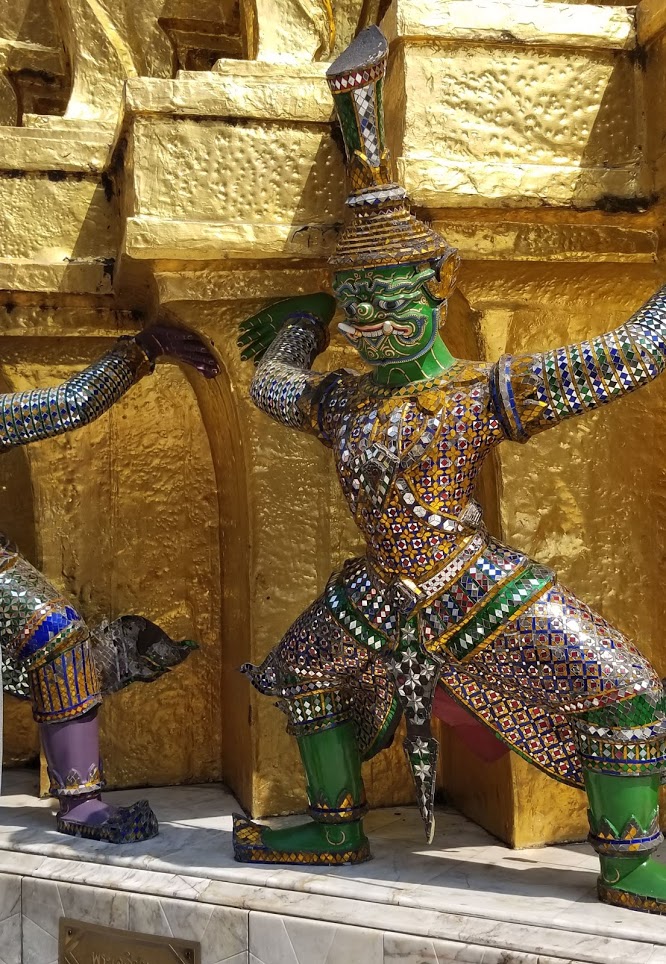
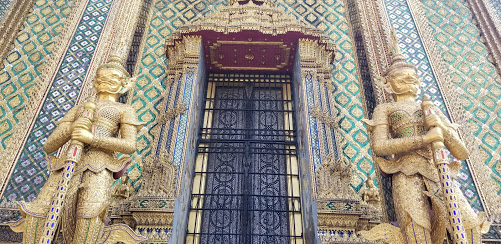
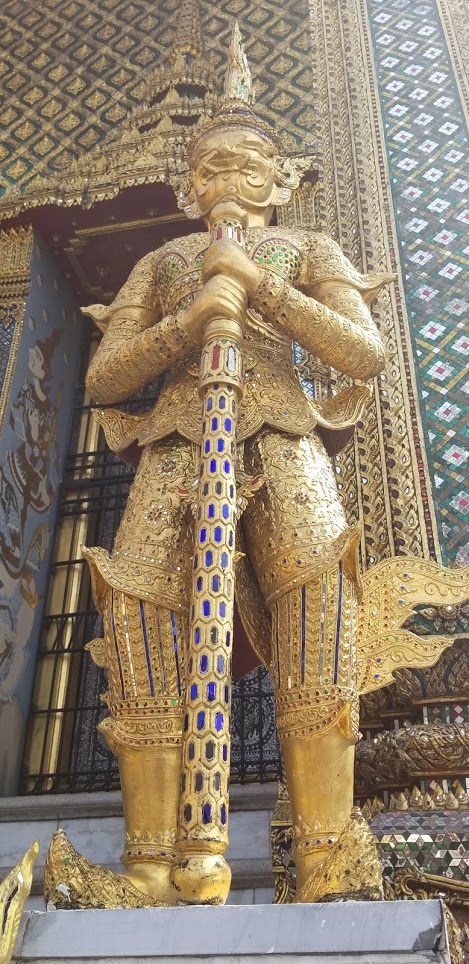
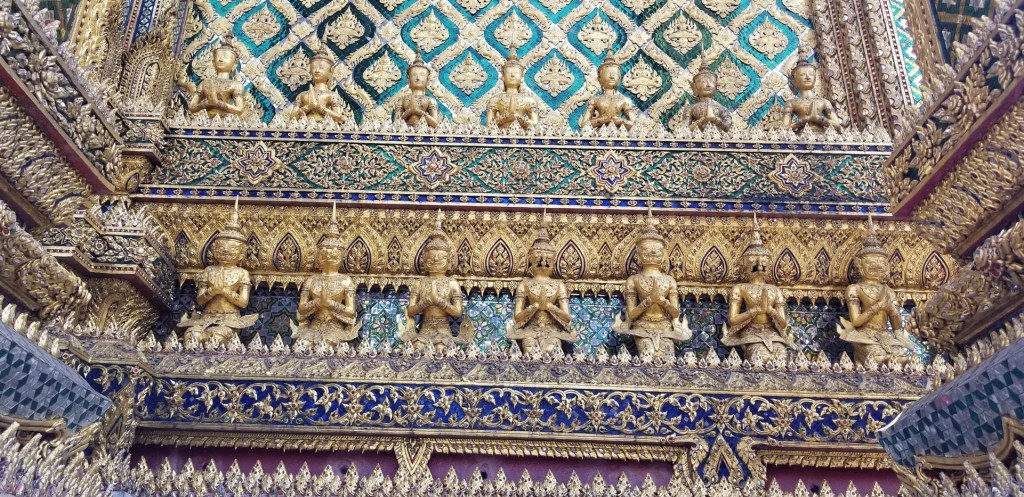
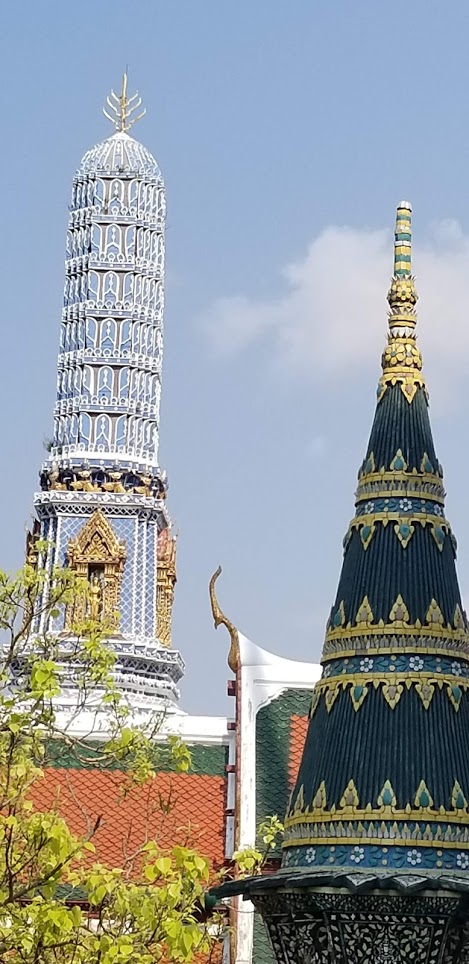
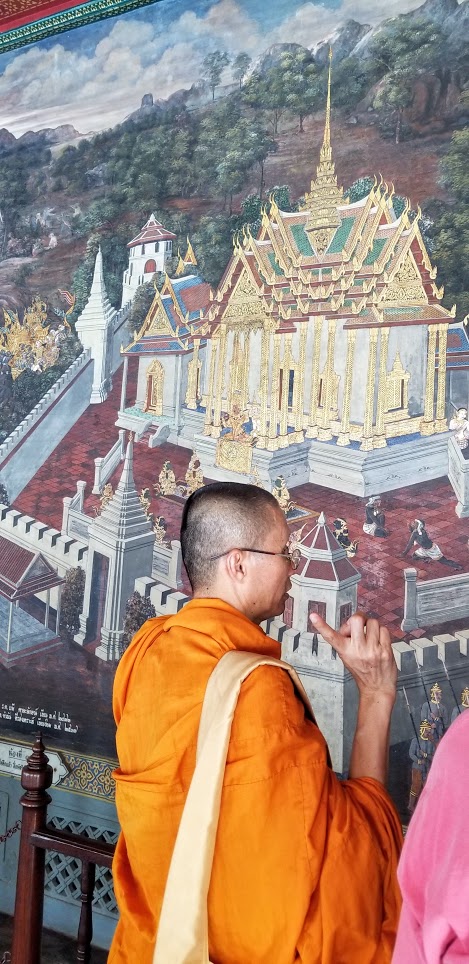
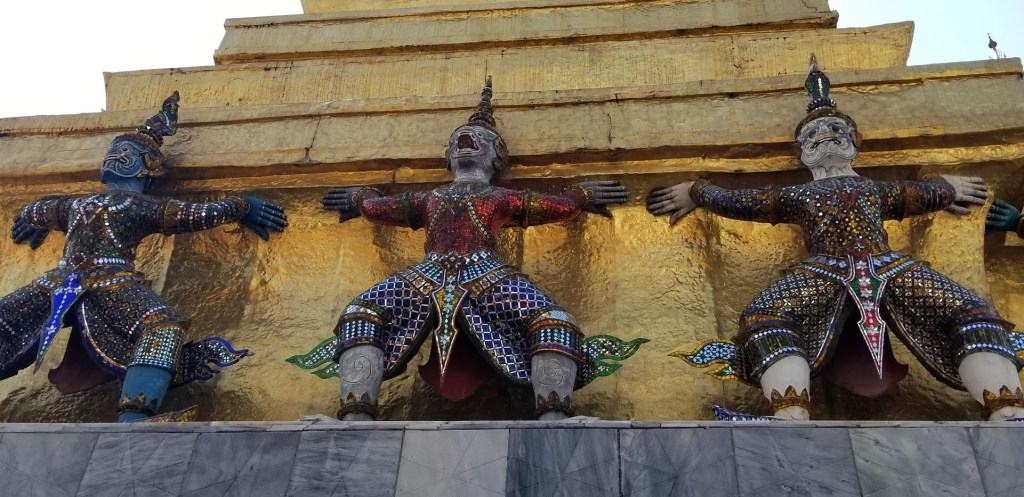
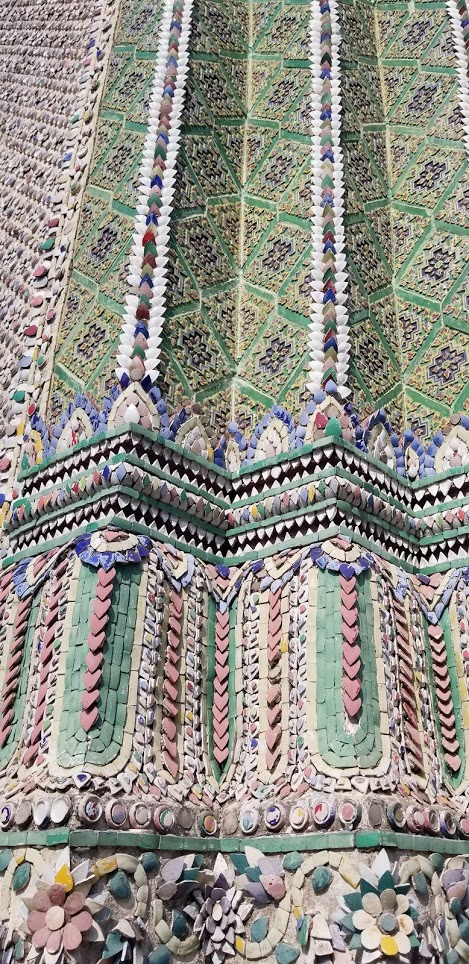
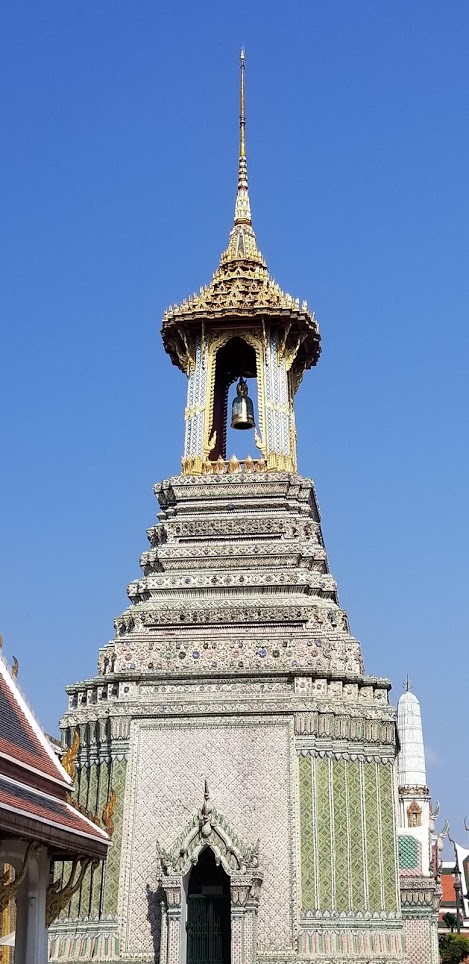
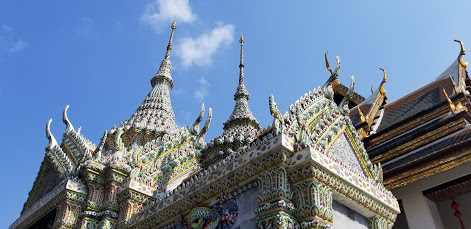
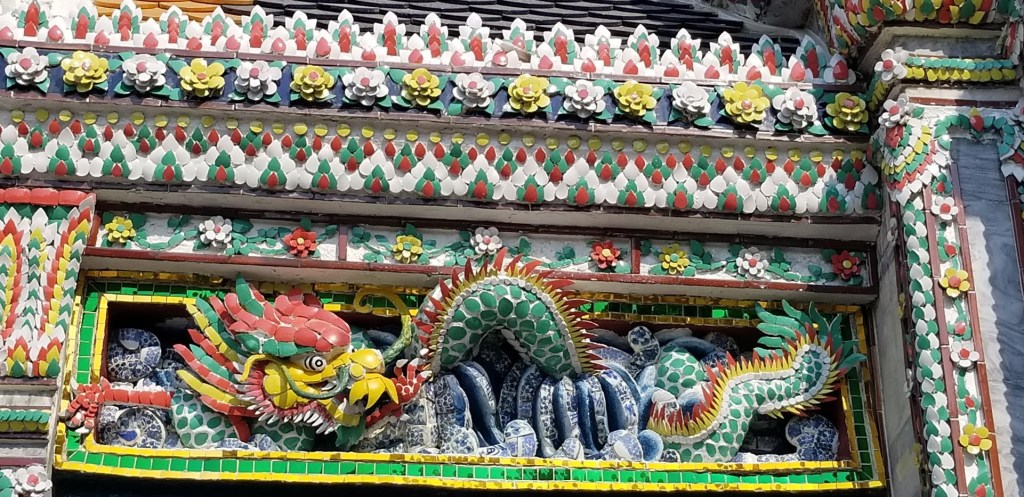
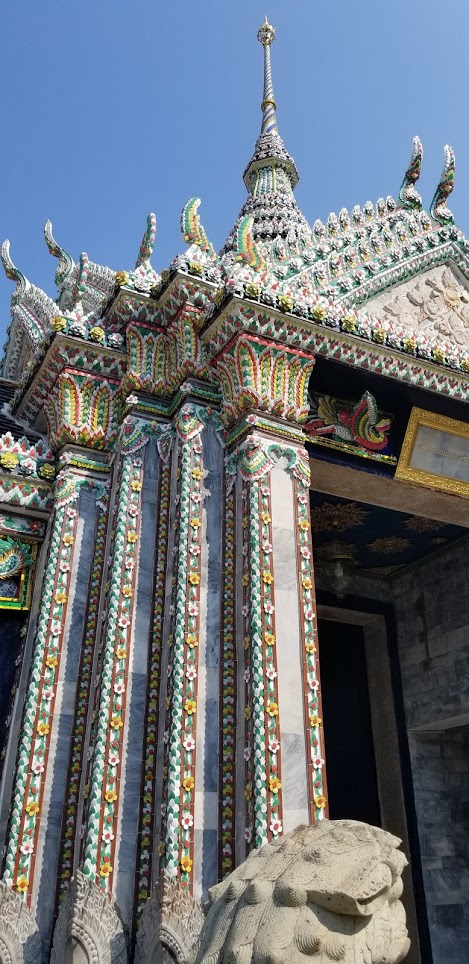
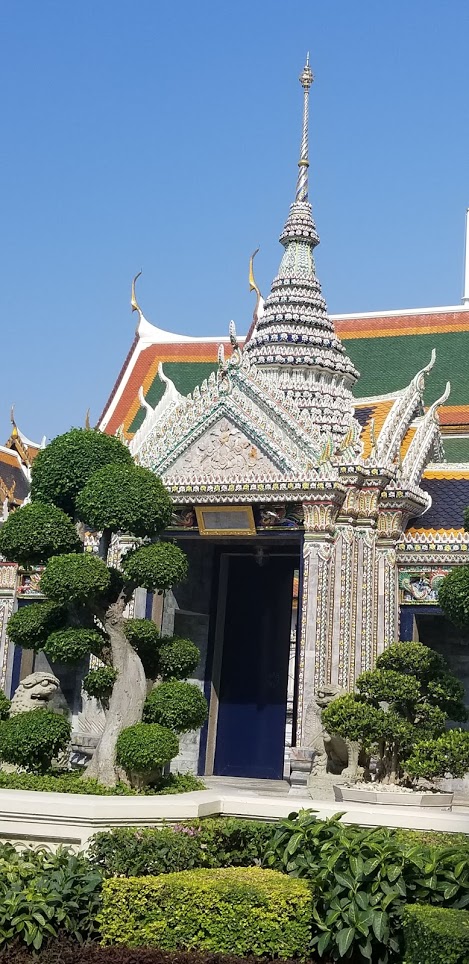
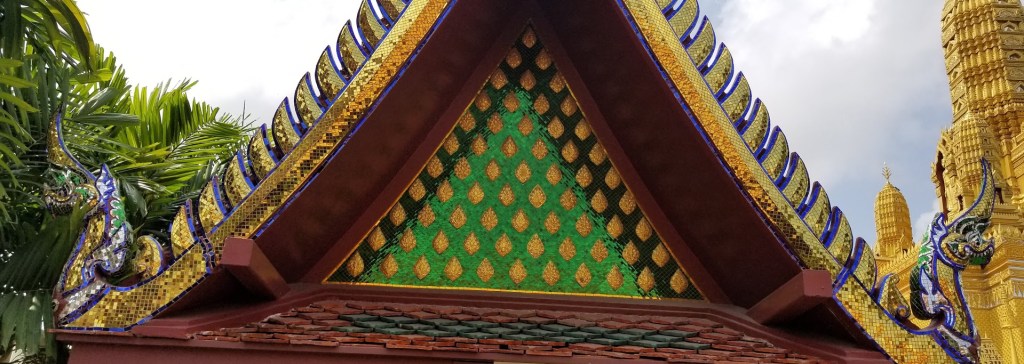
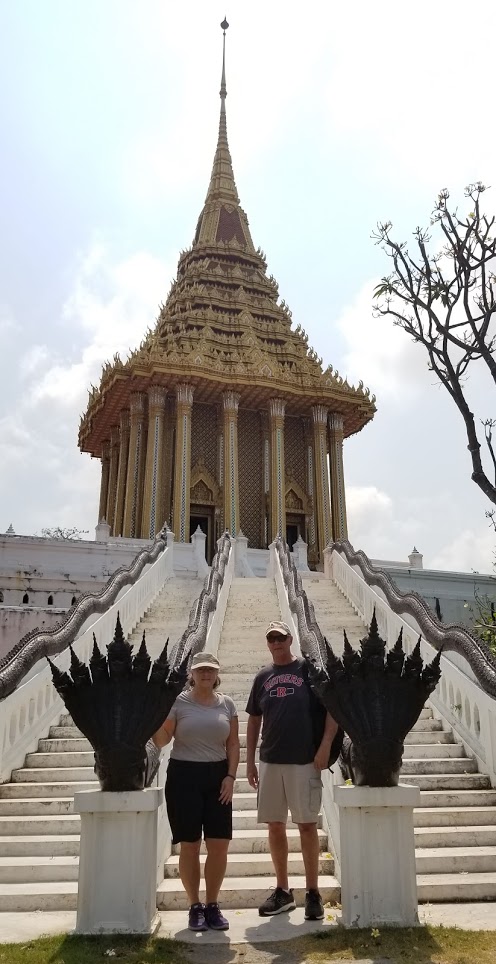
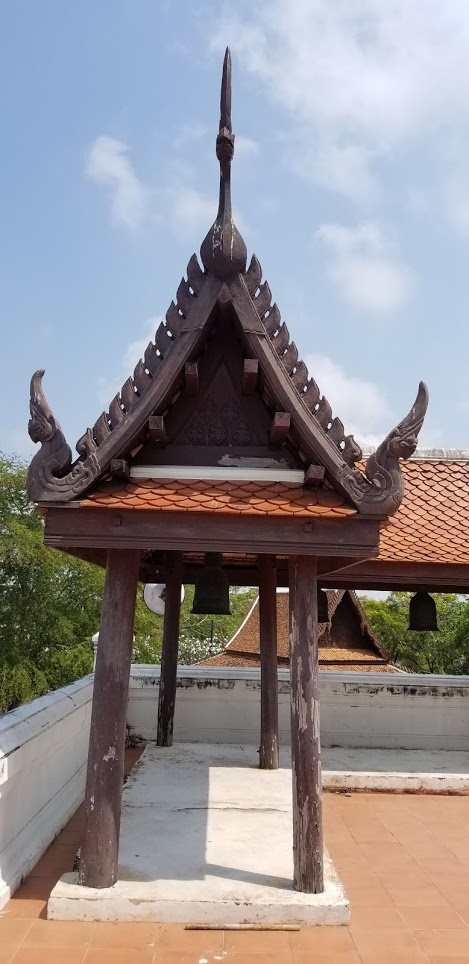
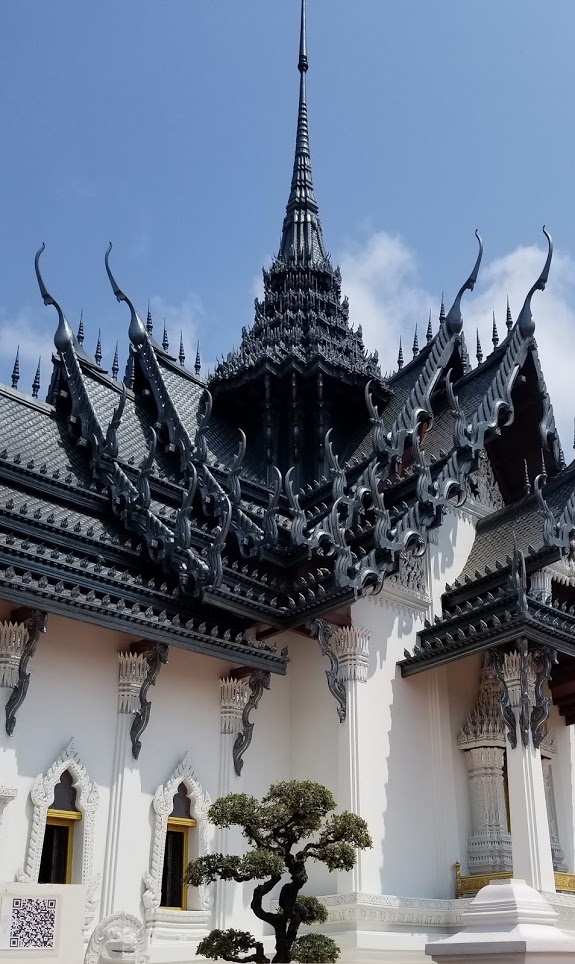
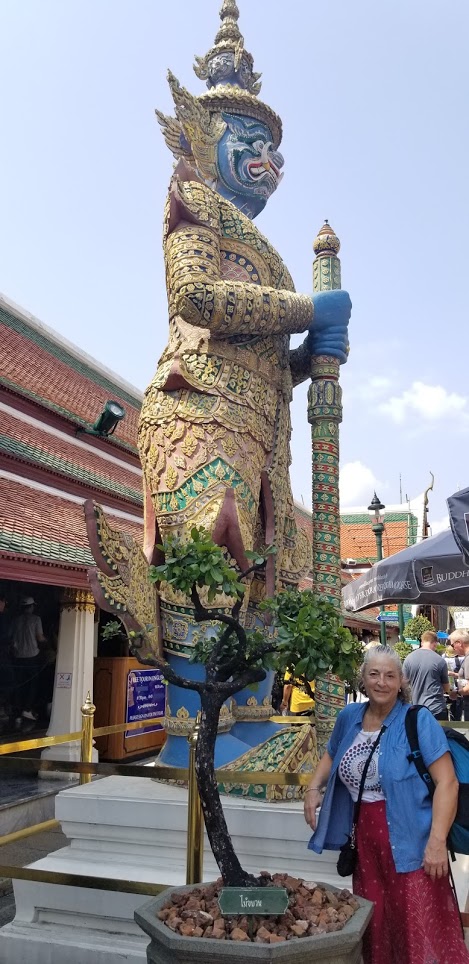
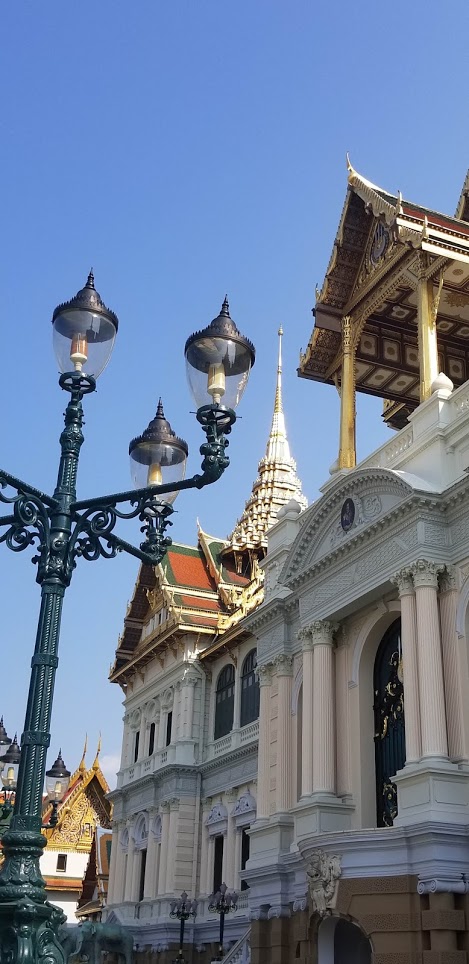
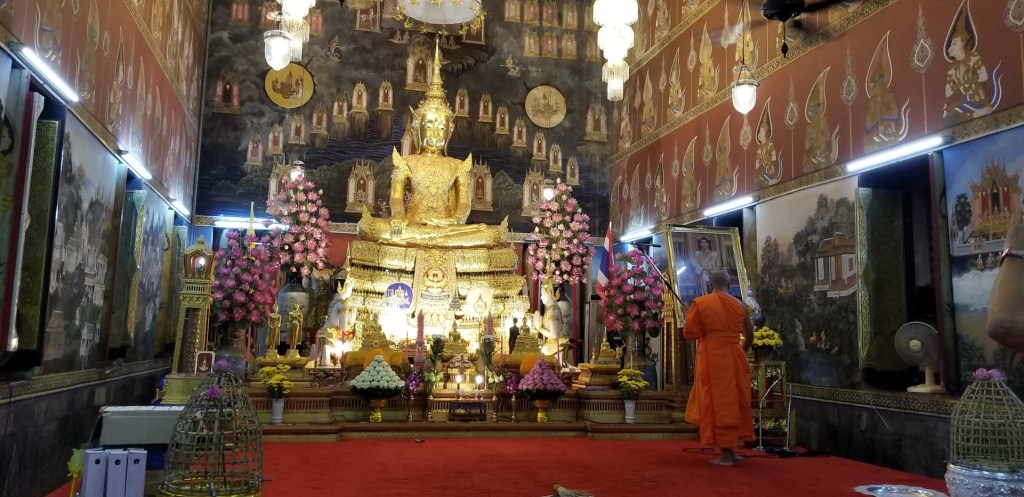
The architecture of Thailand is AMAZING! It is important to the country’s culture as well as it’s religious beliefs. I am drawn to the symmetry of the structures. Prior to visiting Wat Phra Kaeo, Phra (Monk) Suraphet gave us an overview on the different components of Thai architecture, mostly as it relates to a Thai temple. The Buddhist temple is not just one building, but often a collection of buildings, shrines, and monuments within a courtyard that is enclosed by a wall that divides it from the secular world. Regardless of how plain or ornate the temples are, they usually consist of several buildings that contain similar elements: Boundary Stone, Assembly Hall, Stupa/Chedi/Vihara, Corn Cob Shape Stupa (Cambodian style), Bell Tower and a Pavilion with a pyramidal roof. My pictures below capture the typical roof lines of a temple and some of the monuments mentioned. Phra Suraphet explained that from an architectural standpoint, sometimes in Thailand you cannot separate Buddhism and Hinduism. Multiple roof tiers are an important element of the Thai temple. Perched on the peak is a large curving ornament which resembles the beak of a Garuda. The Garuda is described as a legendary bird or bird-like creature and is also the national emblem of Thailand. On the lower tiered roof lines is the Naga head (serpentine). In Buddhism, both animals protect Dharma (the teachings of the Buddha).
Temple Guards
Corn-Cob shaped Stupa
Garuda
Bell Tower
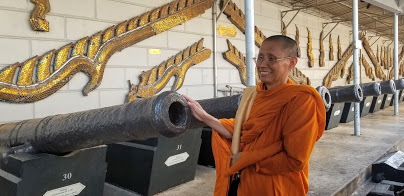
Phra Suraphet said that these (cannon) will be used again after WWIII 🙂
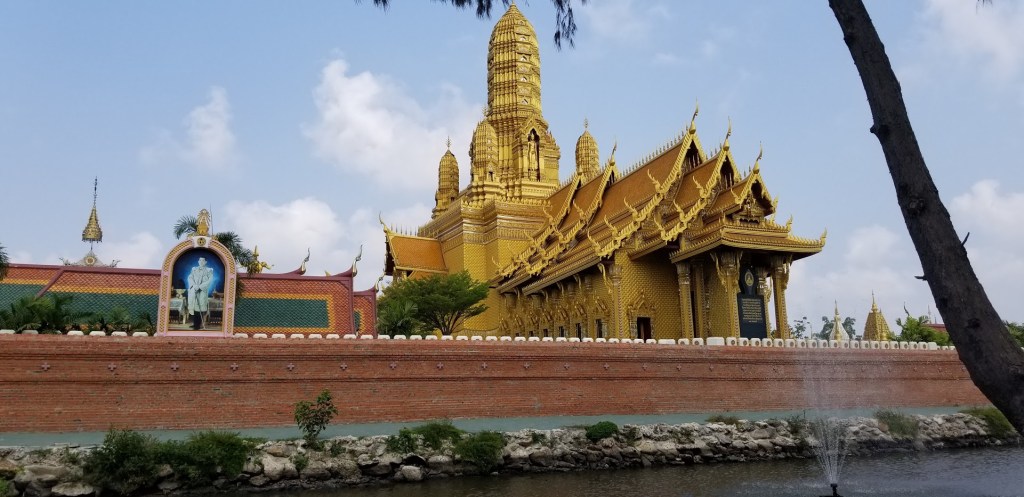
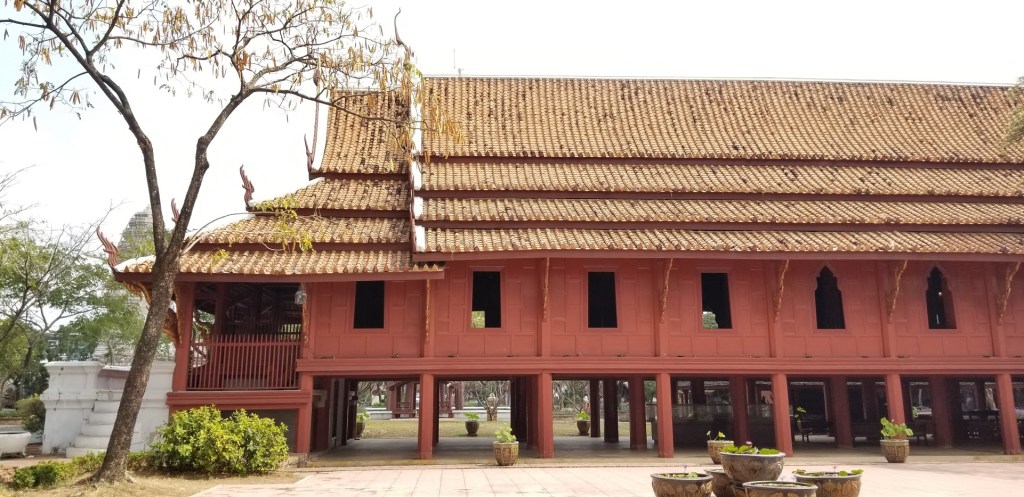
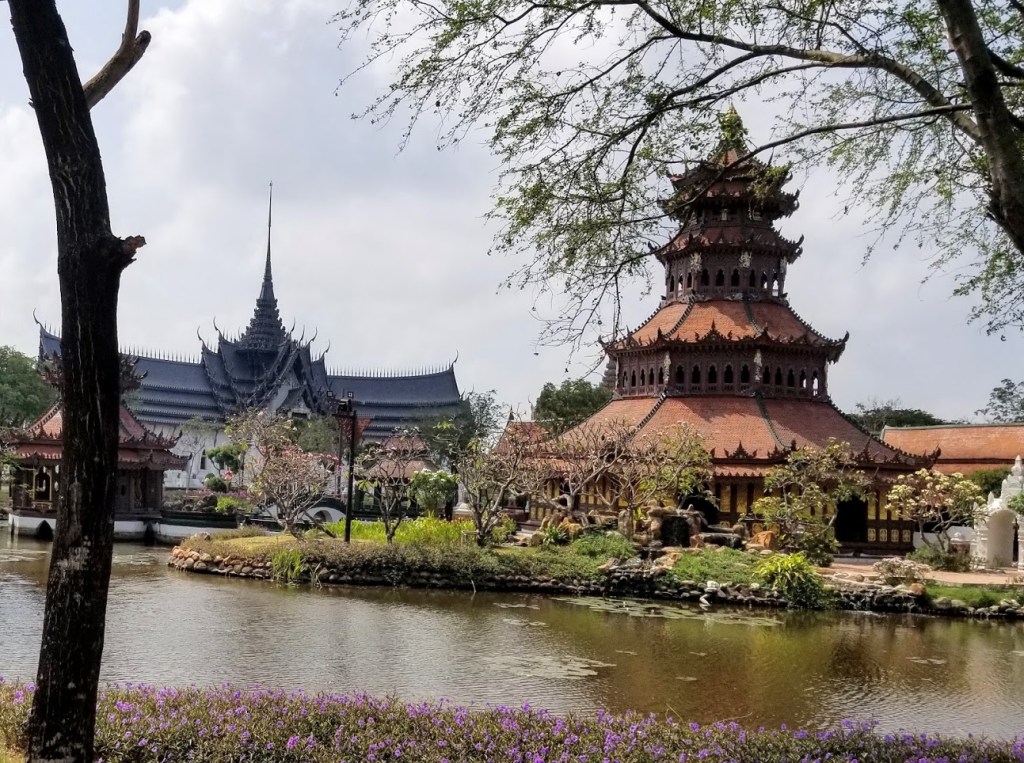
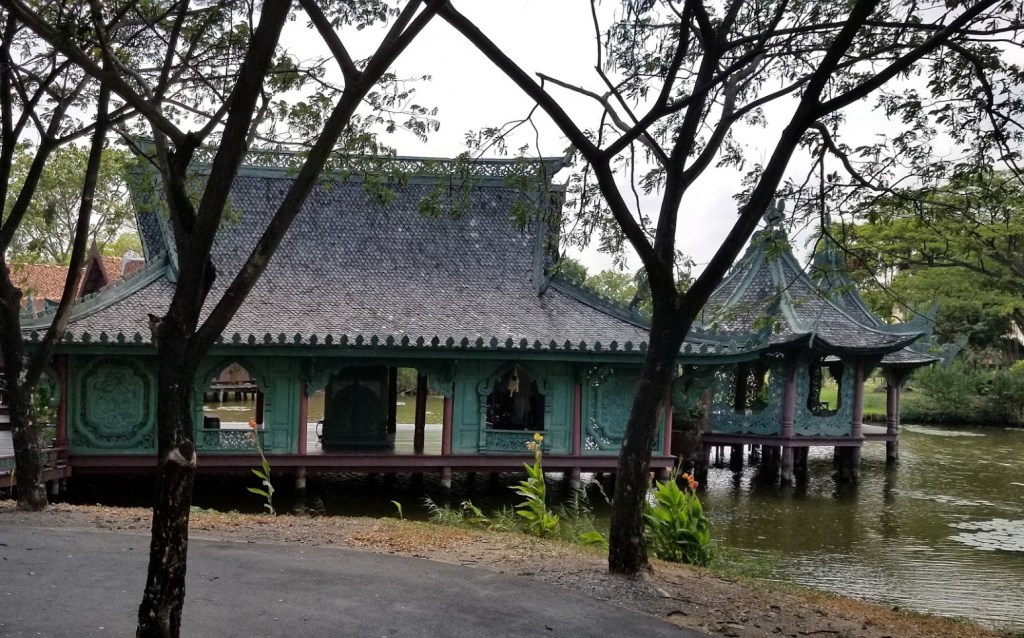
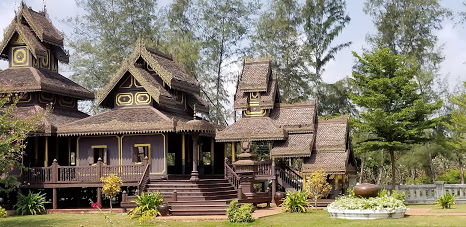
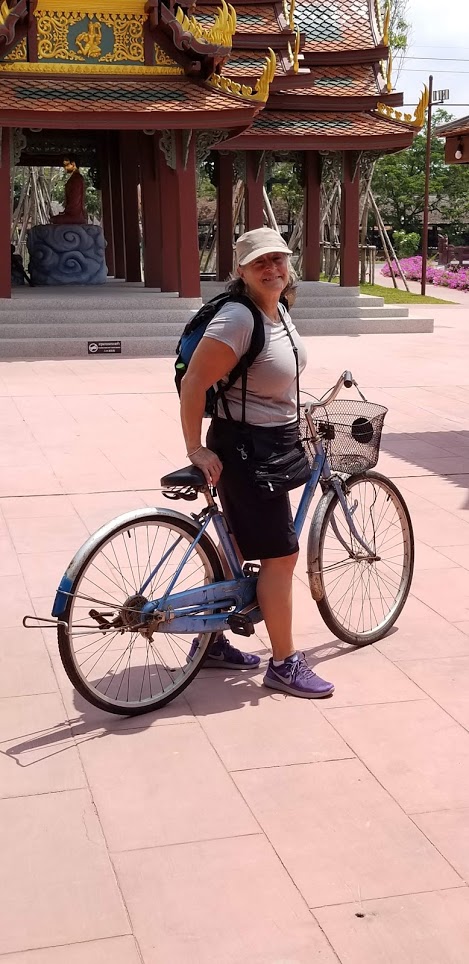
We visited The Ancient City just outside of Bangkok. The park contains life-size or nearly life-size reproductions of over 100 monuments, palaces and other buildings from each province in Thailand. It was a wonderful opportunity to view these works of architectural artistry in one place. We rode on a guided tram part way then rode bikes to re-visit sites and take pictures.
Pavilion of the Enlightened
NAGA
Pagoda Influence
Bell Tower
Grand Palace
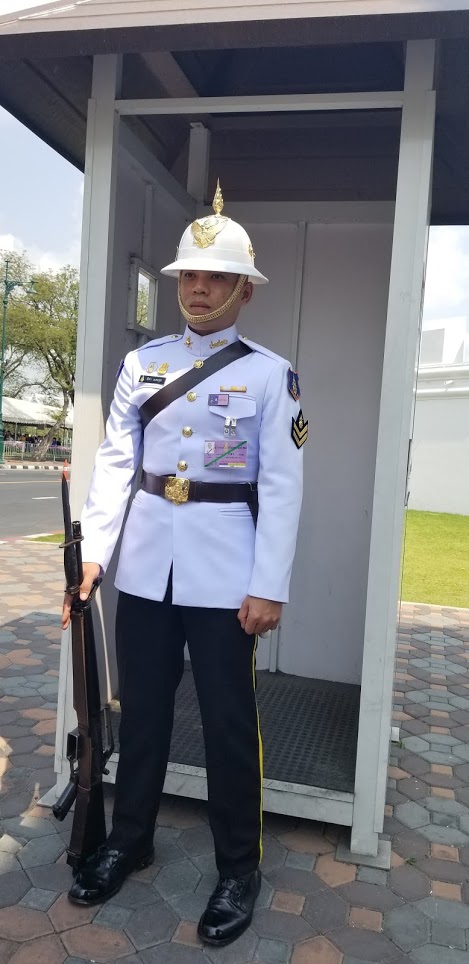
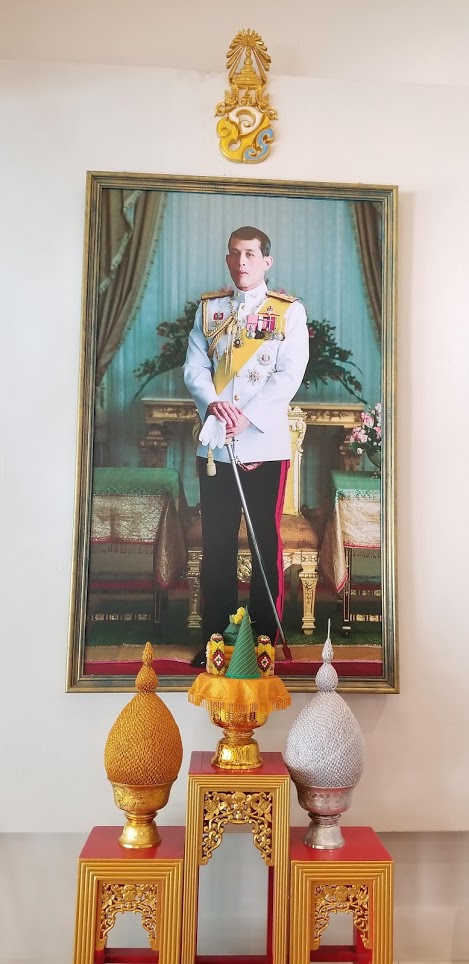
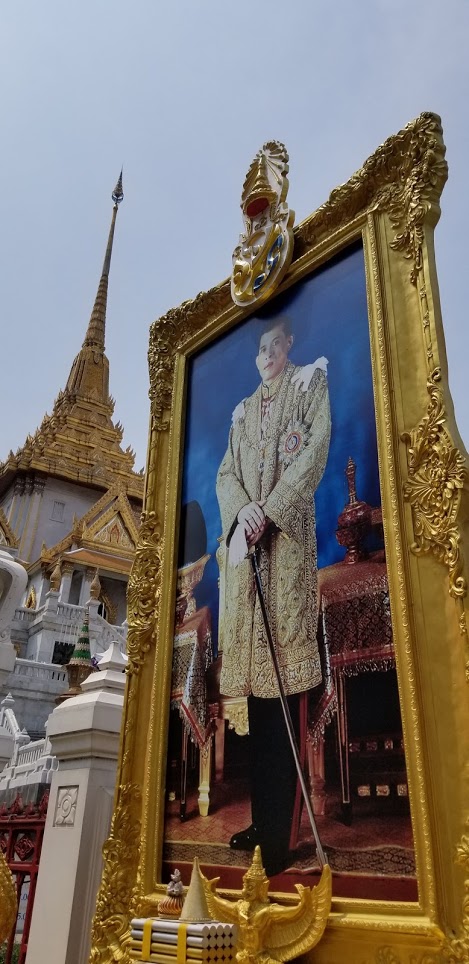
The Grand Palace was the former royal residence. Although the royal family no longer live there, Thailand is a kingdom, and a kingdom would be incomplete without a gorgeous palace complete with austere guards standing at the palace entrance. The late King Bhumibol Adulyadej of Thailand died in October 2016, but two years later, preparations are beginning for the coronation ceremony of his son, His Majesty King Maha Vajiralongkorn. The ceremony is scheduled May 4 – May 6, 2019 in Bangkok. Pictures of the late King and and King-to-be are not only on the Thai Baht currency, but huge framed enlargements of the royalty can be seen everywhere around Bangkok.
The Thai general elections are scheduled soon on March 24th, so campaigns are in full swing. My understanding is that the campaign period can only last 6 weeks prior to the election. Six and done! It scared me initially when a truck would pass by covered with large campaign signs and shouting loudly (“vote for me” – in Thai) through a megaphone! I’m sure the political system is much more complicated, but for my simple mind, there are basically two voting parties; The Red shirts who follow the Prime Minister, and The Yellow shirts who are more conservative and follow the Government.
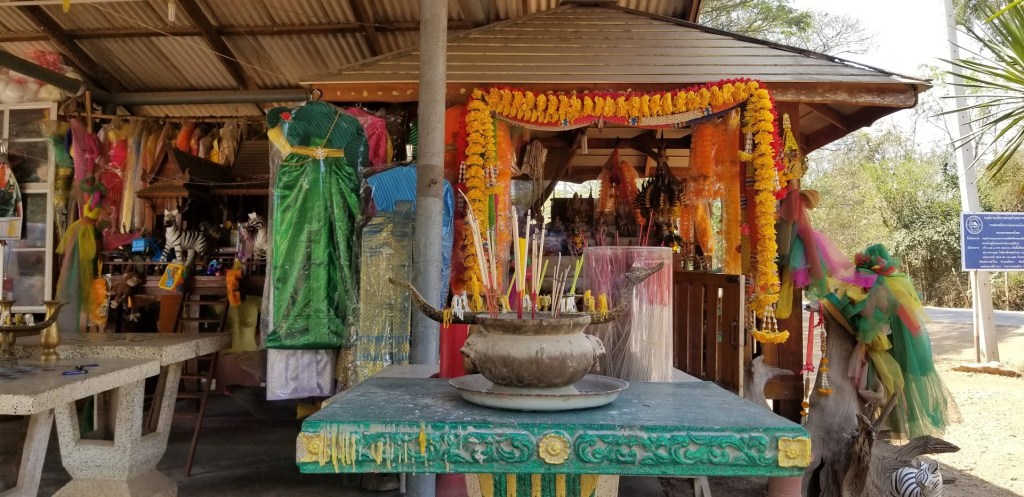
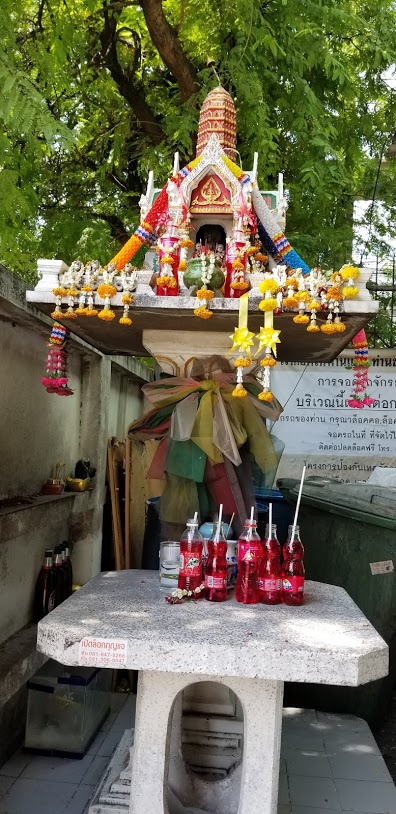
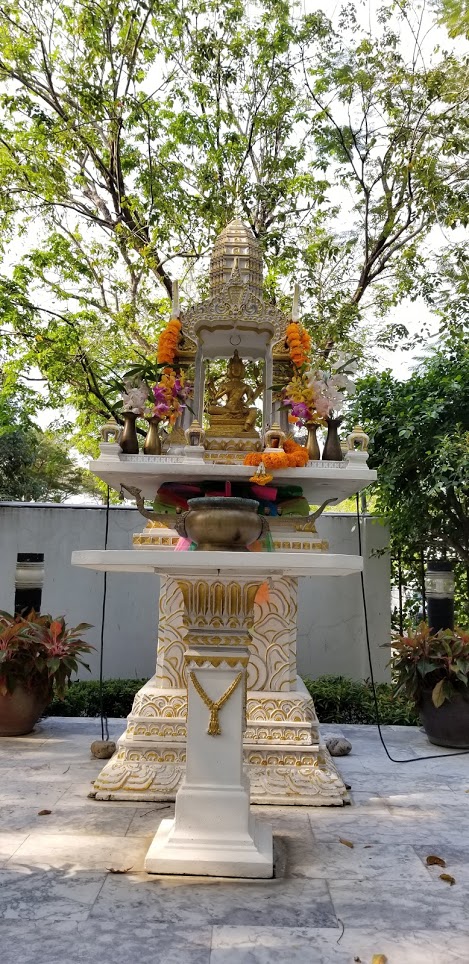
Spirit Houses
Spirit Houses are seen outside homes, businesses and other buildings as a shrine to protect the spirit of the place. Oftentimes, they are located next to a tree. The spirit house is normally in the form of a small Thai architecture roofed structure and is mounted on a platform. We saw one the other day that was adorned with women’s clothing because the people believe that particular spirit is a woman. Visitors to the spirit house bring candles, incense, flowers, food and drinks, etc.
“Don’t try to use what you learn from Buddhism to be a better Buddhist; use it to be a better whatever-you-already-are.”
Dalai Lama – 14th
Teachers
The Buddha instructed his monks to “teach”. The use of the word, teach, is significant. Neither the Buddha nor his disciples attempted directly to proselytize, nor have Buddhists ever done so, for a Buddhist respects all religions.
I chose to volunteer with the Maryknoll missioners because there is never any type of proselytizing in the program. Maryknoll missioners demonstrate their faith by acts of compassion and charity while showing total respect for the religions practiced by the persons with whom they work.
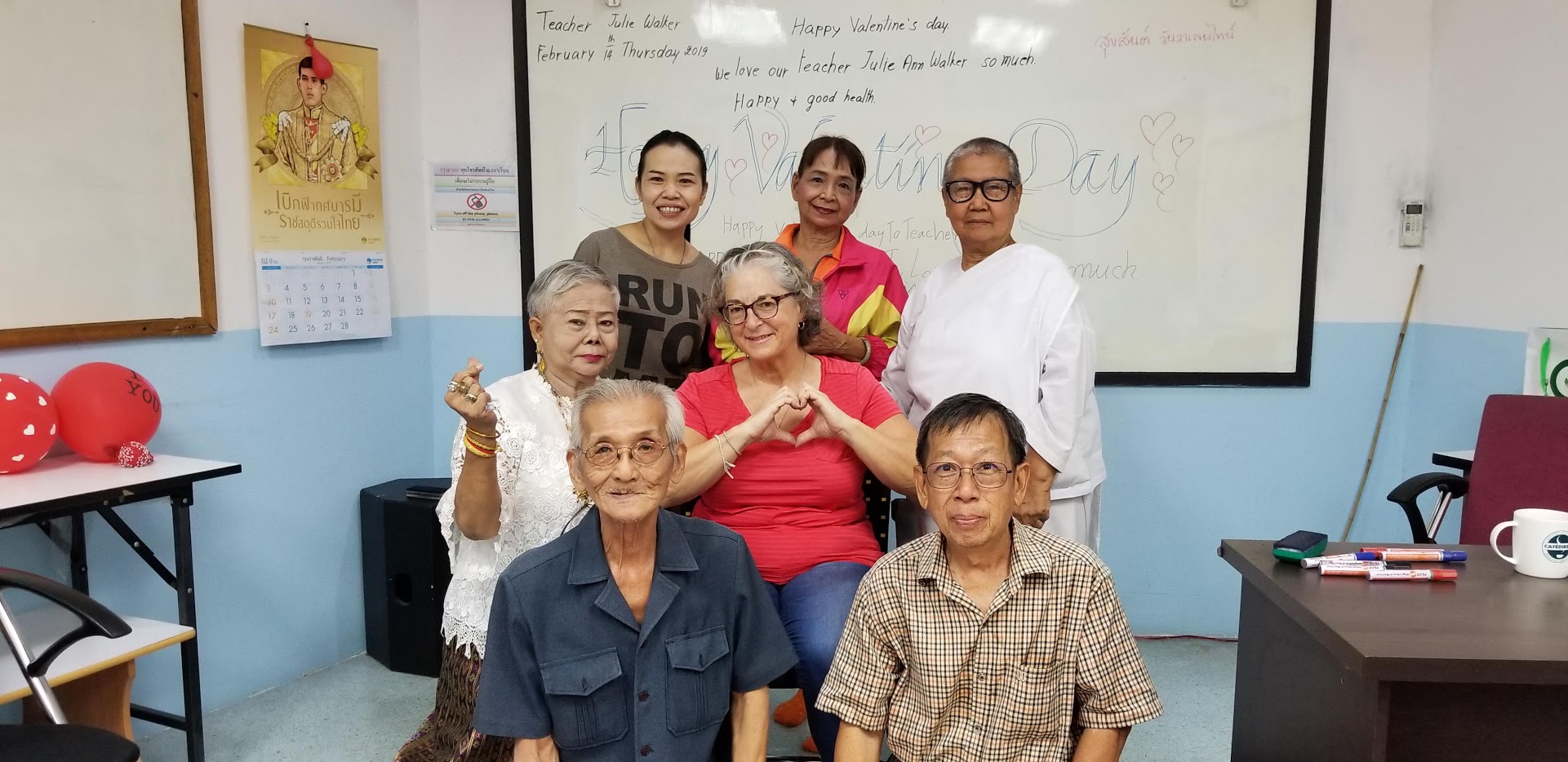
All teachers are highly regarded in Thailand. I continue to be taken aback by the respect and admiration for teachers. Whether teaching English in the classroom or attending an event, I almost feel like a movie star with people wanting their picture taken with us and treating us like royalty!
Happy Valentines Day! I love my students!
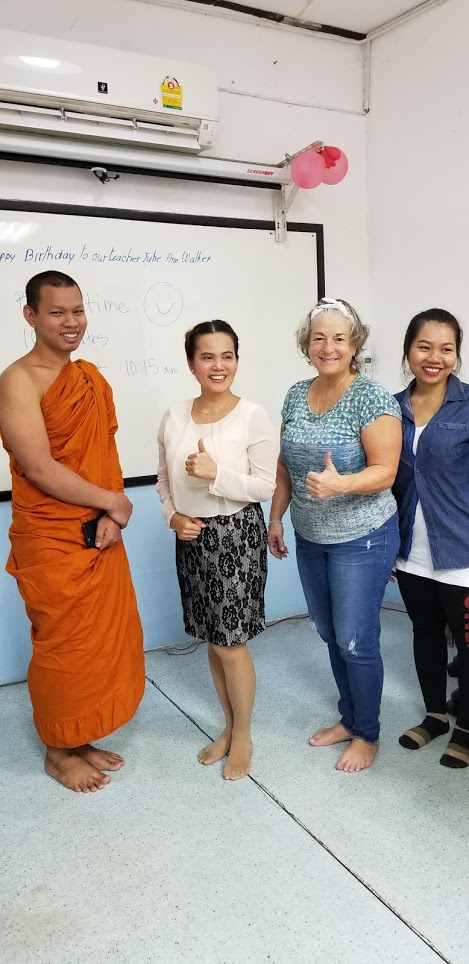
Happy Birthday Teacher Julie! My students planned a potluck, even pizza!
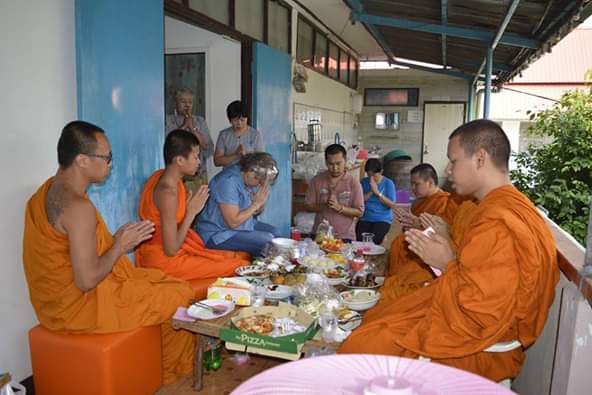
Monks Chant on many occasions; here they are offering blessings to me (a layperson) on my birthday. It was very special to me.
The Jungle
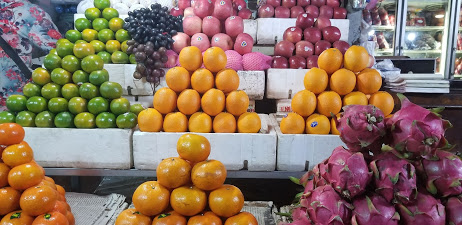
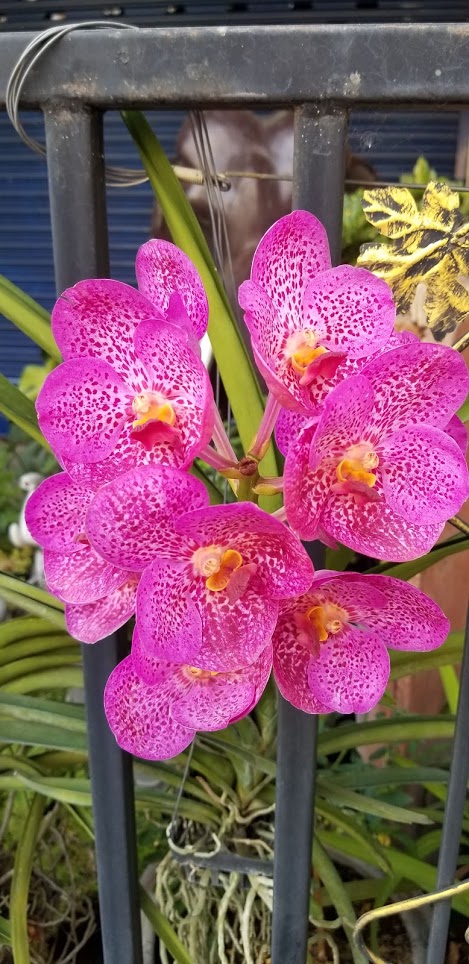
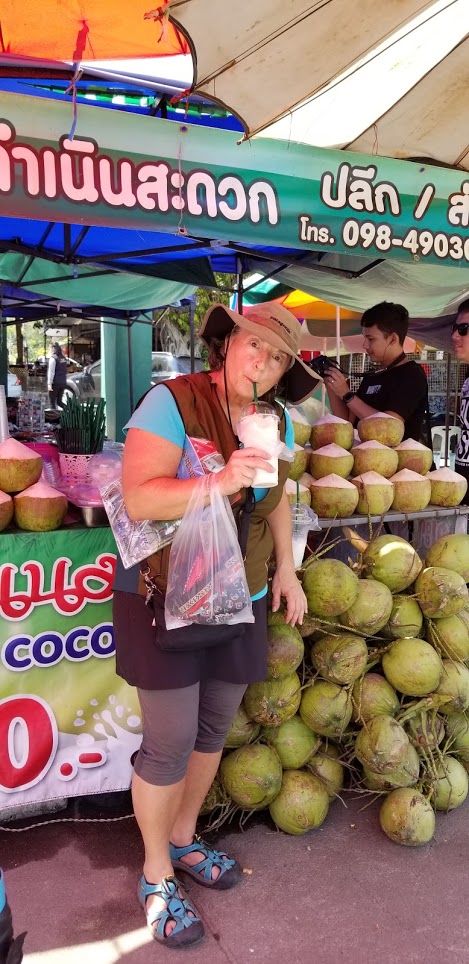
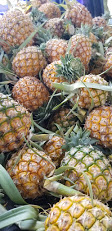
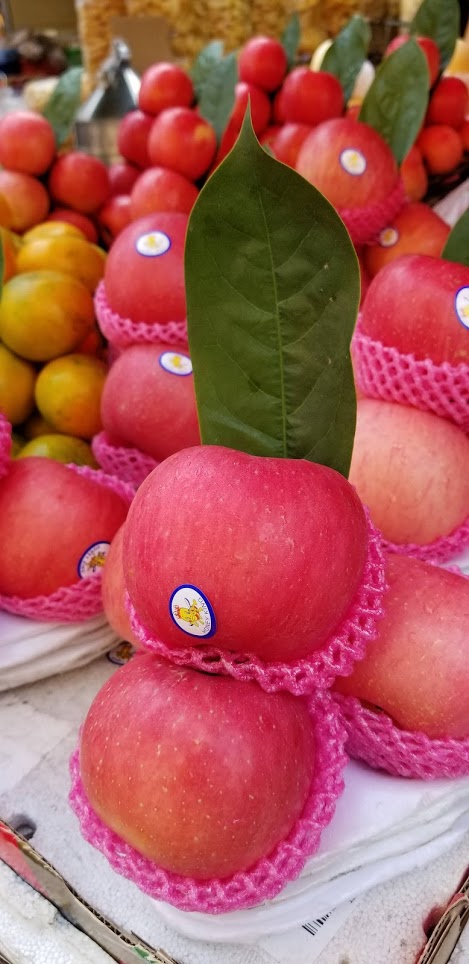
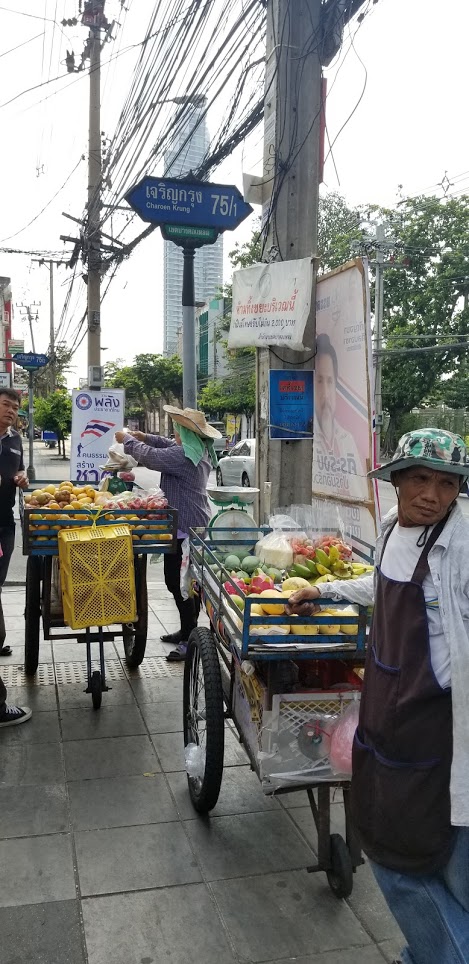
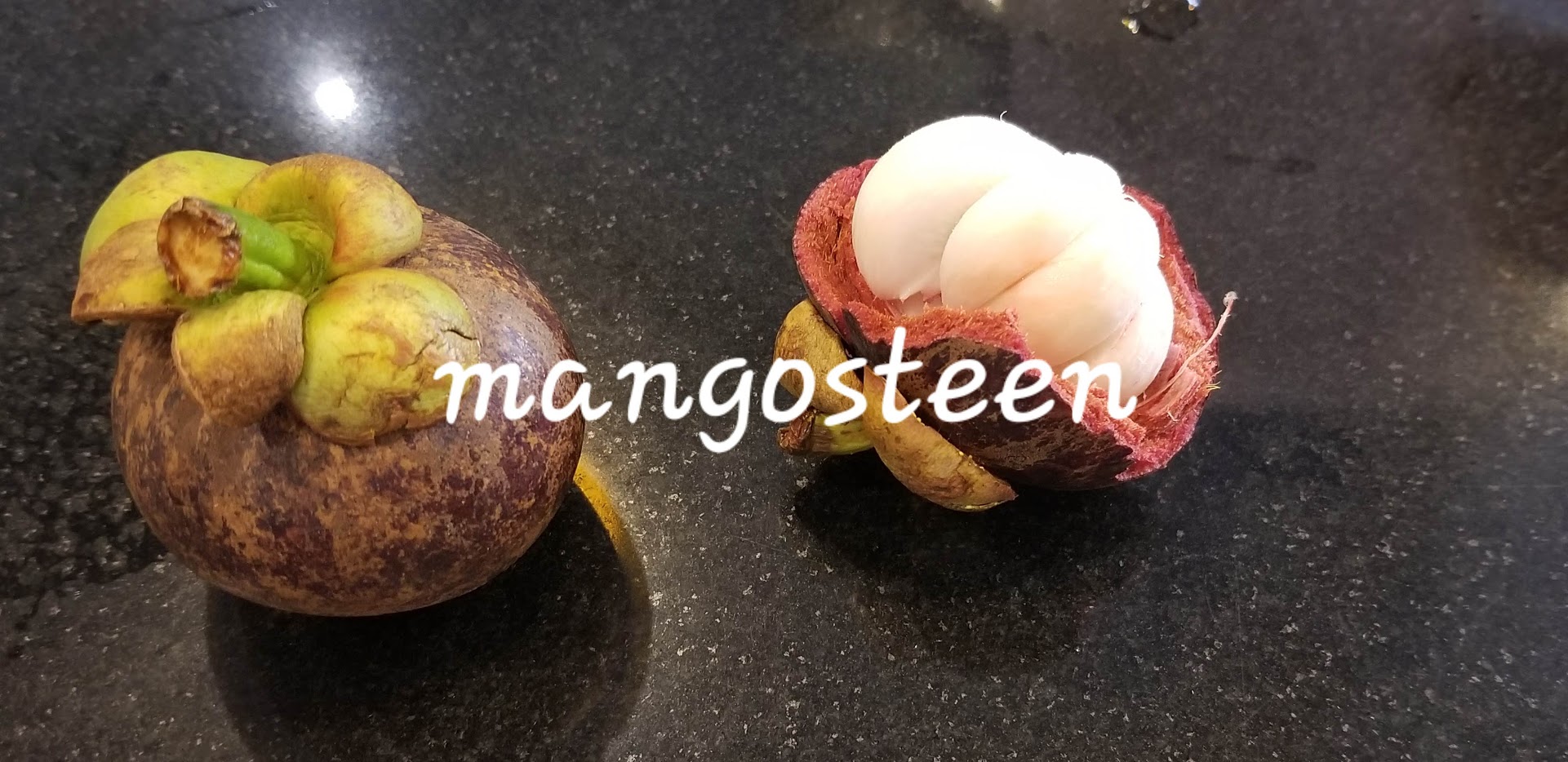
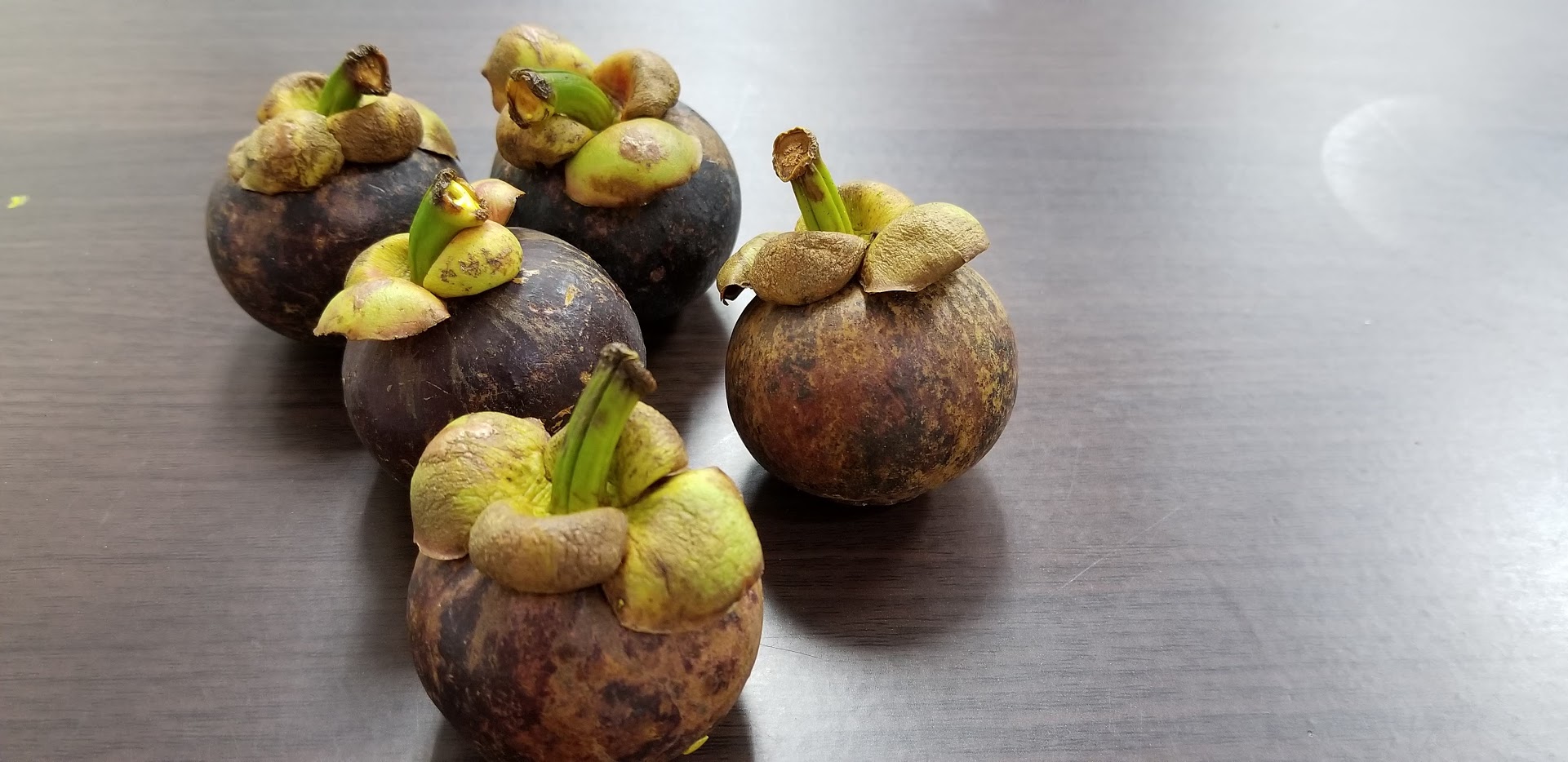
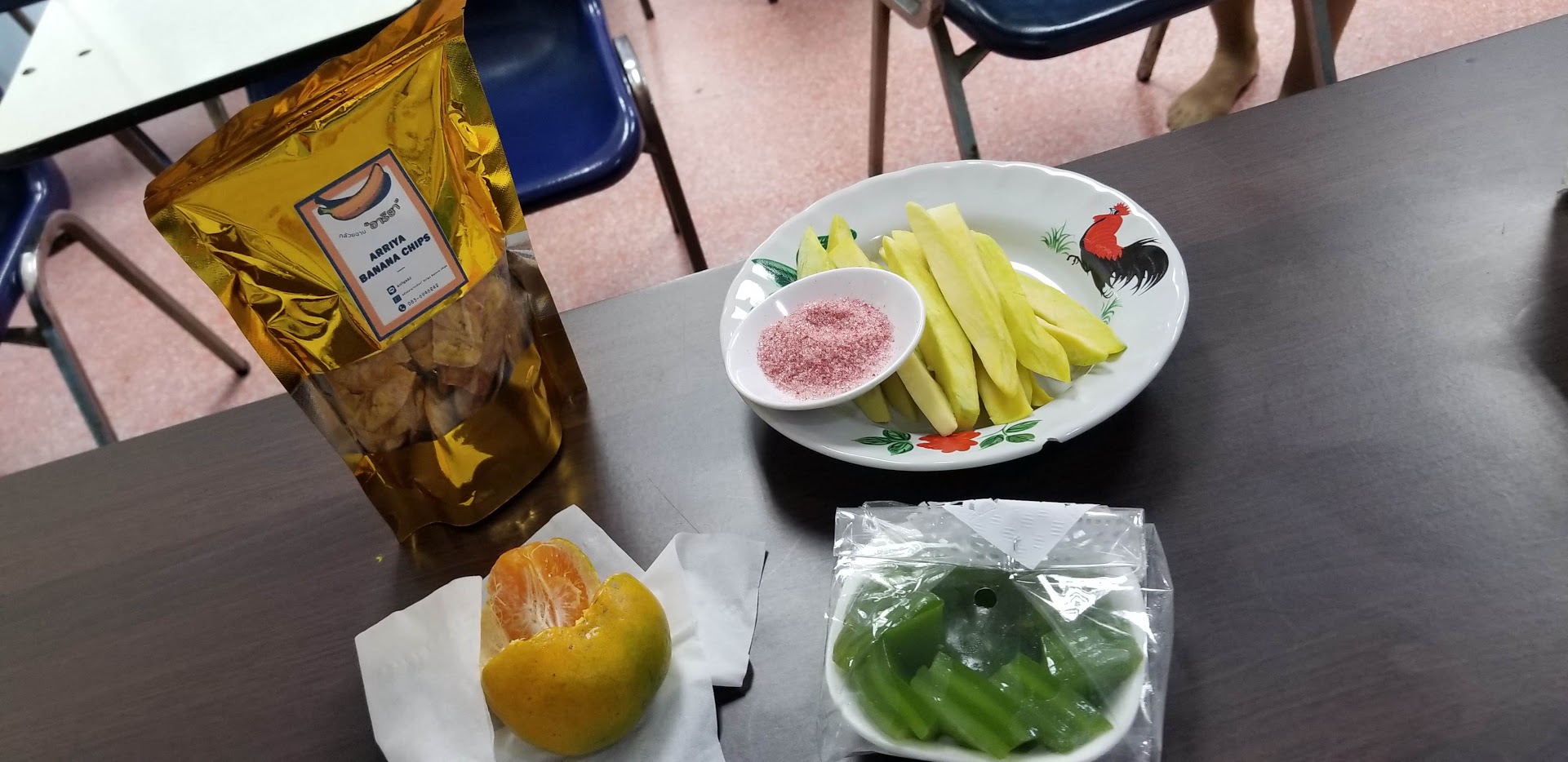
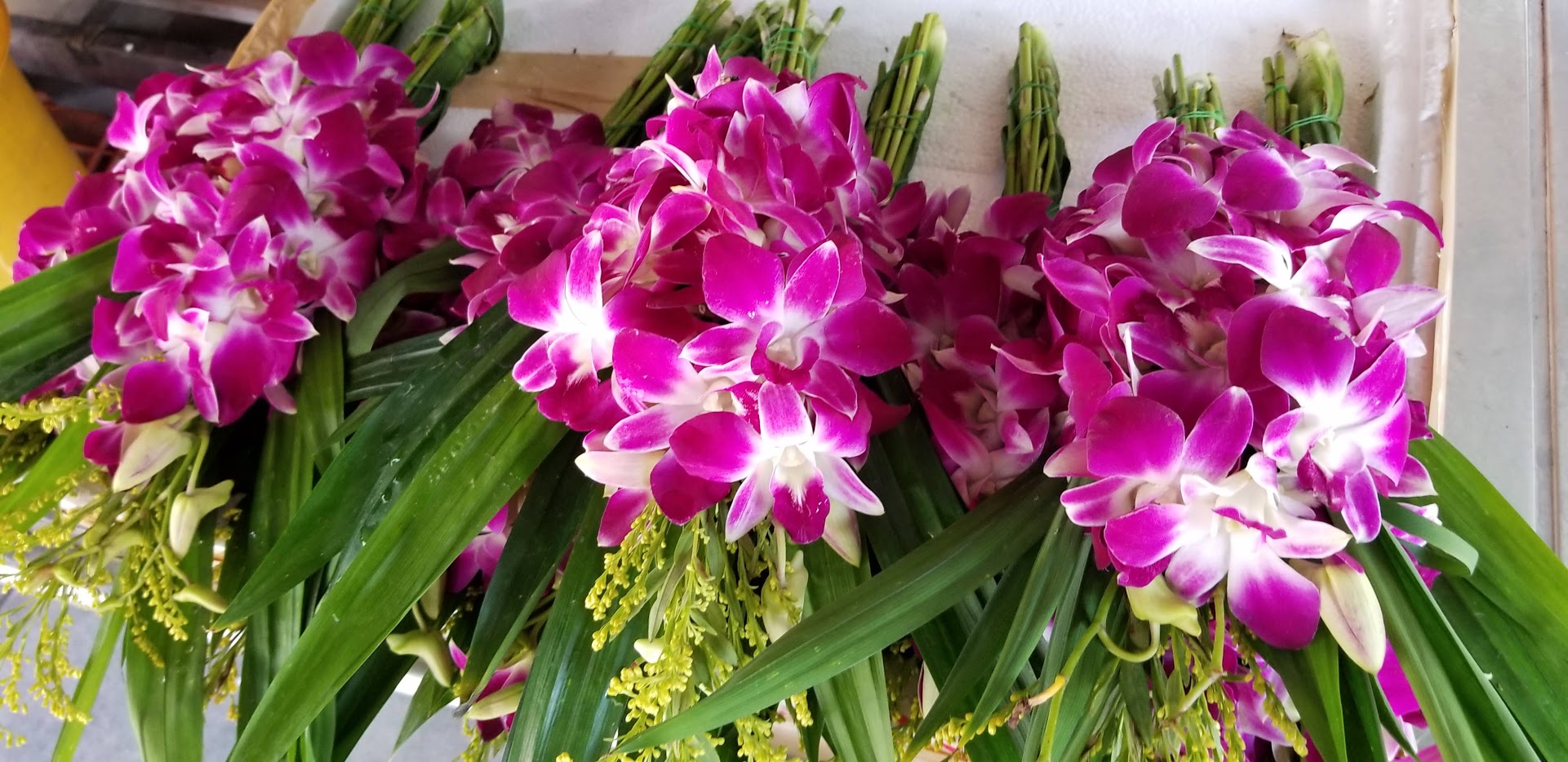
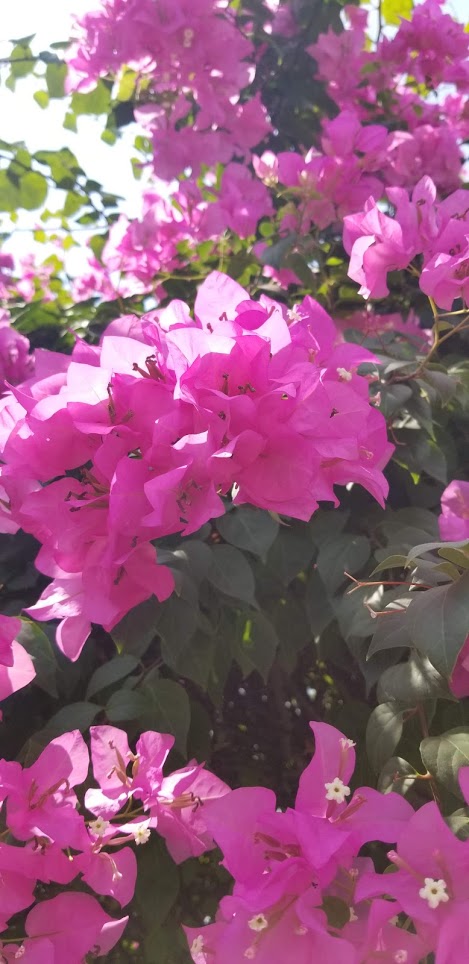
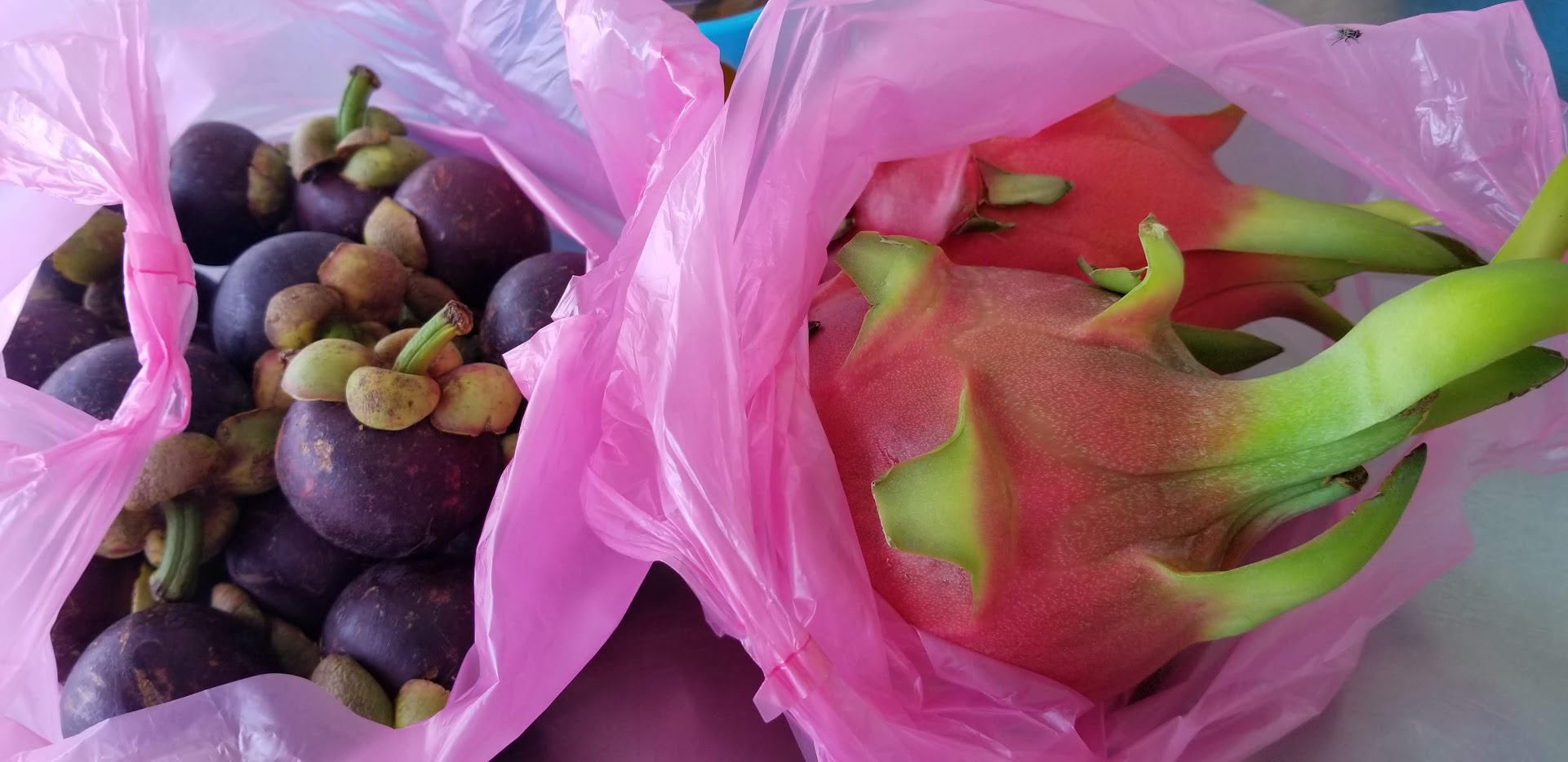
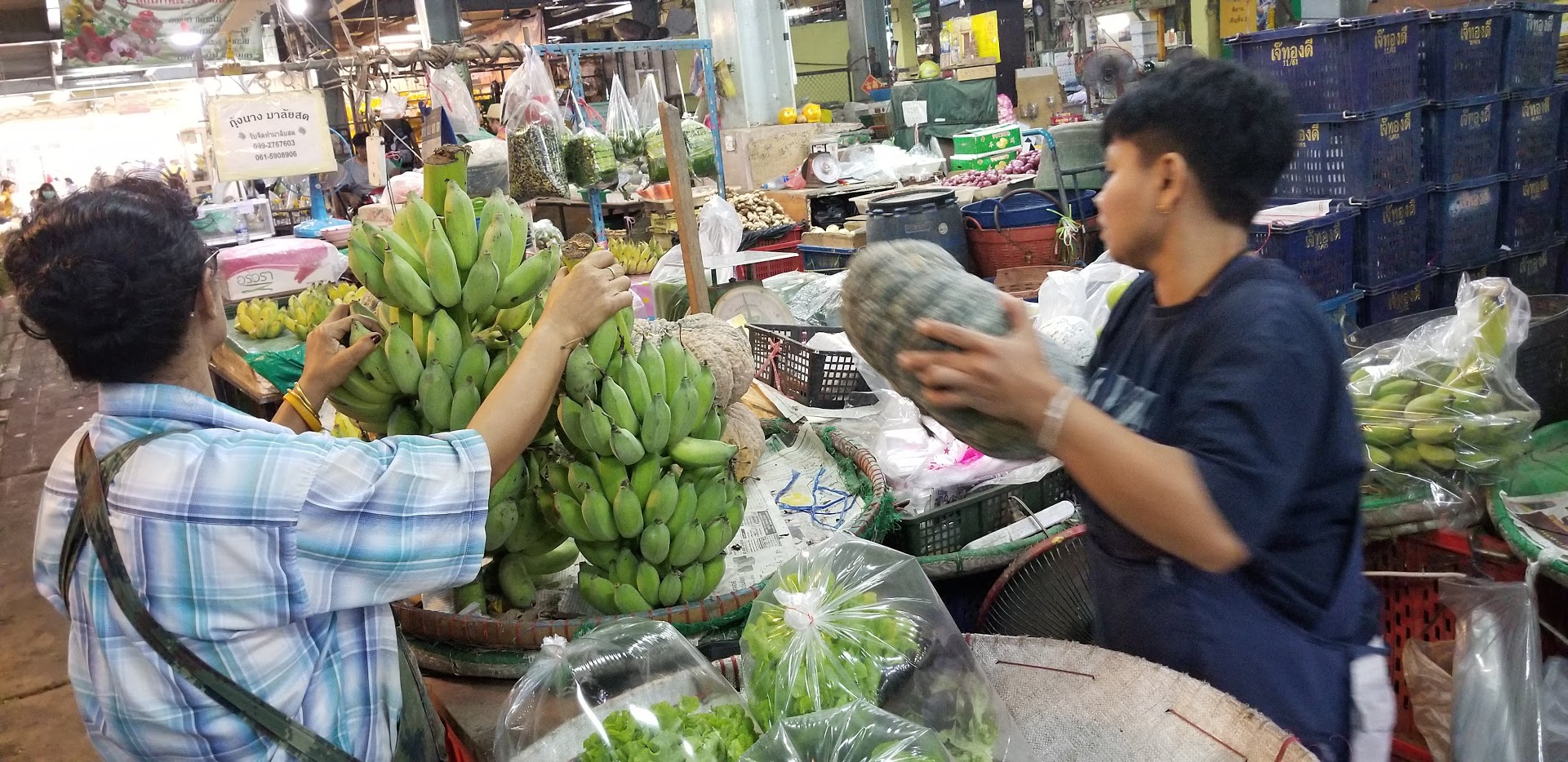
The population census for Bangkok in 2017 boasts 70 million people. Skyscraper buildings and cranes promoting growth are seen throughout the city. Sometimes I forget that we are in a jungle until I see the beautiful orchids and other exotic flowers and fruits prevalent in the everyday culture. I’m in love with the Mangosteen, or Jewish Mango as Bro. Tim refers to them. In fact, I’m eating some as I write – they have such a sweet/tart flavor! Other fruits from the street vendors are served with a sweet/spicy dipping condiment. I just received a “dragon fruit” but haven’t cut in to it yet. I’ll let you know what I think . . . next blog post.
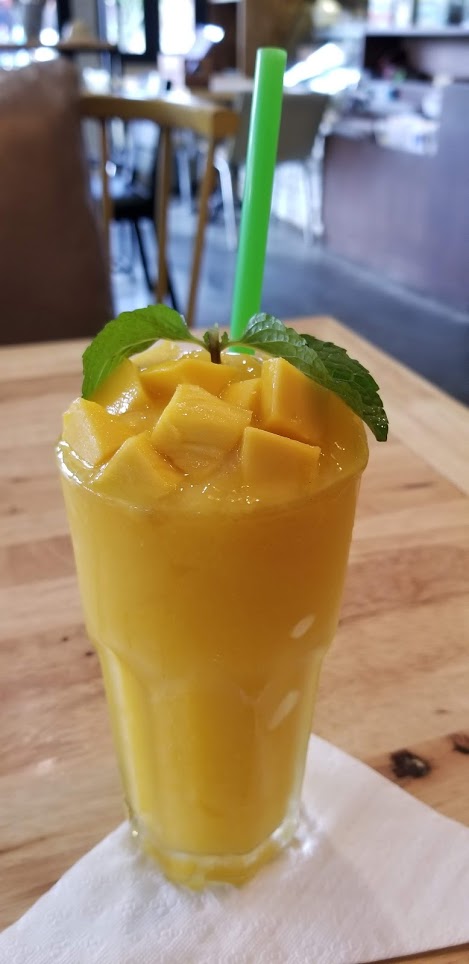
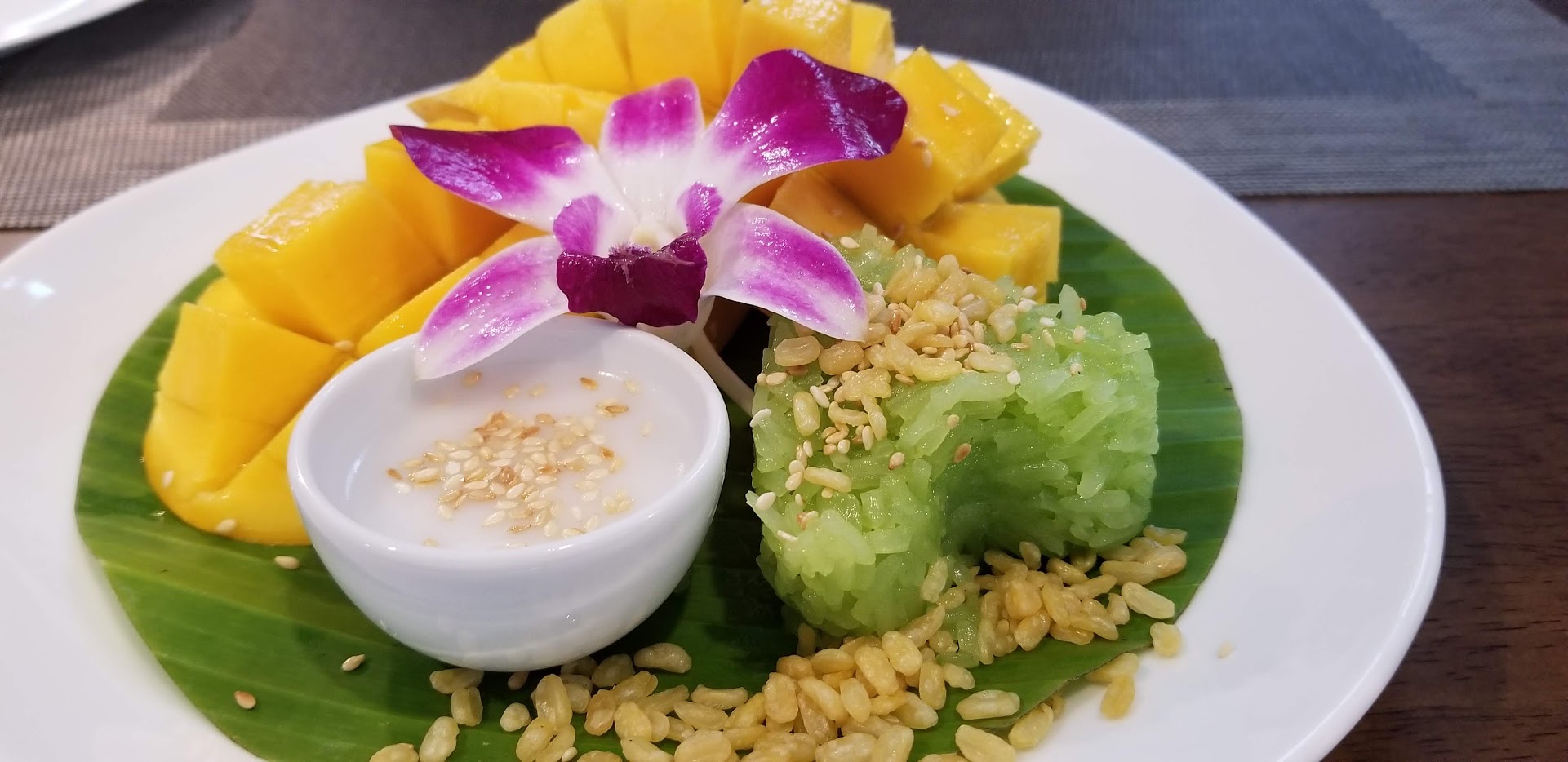
Mango & Sticky Rice with coconut milk and nutty sprinkles
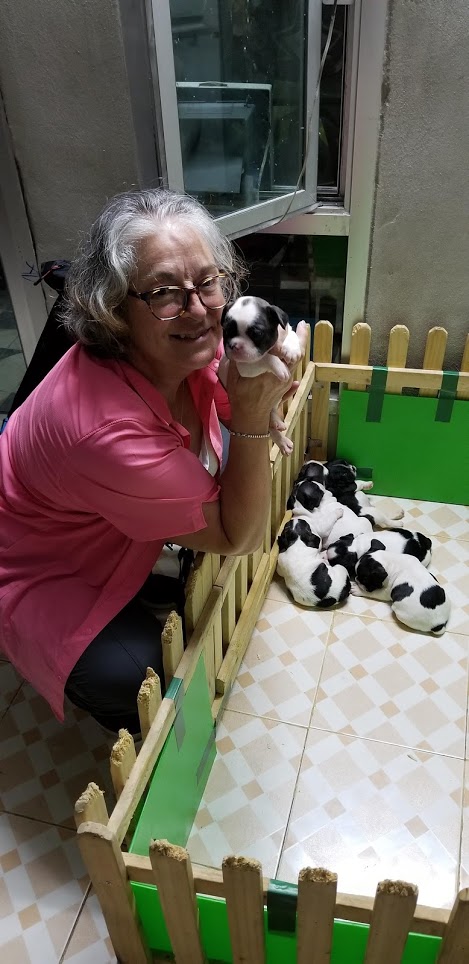
Massage Dog
Apartment Tenant
Dragon Fruit
Spicy!!!
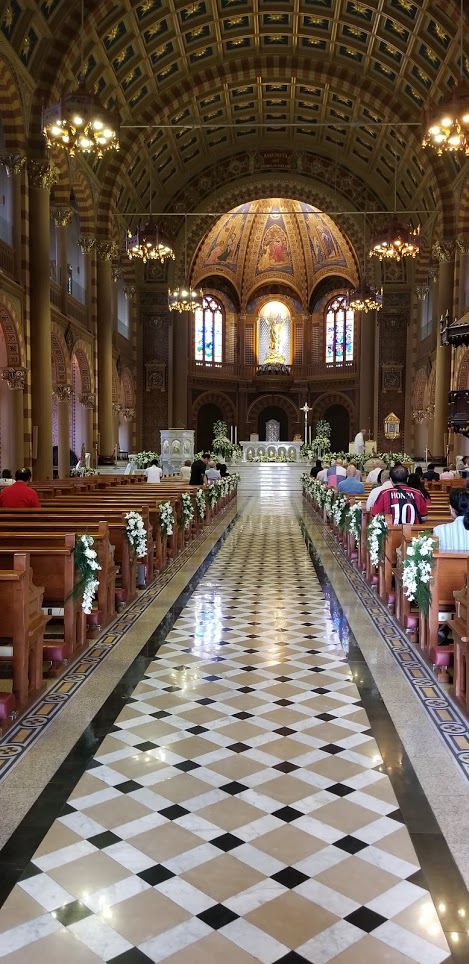
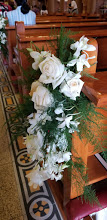
Wedding flowers at the Cathedral
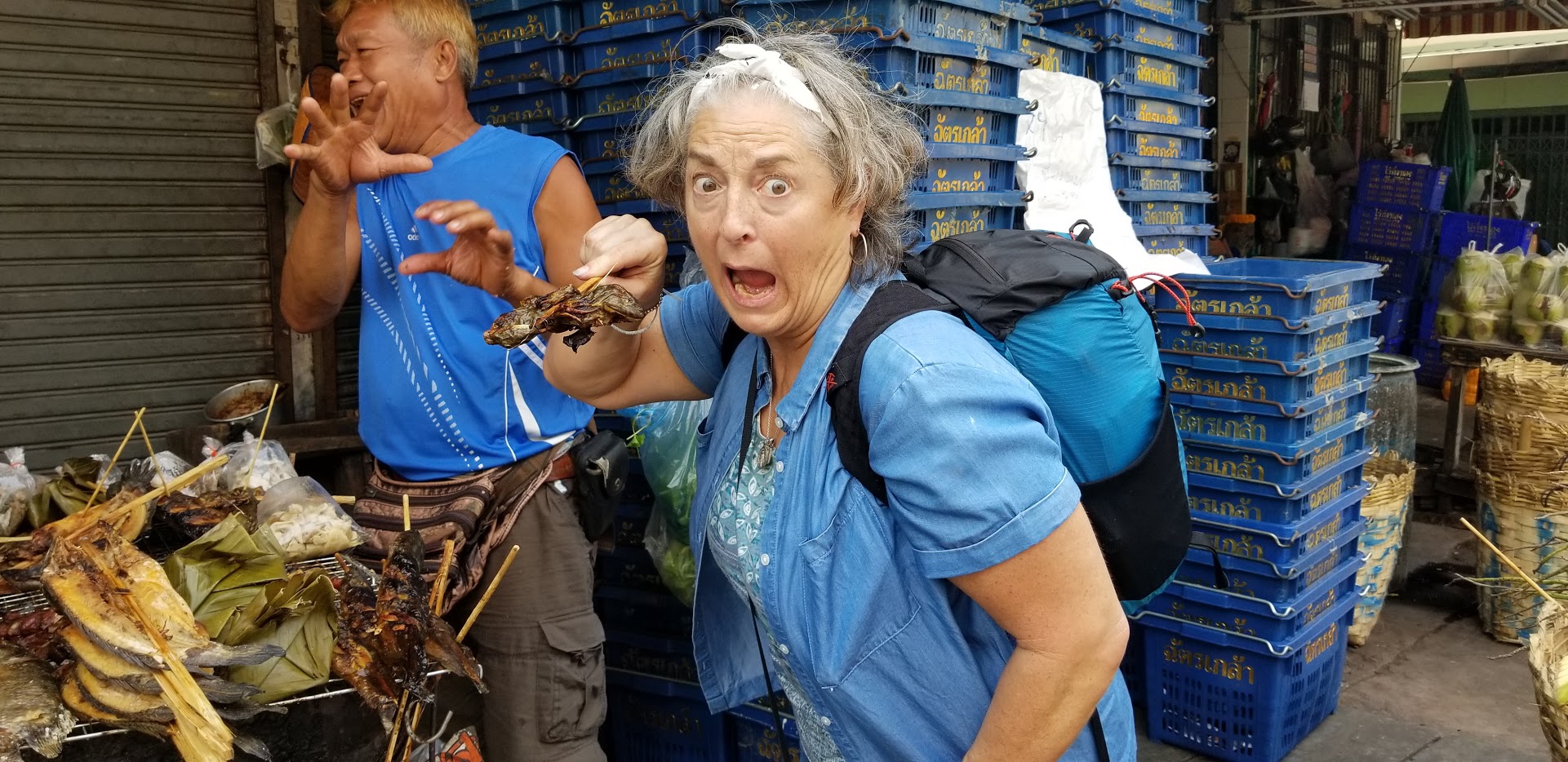
Frog on a stick anyone?
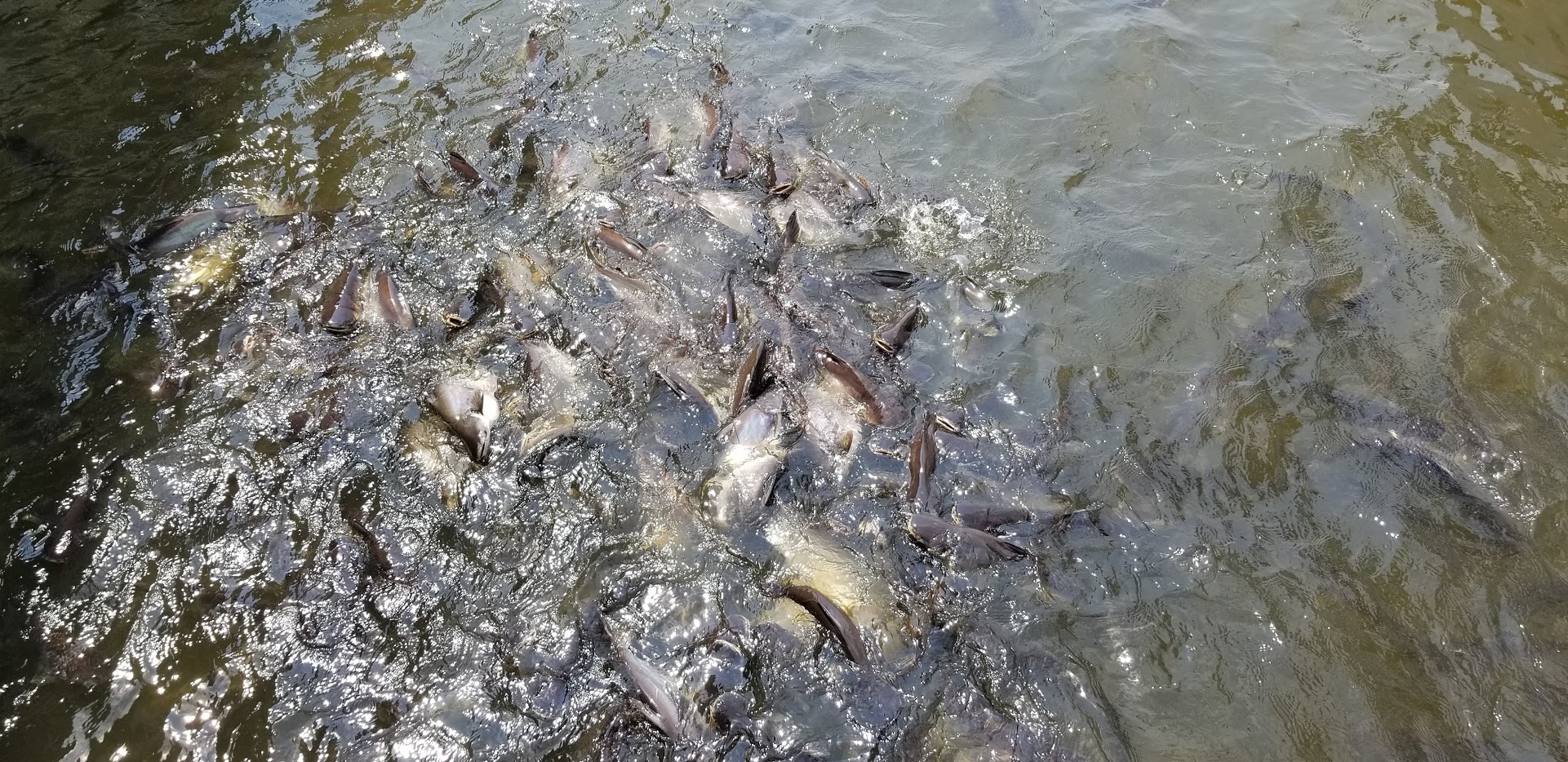
They grow’em BIG here!
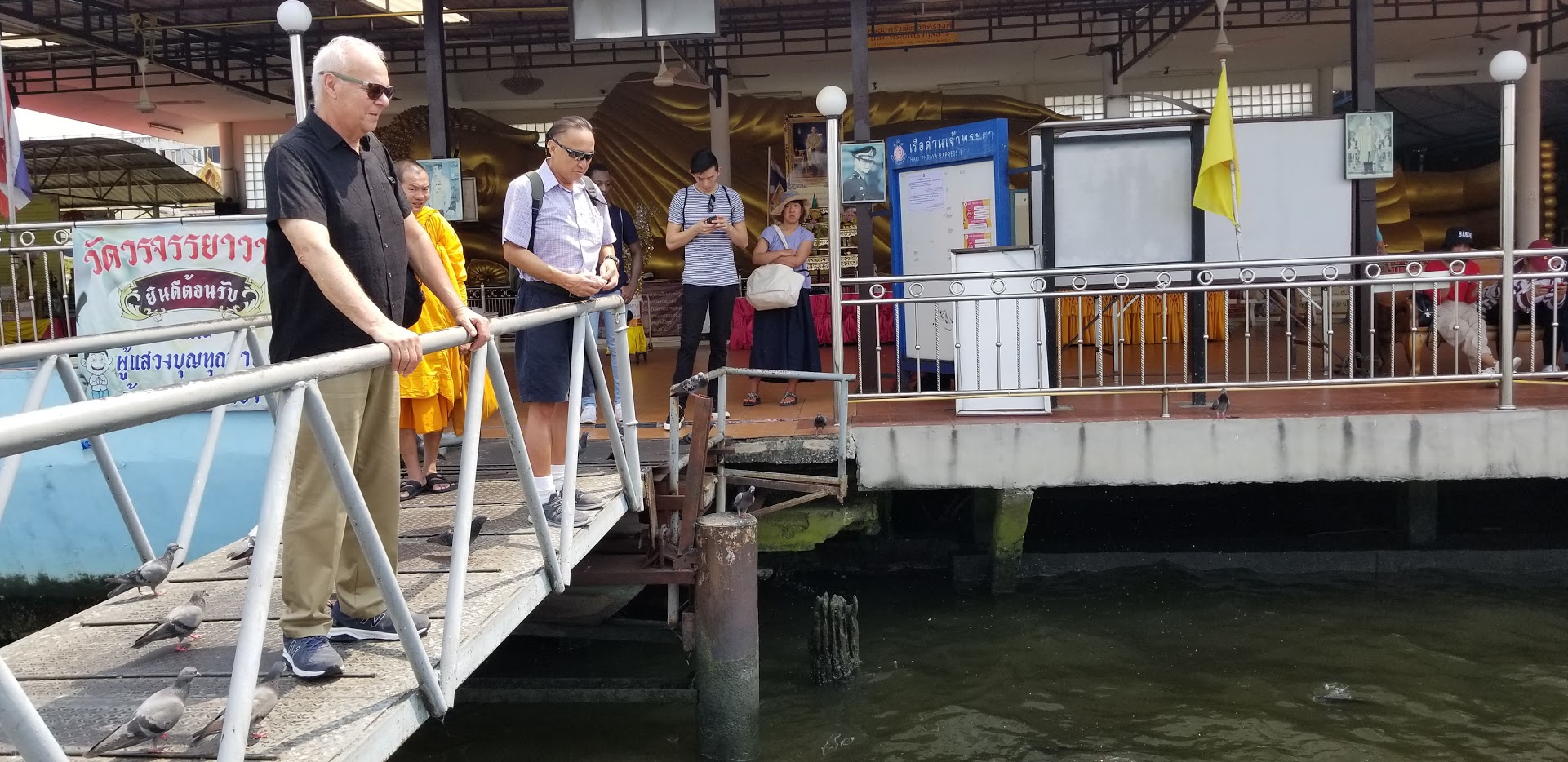
Cat fish at the pier
Ah Oh, they will be ready to take home when I leave!
Bus #1 – Hold on!!!
Subway
Myanmar – Mon People
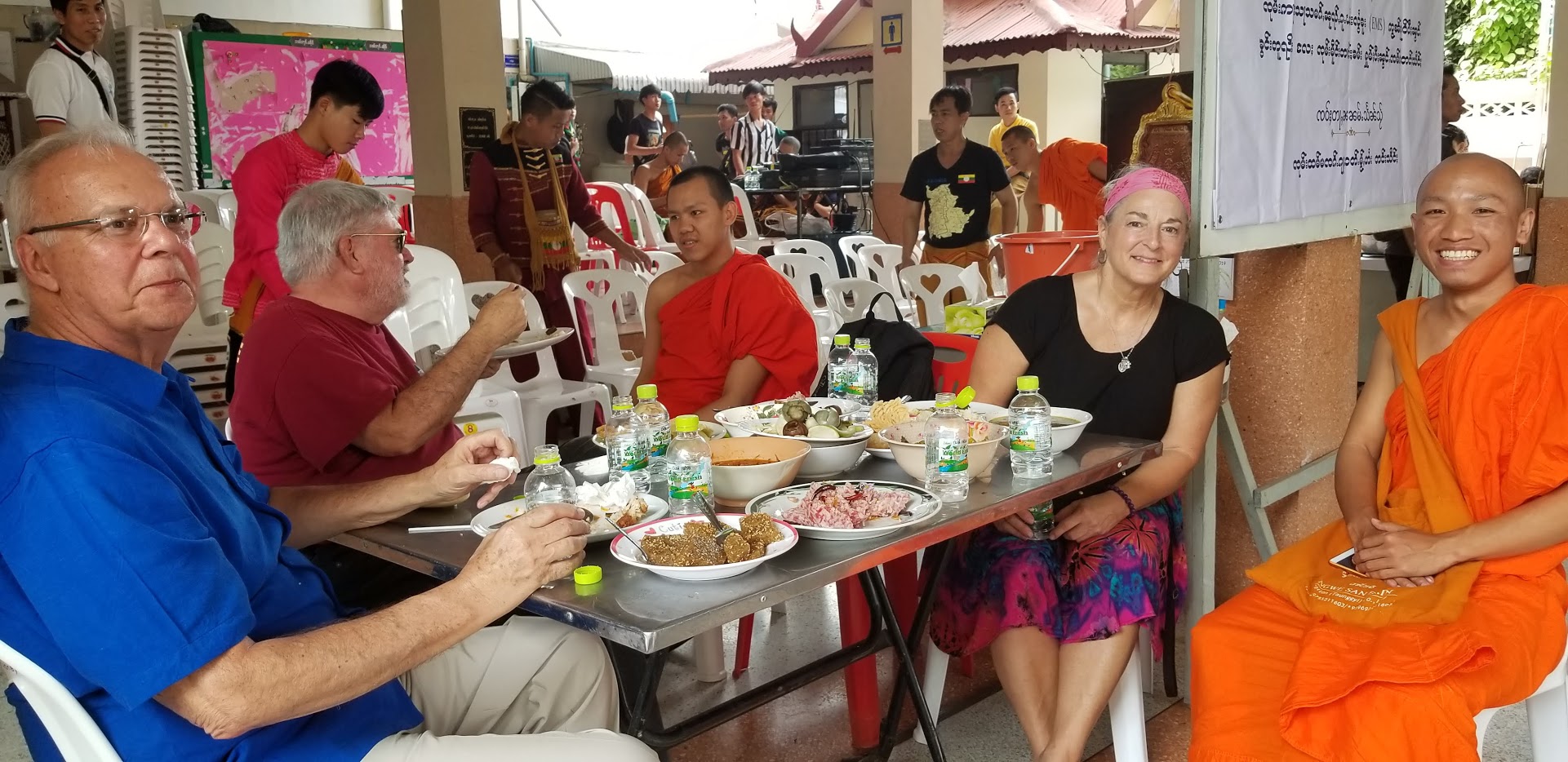
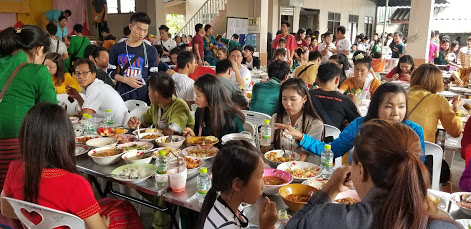
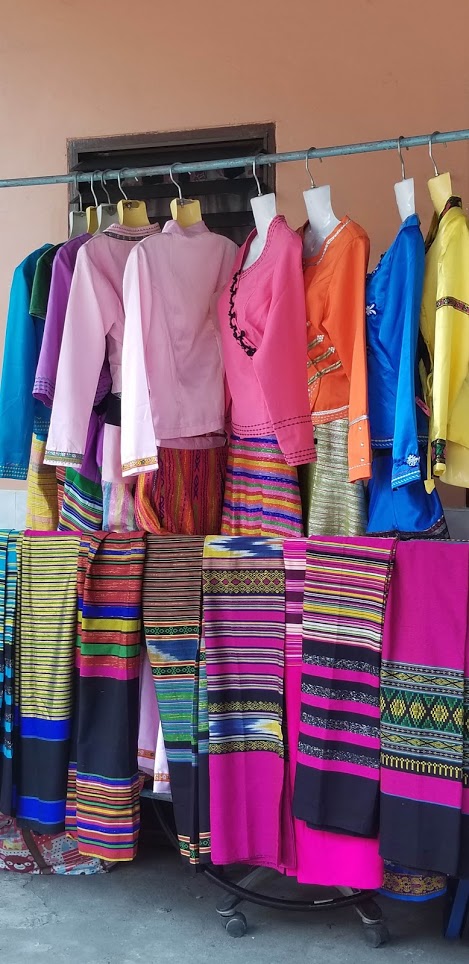
The Mon People are the earliest known inhabitants of lower Burma (now Myanmar). We were invited to attend the 72nd Anniversary of Shan State National Day at Wat Prok. Wat Prok is a Mon Buddhist Temple and one of the three temples where Maryknoll teaches English. Shan State is one of 7 state’s in Myanmar. It is the largest of the 14 provinces by land area. Myanmar consists of 14 provinces; or 7 states representing the areas 7 main ethnic races and 7 divisions. Mon people originally from Shan State who now reside in Thailand travelled from all over to attend the Anniversary celebration. The pride of their heritage was evident as displayed by their colorful cultural dress and array of culinary delights.
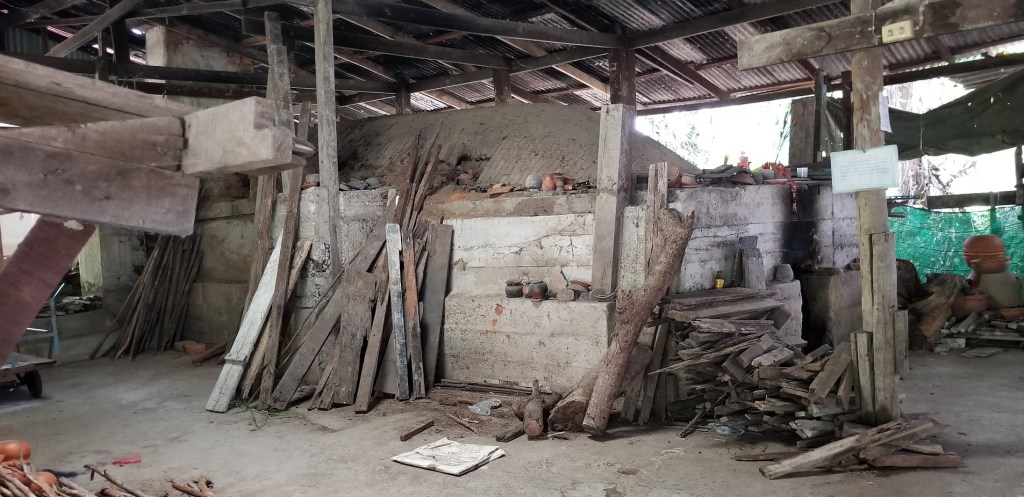
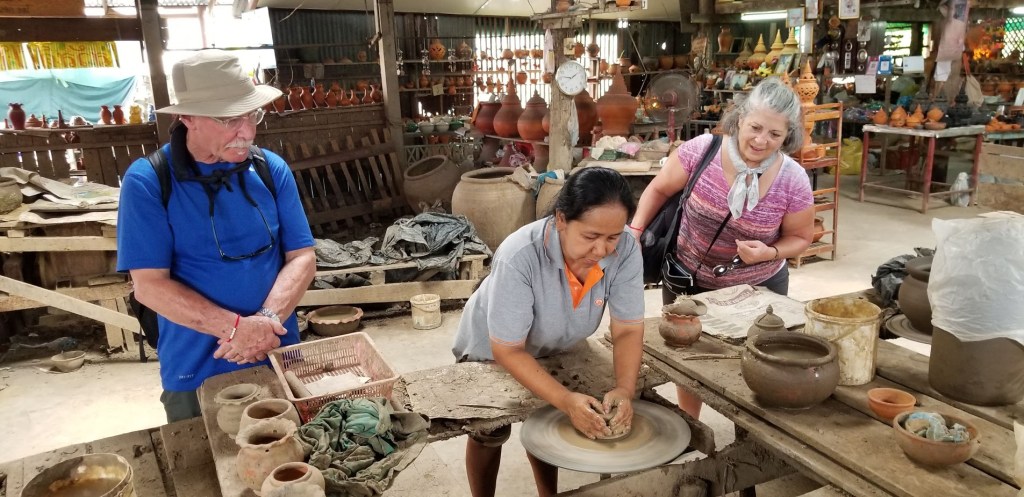
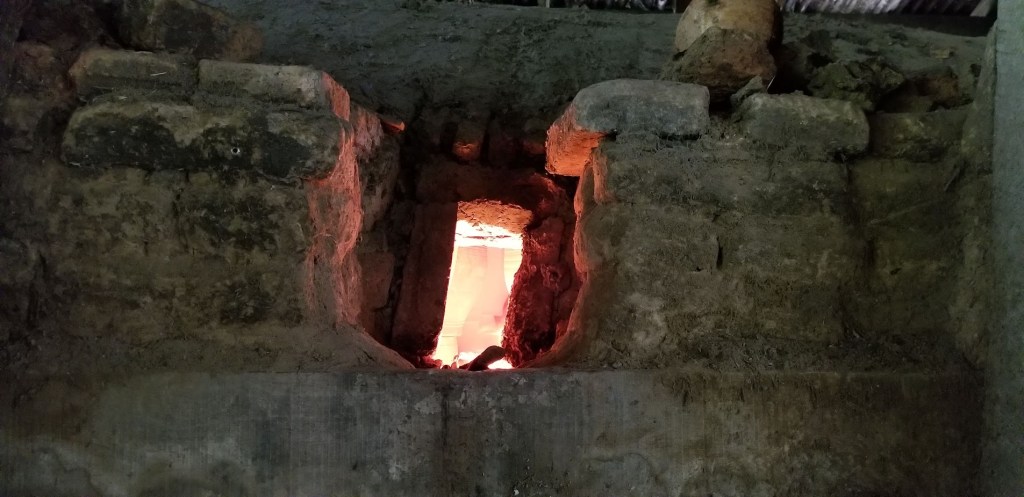
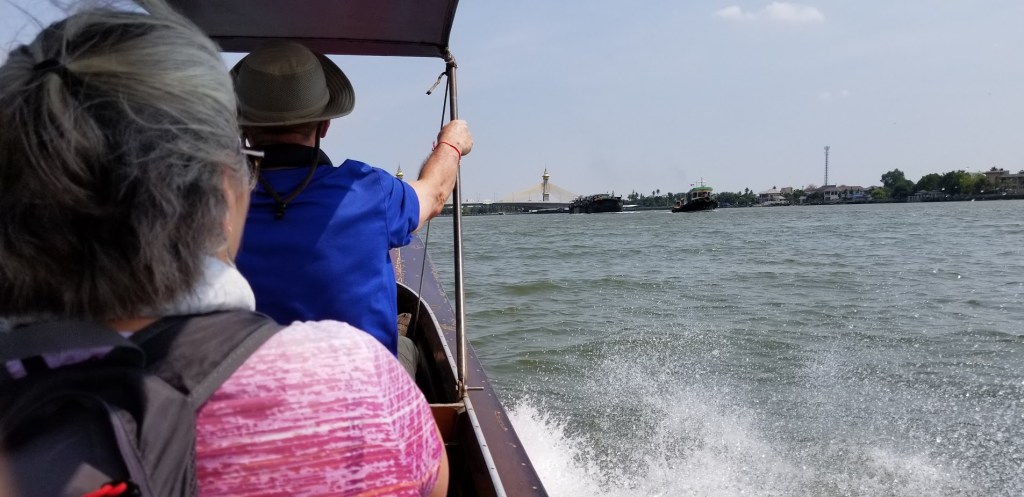
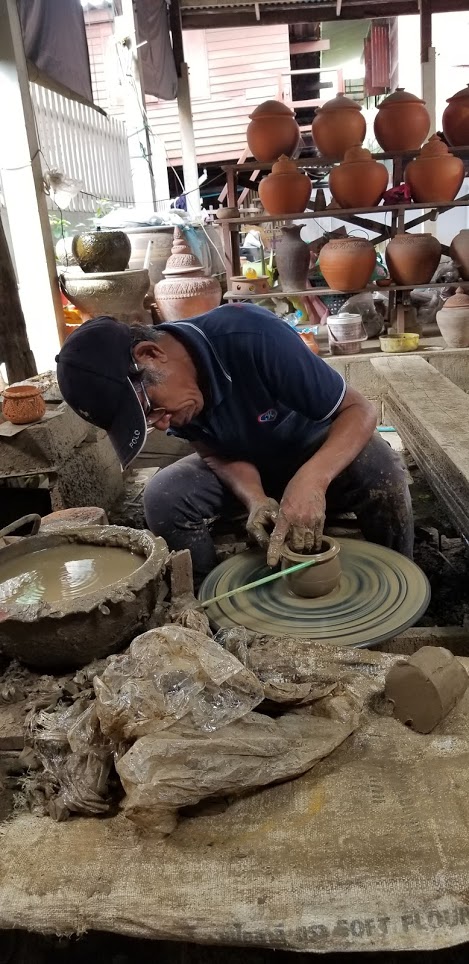
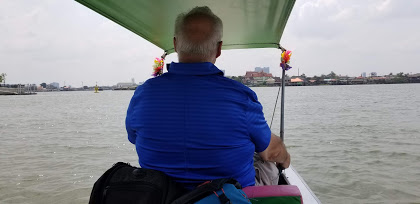
On my birthday we visited Ko Kret , a 1 sq. mile island created during the Ayutthaya period. It is populated by the Mon people whom were given refuge there when they fled the kingdom of Pegu, in Burma, after the Burmese king Alaungpaya destroyed it in 1757. We took the express boat along the Chao Phraya river from our starting point Pier -2 to Pier 30. From there, the three of us travelling together hired a half-size longtail boat for the 20 minute ride to Ko Kret. The boat made for a high-powered, exhilarating and bumpy ride! Ko Kret is best known for its Mon pottery, which is intricately designed, unglazed and colored orange or blackish -grey.
1/2 size longtail boat
“Leaning stupa of Ko Kret” Chedi Songmon
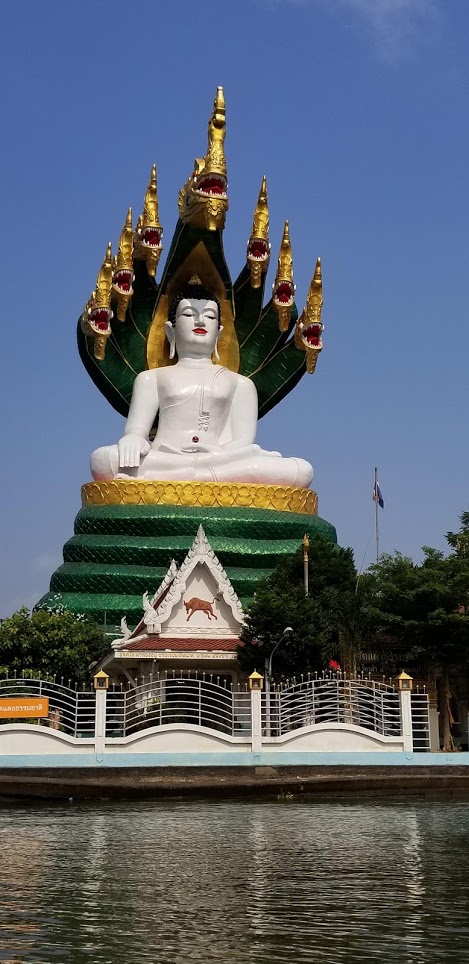
My Birth-day Buddha – Naga On way to Ko Kret
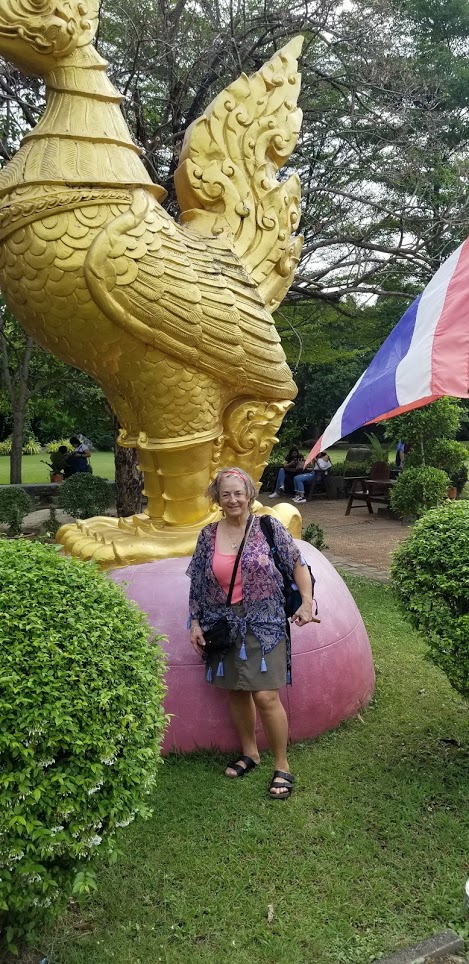
My Chinese Birth Year – Rooster Wat Pai-Lom at Ko Kret
Hang on Harry for a wild ride!
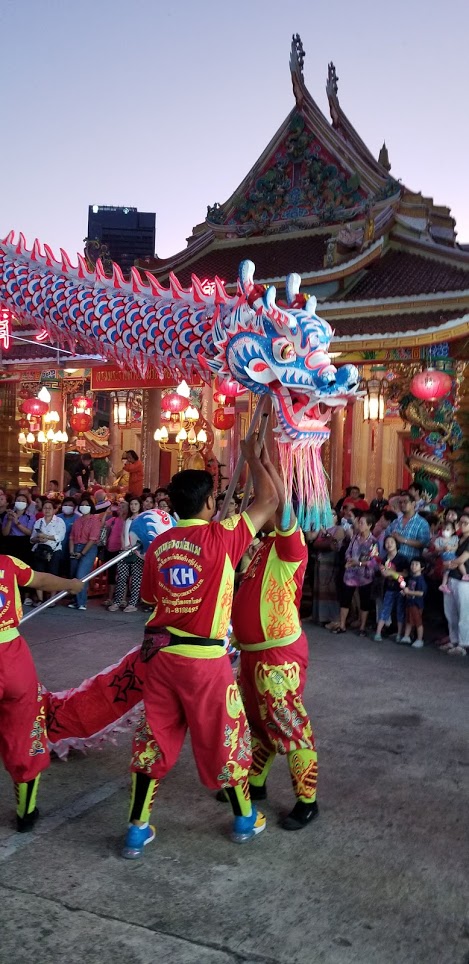
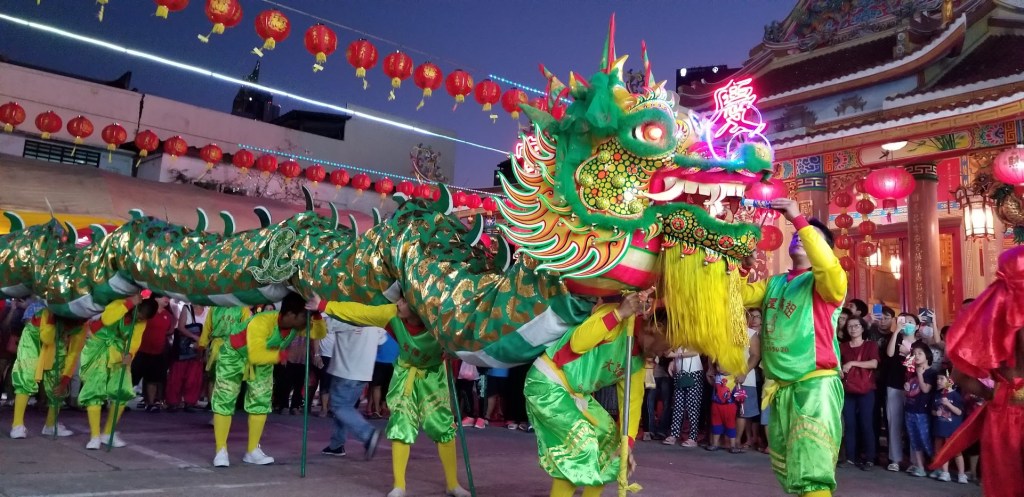
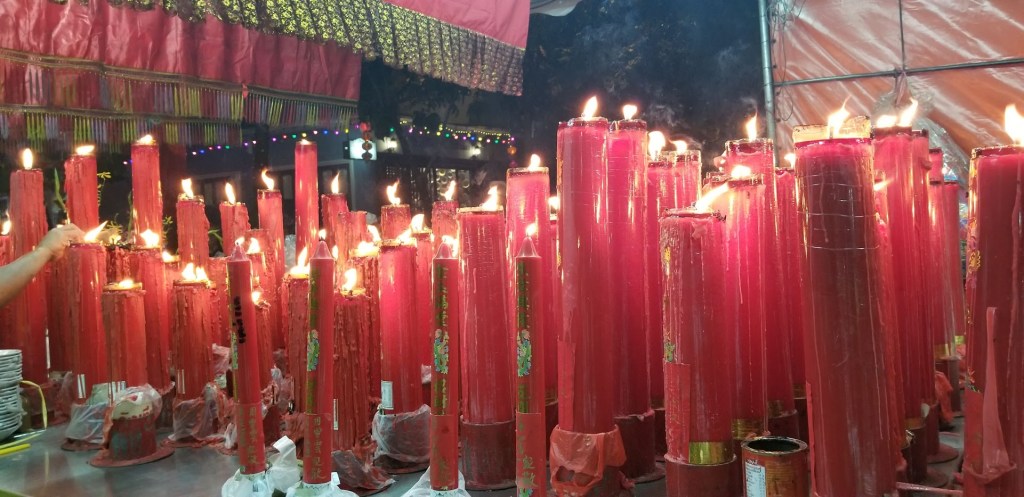
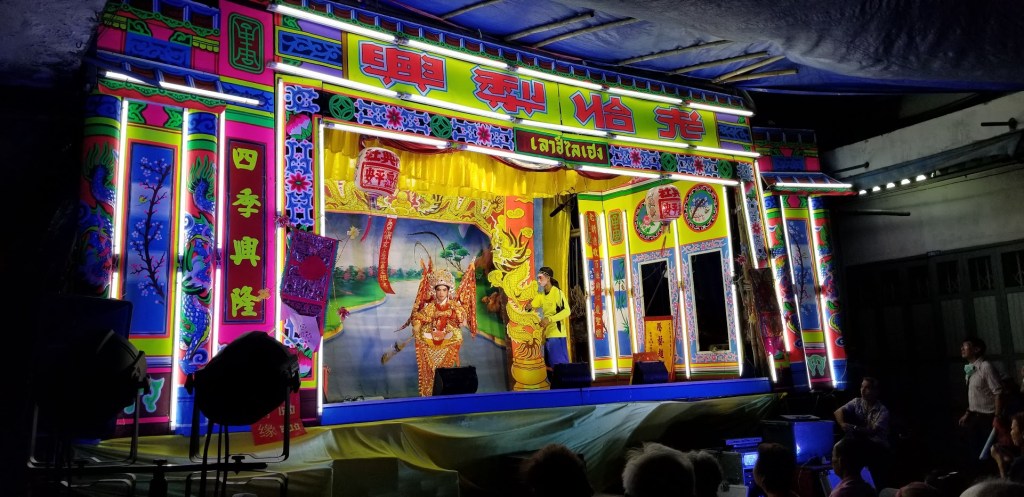
Chinese New Year & Magha Puja
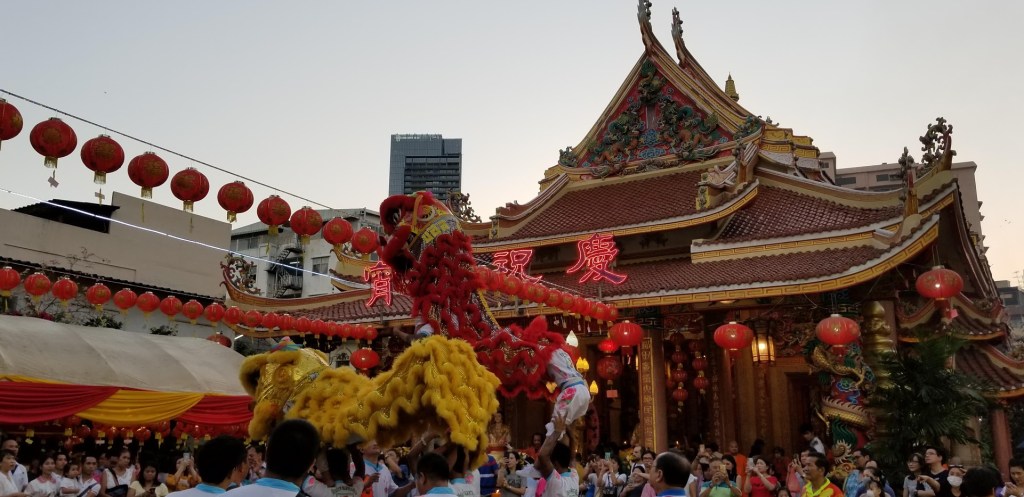
We participated in the end of the Chinese New Year celebrations as well as Magha Puja (Prayer Day) which both fall on the full moon day of the third lunar month. Of the 70 million population of Thailand polled in 2017, the Chinese community represents about 14% or 10 million people. Thailand is home to the largest overseas Chinese population. The religious affiliation in Thailand is Buddhist 54 million or 87%, Muslim 7.5 million or 12% and Christians are less than a million or .72%. Magha Puja is the 2nd most important Buddhist festival which commemorates a gathering that was held between the Buddha and 1,250 of his first disciples. On this day, Buddhists celebrate the creation of an ideal and exemplary community made up of Monks, Nuns, Laymen and Laywomen. Some authors have also referred to the day as the Buddhist “All Saints Day”.
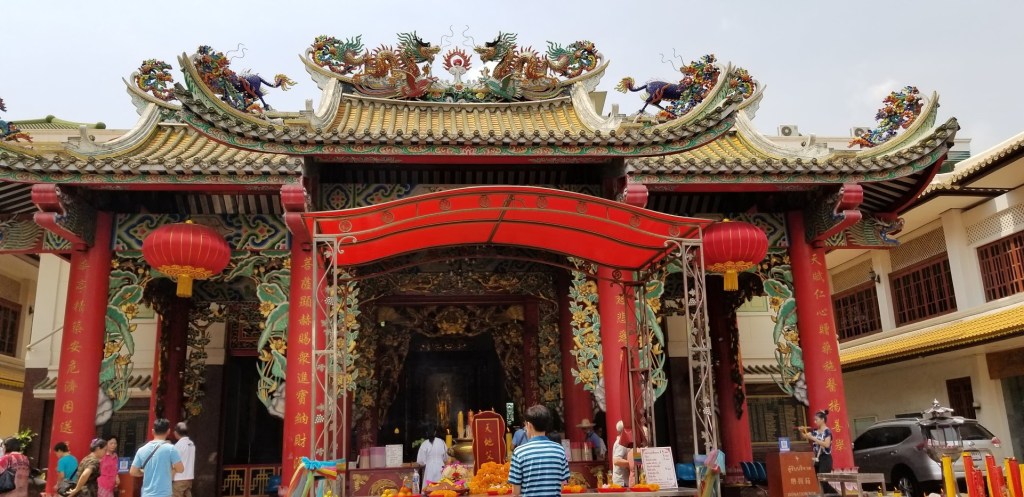
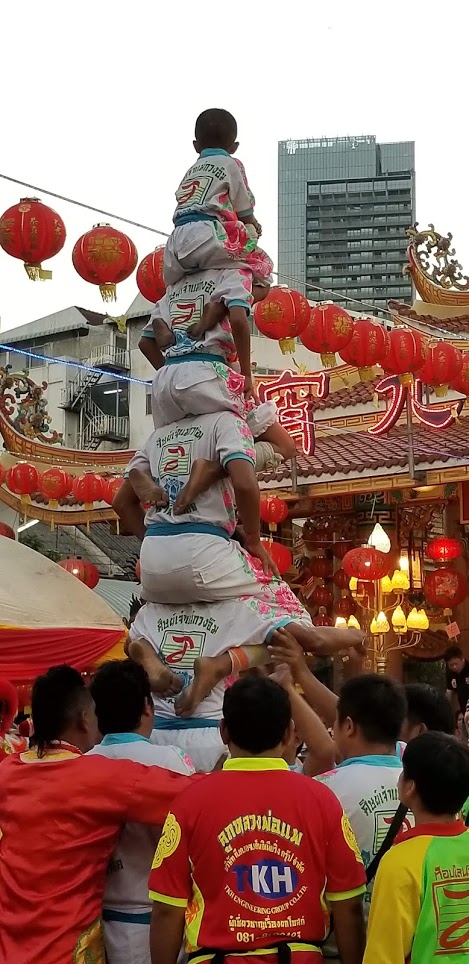
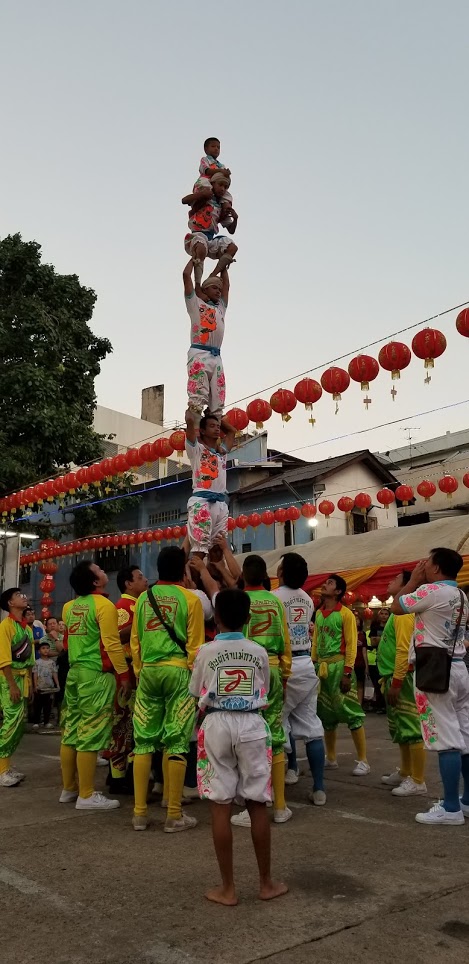
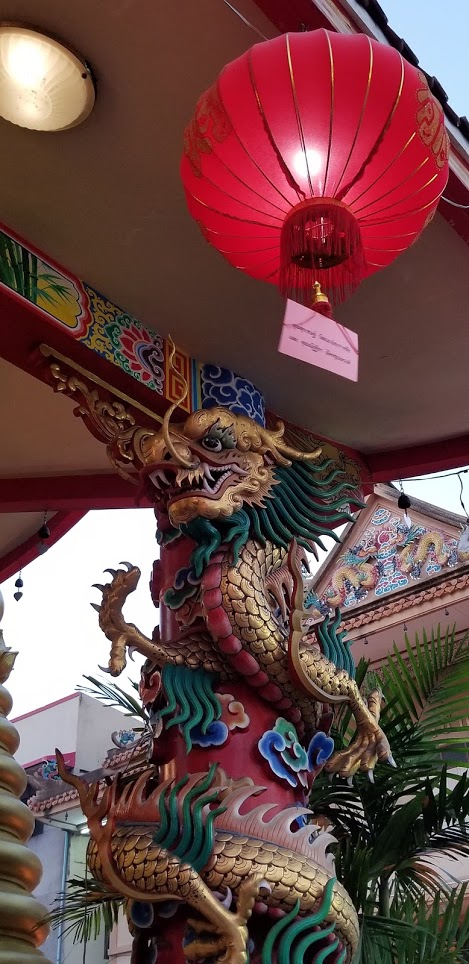
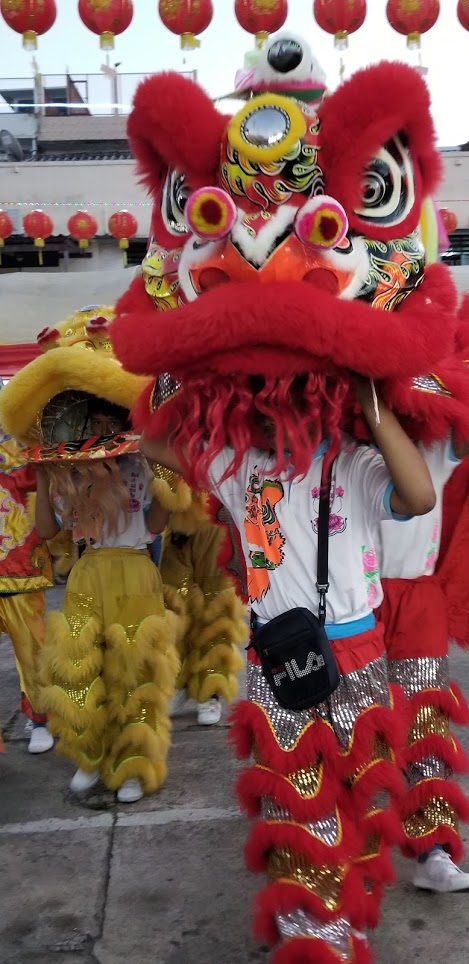
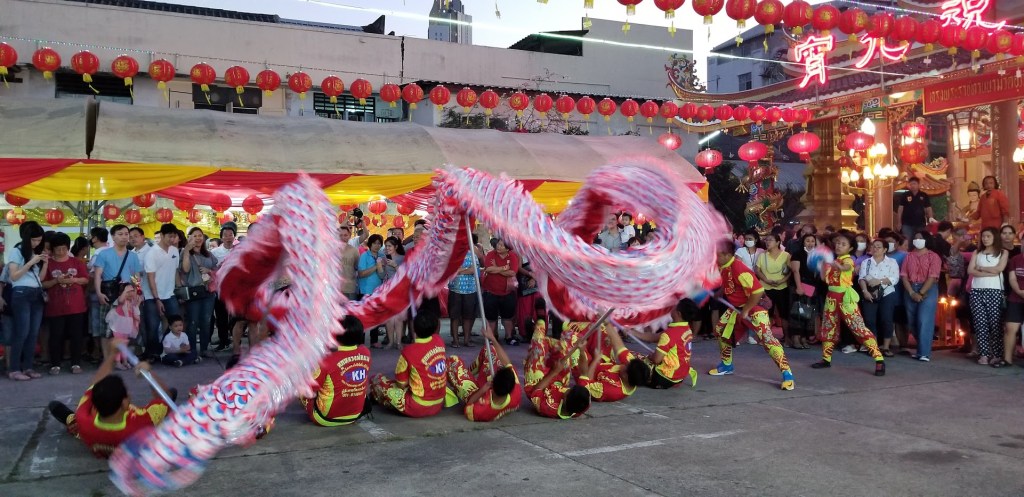
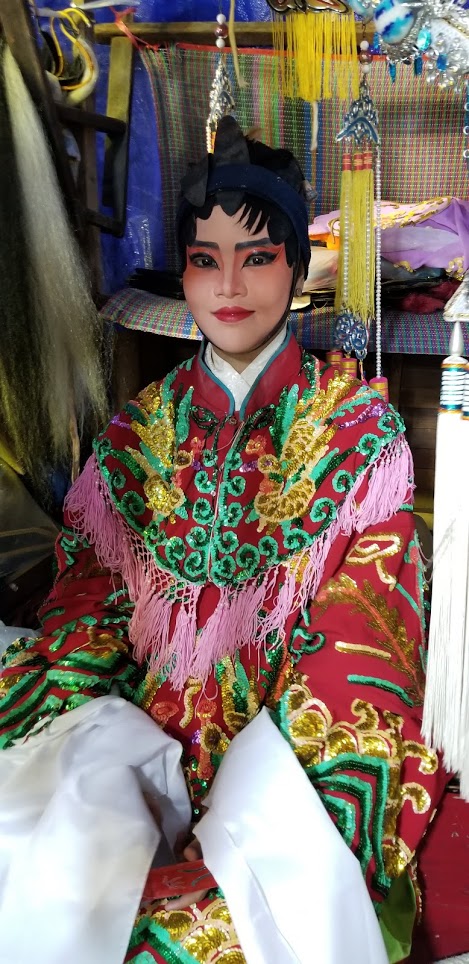
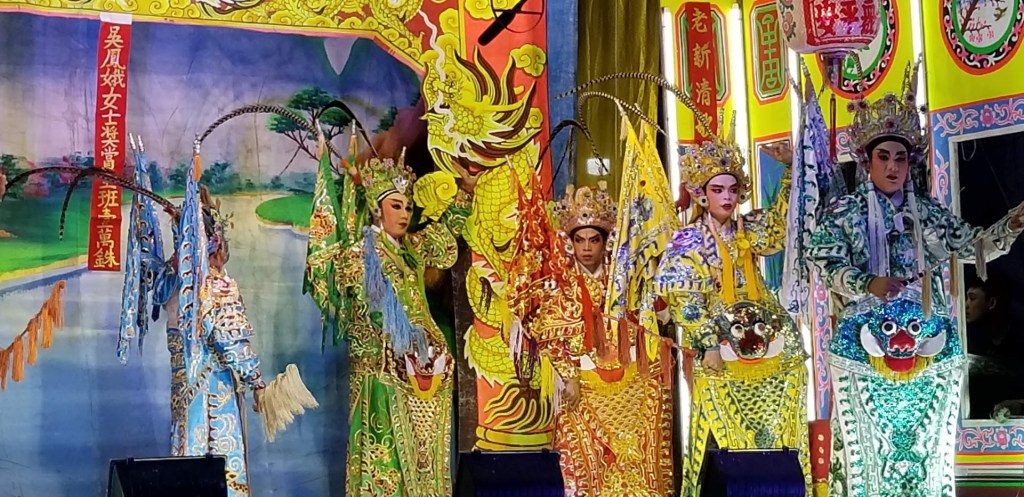
It was so exciting to see the lion and dragon dances as well as acrobatic performances up close and personal! In Chinese culture, the lion symbolizes strength, stability and superiority, while the dragon represents power, boldness and excellence. The dances are performed during festive occasions as a means to chase away evil spirits and welcome in prosperous times. After watching the dances we ventured to the outdoor Chinese Opera. The costumes were so colorful and beautiful but I did not understand a thing about the opera! Bro. John led us backstage and we were able to see the performers up close.
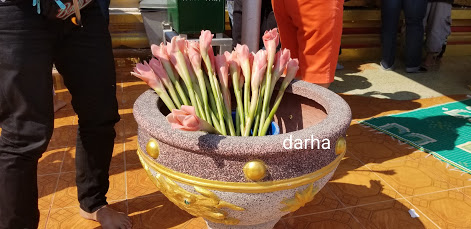
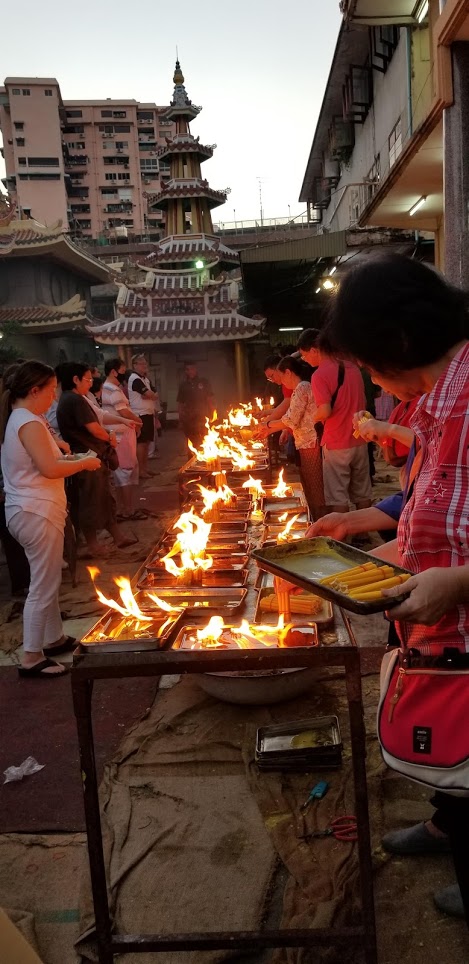
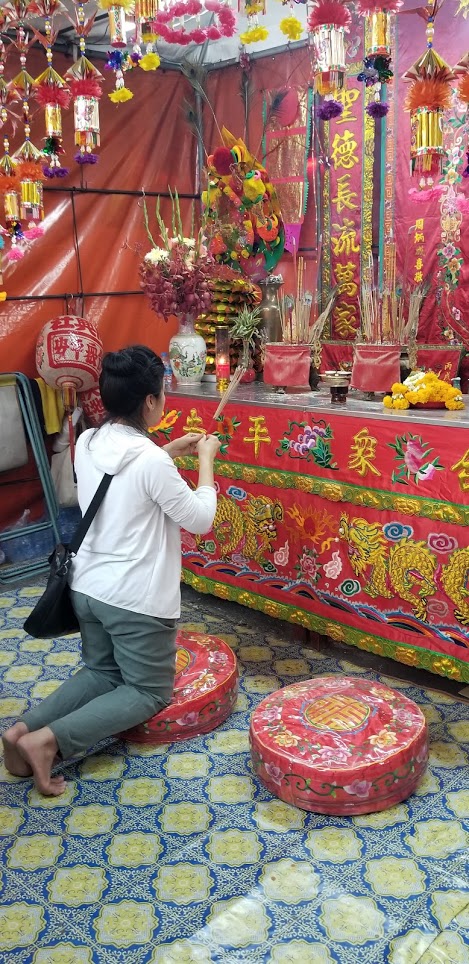
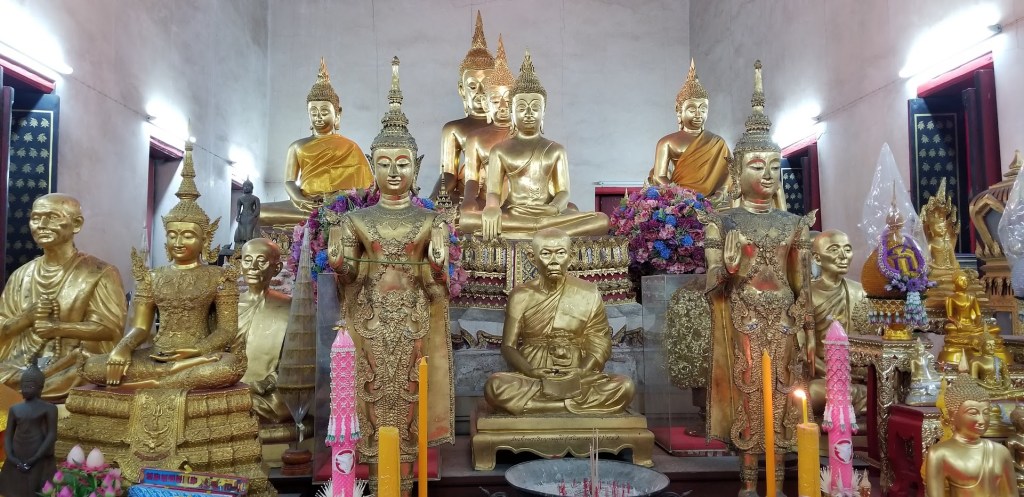
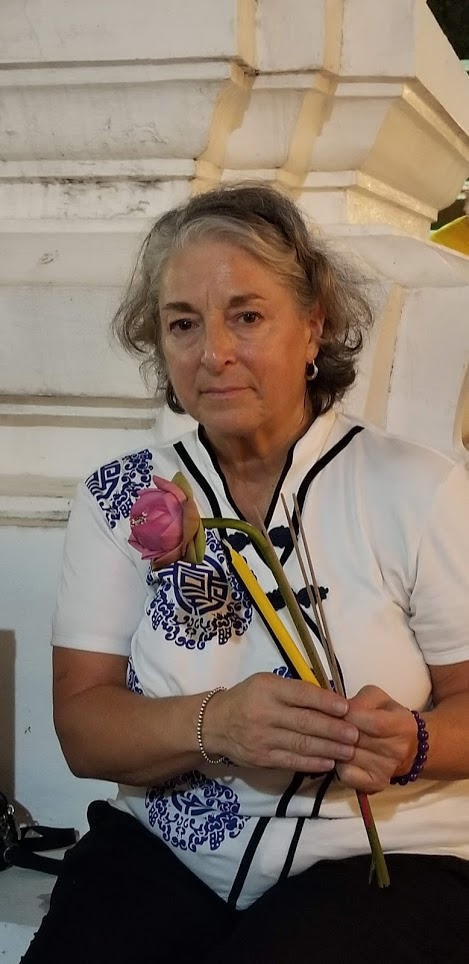
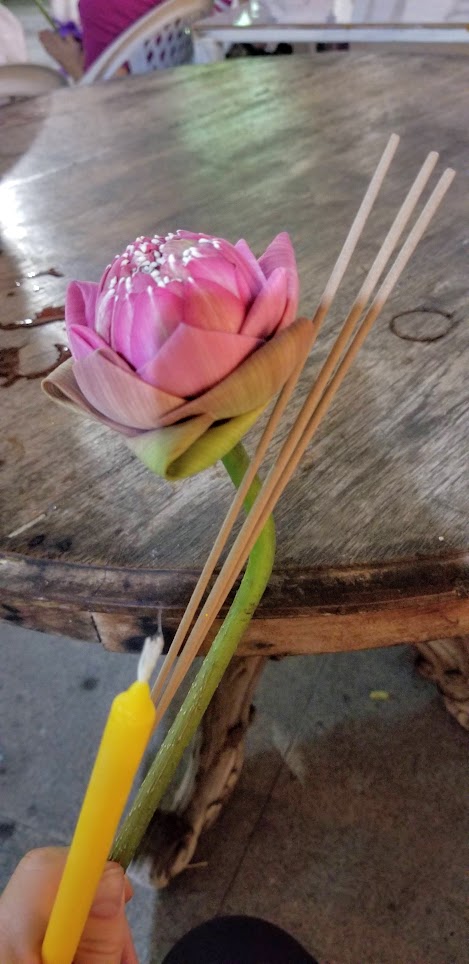
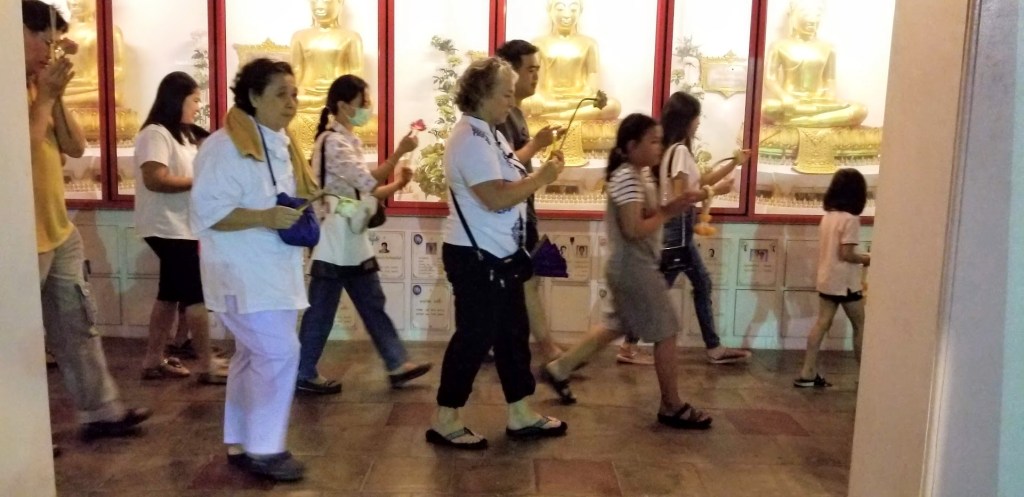
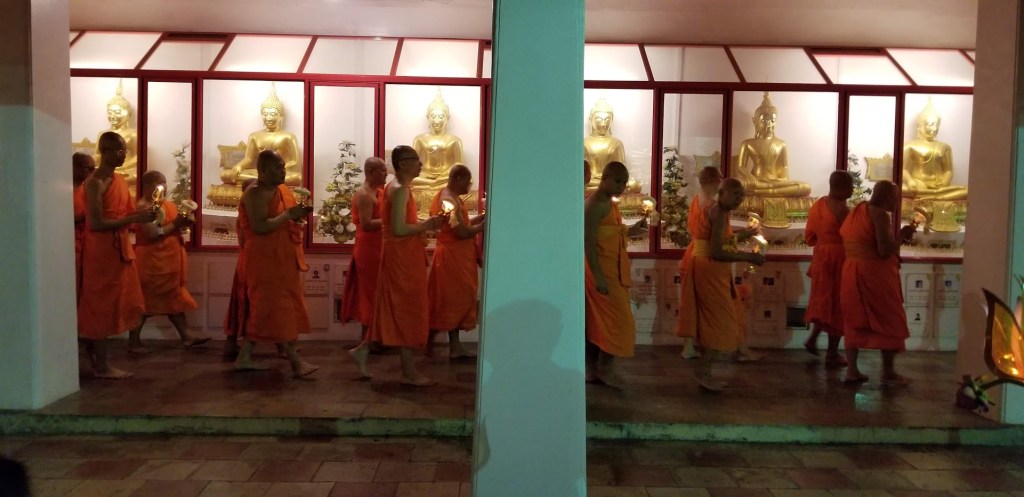
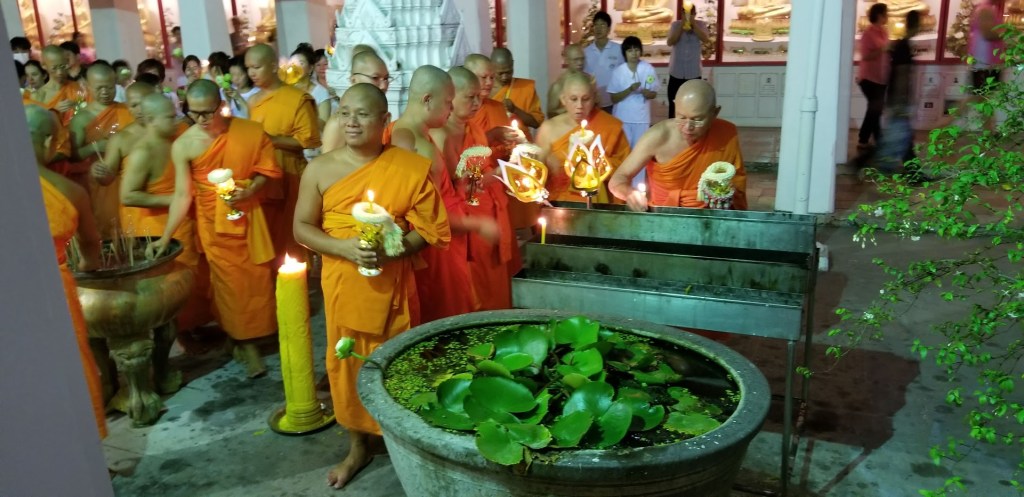
Later in the evening, some of us walked to Wat Sampheng to participate in the candle light procession in celebration of Magha Puja. Also known as Makha Bucha, the ceremony affirms the Buddhists devotion to the Triple Gem, to recite the Buddhist precepts, to meditate in silence and to walk clockwise behind the monks around the Chedi (outer temple) three times holding in tented hands at chest level a lighted candle, three incense sticks and a floral offering, all of which are then offered to the Buddha images of the temple. The flowers are symbolic of the beautiful qualities of the Buddha, the candlelight of the Dhamma (Buddhist teachings on “how to live a good life”) lighting up dark places of the mind and heart, and the incense of the pervasive and influential “fragrance” of the Sangha (Buddhist community).

























































































































 Embracing Gray